

Maddy summaryHRES 486 is a symbolic House resolution recognizing June 8 as World Oceans Day. It affirms the U.S. duty to protect, conserve, and rebuild ocean resources, highlights ocean health as critical to climate, food security, and coastal economies, and cites specific threats like plastic pollution, ocean acidification, and climate impacts. The resolution commits the House to increasing federal investment in ocean science research and monitoring to address these challenges. As a procedural resolution, it does not create new laws or allocate funds but serves to raise awareness and encourage coordinated action on ocean conservation.
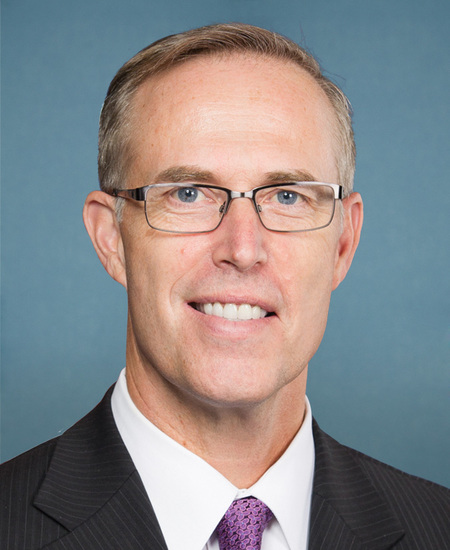
Rep. Jared Huffman
Sponsored bills
Maddy summaryThis resolution designates May 5, 2023, as the "National Day of Awareness for Missing and Murdered Indigenous Women and Girls" to honor victims and support families. It asks the public to commemorate affected individuals and demonstrates solidarity with impacted communities. The bill also recommends the Justice Department commission a new study to update statistics on violence against Indigenous women, referencing the 2016 DOJ study that found 84.3% experienced violence in their lifetime. This symbolic measure aims to raise awareness and encourage federal action, without changing laws or allocating new funding.
Maddy summaryHR 3978, the Southern California Coast and Ocean Protection Act, prohibits the federal government from issuing new oil and gas leases in the Southern California planning area. It directly affects the Secretary of the Interior and potential oil and gas companies by banning exploration, development, or production leases in that specific region, as defined in the 2018 National OCS Leasing Program. The bill amends existing law to permanently block new leasing in this coastal zone, with no new permits allowed under current or future federal leasing programs.
Maddy summaryThis bill requires federal agencies collecting demographic survey data to begin including questions on sexual orientation, gender identity, and variations in sex characteristics (intersex traits) within 360 days of enactment. Agencies must review existing surveys to identify gaps, develop privacy-protective methods for collecting this data (including anonymization and data destruction protocols), and incorporate it into relevant reports within three years. The law applies to all federal surveys that collect standard demographic data (like race, ethnicity, and age), such as the census or health surveys, but does not compel individuals to disclose their status. It emphasizes maintaining confidentiality, allows limited agency waivers if standards can't be met, and mandates a congressional report on implementation within two years.
Green Climate Fund Authorization Act of 2023 This bill authorizes $4 billion in both FY2024 and FY2025 for U.S. contributions to the Green Climate Fund (a fund established under the United Nations Framework Convention on Climate Change to finance projects that address climate change).
Maddy summaryHR 3850, the Pride In Mental Health Act of 2023, establishes a federal grant program to improve mental health and substance abuse services for LGBTQ+ youth (including nonbinary, intersex, and Two Spirit individuals). The bill directs the Health and Human Services Secretary to fund eligible organizations to provide trauma-informed care, cultural competency training for caregivers, school bullying prevention guidelines, and family support resources. It explicitly prohibits grant funds from being used for conversion therapy or advertising related to such therapy. The bill also requires data collection on LGBTQ+ youth mental health and a federal survey to measure psychological distress.
San Gabriel Mountains Protection Act This bill designates wilderness areas and wild and scenic rivers in California and modifies the boundaries of the San Gabriel Mountains National Monument in California to include additional National Forest System (NFS) land. Specifically, the monument shall include approximately 109,167 acres of additional NFS land. The bill designates parcels of NFS land as wilderness and components of the National Wilderness Preservation System to create the Condor Peak Wilderness and Yerba Buena Wilderness and to add to the San Gabriel Wilderness and Sheep Mountain Wilderness. The bill designates specified wild and scenic rivers. The Department of Agriculture may issue a special use authorization to the owners of a water transport or diversion facility located on NFS land in the Pleasant View Ridge Wilderness for the continued operation, maintenance, and reconstruction of the facility if specified conditions are met.
Northwest California Wilderness, Recreation, and Working Forests Act This bill addresses issues involving the management of federal lands in northern California. The bill designates various wilderness areas, potential wilderness areas, and wild and scenic rivers. The bill establishes the South Fork Trinity-Mad River Restoration Area, the Horse Mountain Special Management Area, and the Sanhedrin Special Conservation Management Area. The Department of the Interior may carry out initiatives to restore degraded redwood forest ecosystems in Redwood National and State Parks in partnership with California, local agencies, and nongovernmental organizations. The bill establishes the California Public Land Remediation Partnership to support coordination of activities among federal, state, tribal, and local authorities and the private sector in the remediation of federal land in the state affected by illegal marijuana cultivation or other illegal activity. The bill authorizes construction of visitor centers in Weaverville and Del Norte County. Interior must study the feasibility and suitability of establishing overnight accommodations near Redwood National and State Parks. Interior, in revising the certain fire management plans, must (1) develop spatial fire management plans in accordance with specified guidance and other appropriate policies; and (2) ensure that such plans consider how prescribed or managed fire can be used to achieve ecological management objectives of wilderness and other natural or primitive areas.
Maddy summaryThe American Family Act establishes a monthly child tax credit of $250 per month for each child under age 6 and $300 per month for each child aged 6-18, with income limits of $150,000 for joint filers and $112,500 for other filers. The credit is refundable, meaning it can be paid even if the taxpayer owes no income tax, and will be adjusted annually for inflation. The bill includes detailed rules for determining eligibility, including requirements that the child resides with the taxpayer for more than half the month and provisions to prevent fraud through recapture of improperly received payments. The credit will be paid monthly in advance rather than as a single annual payment, with specific mechanisms for calculating and distributing the payments.
Maddy summaryHR 3873 establishes "Ocean Innovation Clusters" in coastal and Great Lakes regions to foster collaboration among businesses, academic institutions, and government entities for sustainable ocean-related industries (the "Blue Economy"). The bill designates at least seven clusters, prioritizing those serving diverse, underserved communities and promoting economic resilience in areas like fishing, tourism, and renewable energy. It authorizes $50 million annually (2024-2029) for grants to support cluster operations and build physical collaboration centers focused on workforce development, sustainable seafood supply chains, and ocean energy innovation. These clusters aim to create jobs and support small businesses through shared resources, partnerships, and targeted economic growth initiatives.