

Maddy summaryThis bill extends existing programs that provide payments to counties and states with federal land, primarily to support local schools and communities. It updates key deadlines, extending secure payments through 2026, special project authorities through 2029, and county fund expenditure authority through 2028. A new pilot program allows regional foresters to appoint resource advisory committee members directly, with this authority ending October 1, 2028. These changes directly affect rural counties and states managing federal lands, maintaining current funding mechanisms without altering eligibility or payment amounts.
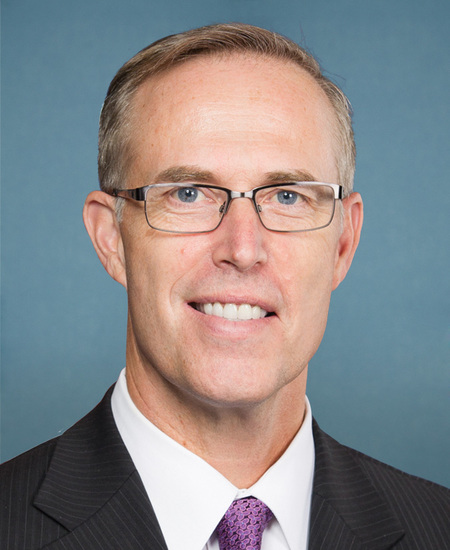
Rep. Jared Huffman
Sponsored bills
Maddy summaryThe Tribal Access to Clean Water Act of 2023 provides dedicated federal funding to address water infrastructure gaps in Native communities. It allocates $100 million annually (2024-2028) through the USDA for technical assistance and water system construction, $20 million for Indian Health Service sanitation facilities, and $100 million for operation/maintenance of existing water systems. The bill specifically targets tribes and Native Hawaiian communities, requiring no matching funds and prioritizing the most urgent needs. This directly supports tribes in accessing existing infrastructure funding, developing self-sustaining water utilities, and maintaining facilities for public health and safety.
Naturally Offsetting Emissions by Managing and Implementing Tillage Strategies Act of 2023 or the NO EMITS Act of 2023 This bill directs the Department of Agriculture (USDA) to carry out activities to improve soil health, including to address climate change. Specifically, USDA must establish a program that provides agricultural producers incentives (i.e., payments) for and technical assistance with adopting or maintaining practices or cropping systems to improve soil health, award grants to states and Indian tribes for implementing soil health programs, and use a portion of funds of the Commodity Credit Corporation to provide agricultural producers with technical assistance for mitigating and adapting to climate change. The bill also (1) makes practices related to livestock production eligible for certain competitive grants under the On-Farm Conservation Innovation Trials program, and (2) increases funding for the program.
Maddy summaryThe John R. Lewis Voting Rights Advancement Act of 2023 would strengthen the Voting Rights Act of 1965 by updating the criteria for which states and localities must obtain federal preclearance before changing voting practices. It would establish new standards for proving vote dilution and vote denial by requiring courts to consider historical discrimination, racial polarization in voting, and whether voting practices disproportionately burden minority voters. The bill would also require states and localities to provide public notice of voting changes and share demographic data about polling locations. These changes would primarily affect jurisdictions with a history of voting rights violations, aiming to prevent discriminatory voting practices before they take effect.
Maddy summaryThe Humane Cosmetics Act of 2023 bans cosmetic animal testing in the United States, prohibiting companies from conducting or contracting such testing after its enactment (effective 1 year later). It also bans selling or transporting cosmetics developed using animal testing conducted after that date within U.S. interstate commerce. The law directly affects cosmetic manufacturers, retailers, and suppliers operating in the U.S. market, requiring them to use non-animal testing methods for safety evaluations. Exceptions exist for foreign regulatory requirements or when no alternative testing methods are available for specific ingredients.
Maddy summaryThis bill amends U.S. military law to authorize the Secretary of Defense to provide training and equipment to foreign security forces. It specifically targets efforts to counter illegal, unreported, and unregulated (IUU) fishing operations. The key mechanism adds a new provision allowing U.S. support for partner nations' coast guards and navies to build capacity in maritime enforcement. It directly affects foreign security forces in countries where IUU fishing threatens regional stability and fisheries.
Maddy summaryHRES 492 is a congressional resolution condemning the Iranian government's systematic persecution of the Baha'i minority, which directly affects Baha'is in Iran facing arrests, property confiscation, and imprisonment. The resolution specifically calls for Iran to immediately release Baha'is detained for their faith, end state-sponsored hate propaganda against them, and reverse discriminatory policies denying equal access to education, employment, and religious freedom. It urges the U.S. President and Secretary of State to demand Iran’s compliance with international human rights treaties and to use existing sanctions authorities (under the 2010 and 2012 Iran sanctions laws) against officials responsible for these abuses. The resolution does not impose new legal requirements but serves as a formal U.S. government statement of condemnation and a call for diplomatic and sanctions action.
Maddy summaryHR 4949, the Don Young Veterans Advancing Conservation Act, establishes a Department of Commerce grant program to fund nonprofit organizations that train or employ veterans for underwater marine and coastal conservation work. The program, authorized for $1 million in fiscal year 2024 and increasing to $1.8 million by 2028, supports specific activities like coral restoration, invasive species removal, marine debris cleanup, and hurricane recovery. Nonprofits must be 501(c)(3) organizations and use funds to employ veterans in these conservation roles, with coordination required with the Department of the Interior. This directly affects veterans seeking meaningful employment and conservation-focused nonprofits receiving federal grants.
Maddy summaryHR 4547, the Laws Ensuring Safe Shrimp Act (LESS Act), creates a dedicated fund using 70% of U.S. import duties on shrimp and shrimp products (e.g., frozen shrimp, shrimp-based dishes) to improve safety and labor compliance. The fund allocates 50% to the FDA for inspecting high-risk shrimp for antibiotic contamination and verifying imports aren’t sourced from forced labor or illegal fisheries, and 50% to the USDA to boost domestic shrimp consumption. It directly affects shrimp importers (who pay the duties), federal agencies (FDA, USDA, CBP), and domestic shrimp producers (who benefit from consumption programs). The bill ensures funding supplements existing programs and remains available until spent, focusing on concrete safety and labor checks rather than speculative outcomes.
Maddy summaryHR 4350, the MONARCH Act of 2023, establishes a $12.5 million annual fund (2023-2027) to support habitat restoration for western monarch butterflies, which are at risk of extinction due to a 99% population decline over 30 years. The bill authorizes grants to eligible entities like tribal governments, nonprofits, and local agencies to restore milkweed, protect overwintering sites, and conserve pollinator habitats across California, Arizona, Nevada, Washington, Oregon, Idaho, and Utah. Projects must include community consultation, avoid conflicts with food safety, and demonstrate clear conservation benefits. The Secretary of the Interior will manage the grants, require annual progress reports to Congress and the public, and coordinate with existing conservation plans.