

Maddy summaryThis bill names a specific United States Postal Service facility at 24355 Creekside Road in Santa Clarita, California, as the "William L. Reynolds Post Office Building." It directly affects the physical location of this post office by changing its official designation. The key provision is a simple name change, with all existing references to the building in federal documents automatically updated to reflect the new name. This is a ceremonial designation with no policy or funding changes.
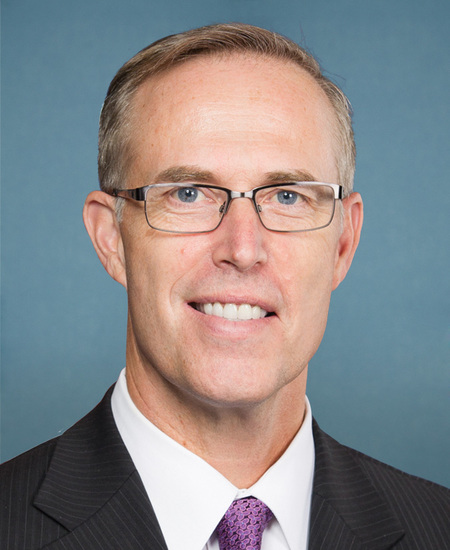
Rep. Jared Huffman
Sponsored bills
Maddy summaryHRES 1202 is a symbolic resolution expressing the U.S. House of Representatives' support for designating May 5-11, 2024, as Wildfire Preparedness Week. It encourages public education on fire safety, evacuation planning, and preventive measures like vegetation management and reducing human-caused ignitions (e.g., fireworks). The resolution does not create new laws or allocate funding but aims to raise awareness about wildfire risks, citing statistics on recent fires and health impacts from smoke exposure. It directly supports communities in wildfire-prone areas by promoting existing preparedness resources and educational initiatives. The resolution was introduced by Representatives Torres, Huffman, and Jacobs and referred to the Committee on Natural Resources.
Maddy summaryThis bill codifies the Environmental Protection Agency's 2023 determination that the Pebble Mine project would cause unacceptable harm to Bristol Bay's salmon habitats. It makes the EPA's prohibition on the mine's waste disposal sites legally binding, directly affecting the Pebble Mine developers and protecting the watershed. The key provision permanently enforces the EPA's finding that the mine would destroy critical salmon streams, wetlands, and fishery areas vital to the region's ecosystem and Indigenous subsistence culture.
Maddy summaryThis resolution is a symbolic gesture expressing support for designating May 4, 2024, as a "National Day of Reason." It does not create new laws or directly affect any individuals or groups, as it is purely a non-binding statement of support. The resolution encourages citizens to observe the day and emphasizes reason, critical thought, and scientific inquiry as vital to addressing societal challenges. It cites historical and contemporary contexts where reason has driven progress, but the resolution itself only proposes recognition, not policy changes.
Maddy summaryThe Captive Primate Safety Act prohibits the import, export, sale, transport, breeding, or possession of certain nonhuman primates - including chimpanzees, gorillas, monkeys, and their hybrids - in interstate or foreign commerce. It directly affects private owners, breeders, and commercial traders of these animals, with limited exceptions for pre-enactment animals (requiring registration with the U.S. Fish and Wildlife Service and restrictions on breeding/sale) and registered research facilities. The law amends the Lacey Act to add these primates to prohibited species lists, effective upon enactment, with regulations to be issued within 180 days. Enforcement remains active even if regulations are delayed, ensuring immediate prohibitions on commercial trade and possession.
Maddy summaryHRES 1177 designates May 5, 2024, as the "National Day of Awareness for Missing and Murdered Indigenous Women and Girls." The resolution expresses congressional support for this designation, calls on the public to commemorate affected individuals and show solidarity with families, and recommends the Department of Justice commission a new study on the crisis to update statistics since the 2016 report. It directly affects awareness efforts for Indigenous communities and families impacted by violence, while acknowledging ongoing gaps in addressing the crisis despite prior legislation like Savanna’s Act. The resolution does not create new laws or funding but focuses on recognition and data collection.
Maddy summaryHRES 1166 is a symbolic resolution expressing congressional support for Earth Day. It urges the President to issue an Earth Day proclamation, encourages Americans to take specific environmental actions (like addressing pollution and supporting indigenous stewardship), and calls for global efforts to advance climate goals. The resolution does not create new laws or directly affect any groups - it serves as a non-binding statement of support for environmental action. It references historical environmental milestones but focuses on reaffirming the need for year-round climate and environmental protection efforts.
Maddy summaryHR 8122 redesignates Rock Creek Park in Washington, D.C., as Rock Creek National Park to reflect its nationally significant natural, cultural, and recreational resources. The bill updates all federal references to the park in laws, maps, regulations, and documents to use the new name "Rock Creek National Park" instead of "Rock Creek Park." It makes minor technical changes to existing statutes (like Title 40, U.S. Code) to replace the old name with the new one. This is a procedural name change with no new funding or policy provisions for park management.
Maddy summaryHRES 1164 is a symbolic House resolution acknowledging that climate change poses unique threats to children globally. It recognizes how extreme weather, water scarcity, and environmental shocks disproportionately impact children’s health, education, safety, and future opportunities. The resolution affirms U.S. leadership in climate action and international cooperation to protect vulnerable children, but does not create new laws or allocate funding. It is a non-binding statement expressing the House’s position on climate change’s effects on children, not a policy with concrete implementation.
Maddy summaryHR 8098, the Judicial Ethics Enforcement Act of 2024, creates an independent Office of Inspector General (IG) for the federal judicial branch (excluding the Supreme Court) to investigate misconduct complaints against judges and court staff. The IG would conduct audits, prevent fraud, and report findings to the Chief Justice and Congress, but cannot investigate court decisions or discipline judges. Key provisions include the IG’s authority to subpoena records and require testimony, while explicitly prohibiting oversight of case merits or judicial punishment. The bill establishes strict limits on the IG’s scope to ensure judicial independence, with the Chief Justice appointing the IG after congressional consultation.