

Maddy summaryThis bill (HR 1208) amends the 1934 Indian Reorganization Act to clarify that the Secretary of the Interior can take land into trust for any federally recognized tribe, updating outdated language. It specifically revises Section 19 to replace "any recognized Indian tribe now under Federal jurisdiction" with "any federally recognized Indian Tribe." The bill also ratifies and confirms all past land trust decisions made for federally recognized tribes, protecting those actions from legal challenges based on historical recognition status. This change directly affects federally recognized tribes by ensuring their land trust authority remains valid under current law.
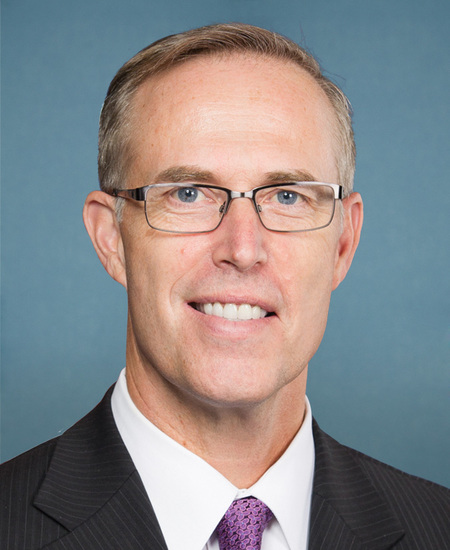
Rep. Jared Huffman
Sponsored bills
Maddy summaryHR 8830, the High Court Gift Ban Act, sets strict limits on gifts federal judges may accept. It prohibits judges from receiving gifts valued over $50 from a single source in a year, unless the total from that source stays under $100 annually. Key exceptions include gifts paid for by the judge, gifts from relatives, honorary degrees from educational institutions, and public opportunities available to all federal employees. The bill also outlines enforcement mechanisms, requiring the Judicial Conference to refer violations to the Attorney General for civil or criminal penalties. This directly affects all federal judges, including Supreme Court justices and lower court judges, by restricting gifts from sources that may have business before them.
Maddy summaryHR 8732, the Domestic Workers Bill of Rights Act, would establish new labor protections for domestic workers including nannies, housekeepers, and caregivers who work in private homes. The bill requires written agreements between employers and domestic employees, provides earned sick days, ensures fair scheduling practices, and prohibits unfair wage deductions for cash shortages or communications. It also creates a Domestic Employee Standards Board to recommend workplace standards and establishes a National Domestic Employee Hotline for assistance. The bill specifically targets domestic workers who have historically been excluded from labor protections under the Fair Labor Standards Act and Civil Rights Act, benefiting an estimated 2.2 million domestic workers in the U.S. who are disproportionately women of color and immigrants.
Maddy summaryHR 8726, the Alan S. Lowenthal Blue Whales, Blue Skies Act, establishes a voluntary program to reduce vessel speeds in designated coastal waters (initially modeled on California's existing program) to protect whales and reduce pollution. It requires large commercial vessels (300+ gross tons) transiting the "Program Area" to slow to 10 knots or less during specific periods, with annual "Excellence Awards" for compliant vessels. The program offers no mandatory participation, funding, or safety changes, and includes a logo for award-winning companies to display with compliance metrics. The Under Secretary must report on expanding the program to the entire U.S. Pacific coast within four years.
Maddy summaryHR 537 authorizes a Congressional Gold Medal to honor 60 diplomats who saved Jewish lives during the Holocaust by issuing visas and passports against their governments' orders, risking expulsion and personal danger. The medal will be presented to the next of kin of these diplomats, alongside representatives from their home countries, and permanently displayed at the United States Holocaust Memorial Museum. The bill also permits the sale of bronze duplicates to cover production costs, with proceeds going to the U.S. Mint. This legislation recognizes the diplomats' humanitarian actions without creating new government programs or altering existing laws.
Maddy summaryHR 8682, the Water Conservation Rebate Tax Parity Act, expands tax-exempt treatment for rebates related to water conservation and management. It modifies the tax code to exclude from income tax subsidies provided by public utilities or local governments for residential water conservation measures (like low-flow fixtures), storm water management (such as rain gardens), and wastewater management (like septic systems) at a homeowner's principal residence. The bill defines these specific measures clearly and ensures rebates for these purposes are treated similarly to existing energy conservation tax exclusions. This change applies to rebates received after December 31, 2021.
Maddy summaryHR 1687 names the United States Postal Service facility at 6444 San Fernando Road in Glendale, California, as the "Paul Ignatius Post Office." All official U.S. government references to this location - such as in laws, maps, or documents - will now use the new name. This is a procedural bill with no policy changes beyond the naming designation.
Maddy summaryThe Tribal Climate Health Assurance Act of 2024 establishes the "Climate Ready Tribes Initiative" to help tribal communities address climate-related health risks. It directs the CDC, in partnership with the National Indian Health Board, to translate climate science, develop planning tools, and share resources for tribal governments and health programs. The bill authorizes $110 million annually starting in 2025 specifically for this initiative, with funds prohibited from being diverted to other CDC programs. This funding enables tribes to prepare for climate impacts like heatwaves or air quality changes that directly affect community health.
Maddy summaryThe Climate Justice Act of 2024 establishes a 22-member Climate Justice Working Group to advise the President on creating a fair transition to a clean economy. The group will develop specific criteria to identify "climate-burdened communities" (facing health risks, pollution, climate impacts, and historical inequity) and create guiding principles ensuring federal climate investments prioritize these communities. Federal agencies must incorporate these criteria and principles into their plans within 90 days of the Working Group’s final report, directing resources toward frontline communities through existing initiatives like Justice40. This directly affects communities disproportionately impacted by environmental hazards and climate change, requiring federal agencies to adjust how they target climate funding and programs.
Maddy summaryThe Alzheimer’s Accountability and Investment Act (HR 620) requires the National Institutes of Health (NIH) Director to annually submit a budget estimate for Alzheimer’s-related initiatives - including personnel needs - directly to the President for review and then to Congress. This budget must be prepared after public comment and submitted without changes by the Secretary of Health and Human Services or the Advisory Council. The bill directly affects the NIH’s budget reporting process for Alzheimer’s research and programs, mandating transparency in how funds are allocated. It does not change funding levels but establishes a specific annual reporting mechanism to improve accountability.