

Maddy summaryThis bill eliminates a tax credit for using carbon dioxide (CO2) in enhanced oil recovery (EOR) operations. It amends the Internal Revenue Code by removing Section 43 (the EOR credit) and modifying Section 45Q to prohibit the credit for new facilities starting construction after the law's enactment. The primary effect is ending the federal tax incentive for oil companies that inject CO2 to extract more oil from existing wells. This change directly affects oil and gas companies planning new EOR projects using CO2, as they will no longer qualify for this specific tax credit.
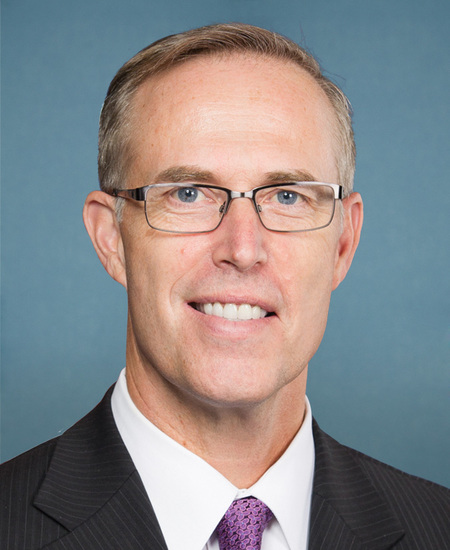
Rep. Jared Huffman
Sponsored bills
Maddy summaryHR 9826, the San Pablo Bay National Wildlife Refuge Expansion Act of 2024, adds approximately 5,658 acres of land, marshes, tidal flats, and waterways in Marin, Sonoma, Napa, and Solano Counties, California, to the existing refuge. The bill authorizes the Secretary of the Interior to acquire these lands through purchase or donation from willing sellers (not through eminent domain) and requires using funding from the Land and Water Conservation Fund for acquisitions. It directs the refuge to prioritize public uses like wildlife observation, fishing, and environmental education while following existing refuge management laws. The bill also mandates public input from local communities during planning and requires the Fish and Wildlife Service to make the boundary map publicly available.
Maddy summaryHR 1657, the Lake Winnibigoshish Land Exchange Act of 2024, authorizes a direct land swap between Big Winnie Land and Timber, LLC (BWLT) and the U.S. government. It would transfer approximately 13.8 acres of federal land in Itasca County, Minnesota, to BWLT in exchange for 38 acres of private land owned by BWLT, which would then be added to the Chippewa National Forest. The exchange requires appraisals to ensure equal value, with a cash payment adjustment if needed - though the government waives payment if the private land is valued higher. The Secretary of Agriculture must complete the transfer within 180 days of BWLT’s offer, following specific appraisal standards and finalizing legal descriptions for public review.
Maddy summaryHCONRES 130 is a symbolic concurrent resolution commending state and local governments that treat reproductive rights as human rights following the *Dobbs* decision. It recognizes efforts by cities like Austin, Texas, and Montgomery County, Maryland, to expand abortion access and condemn criminalization of pregnancy outcomes. The resolution affirms that reproductive rights are human rights, urges states to repeal restrictive laws, and references U.S. obligations under international human rights treaties. As a non-binding resolution, it does not create new laws or alter existing policies.
Maddy summaryHRES 1496 is a resolution supporting the designation of October 23, 2024, as "National Marine Sanctuary Day." It aims to raise public awareness about the National Marine Sanctuary System, which protects ocean, coastal, and Great Lakes areas. The resolution encourages community engagement with these protected sites and acknowledges their role in conserving biodiversity, supporting local economies, and providing recreational opportunities. As a non-binding resolution, it does not create new laws but formally recognizes the importance of marine sanctuaries.
Maddy summaryHRES 1499 is a symbolic resolution expressing concern about rising book bans in U.S. schools and libraries, citing PEN America data showing over 10,000 individual book bans in public schools between July 2023 and June 2024 - more than double the previous year. It highlights how bans disproportionately target books featuring LGBTQ+ themes, racial history, and marginalized voices (like *The Handmaid’s Tale*, *Maus*, and *Fry Bread*), while emphasizing students’ First Amendment rights to access diverse materials. The resolution calls on school districts and libraries to follow established best practices for handling book challenges and to protect students’ right to read widely, including works reflecting diverse perspectives. As a non-binding resolution, it does not create new law but urges local education entities to uphold free expression.
Maddy summaryHRES 1489 is a symbolic House resolution designating the week of September 23-27, 2024, as "National Clean Energy Week." It expresses congressional support for recognizing clean energy's role in economic growth (citing 8.35 million jobs in the sector) and encourages voluntary actions like public awareness, investment in clean energy technologies, and supporting local clean energy jobs. The resolution does not create new laws, funding, or obligations - it only formally endorses the week-long observance to highlight clean energy’s economic and environmental benefits. It directly affects no specific group but aims to raise national awareness of the clean energy sector.
Maddy summaryHRES 1491 is a ceremonial resolution designating October 23, 2024, as "Public Radio Music Day" to honor public radio music stations. It expresses the House's appreciation for these stations' role in serving listeners, musicians, and communities across all 50 states, the District of Columbia, and Puerto Rico. The resolution highlights how these noncommercial stations provide unique access to diverse music genres, support local artists, and foster community cultural engagement. As a symbolic gesture with no legal or financial impact, it does not change any policies or directly affect specific groups beyond recognizing the stations' contributions.
Maddy summaryHR 9760 establishes a federal grant program to help communities prepare for wildfires. It provides up to $10 million per project for eligible entities (like states, tribes, or local governments) to implement or develop community wildfire resilience plans. These plans must include strategies like clearing vegetation near homes (defensible space), protecting vulnerable residents, hardening critical infrastructure, and coordinating with local agencies. The program authorizes $1 billion annually from 2024-2028, prioritizing high-risk areas identified through federal maps, and requires annual reports on radio communication gaps for wildfire response.
Maddy summaryHRES 1478 is a non-binding House resolution recognizing access to water, sanitation, electricity, heating, cooling, broadband, and public transportation as basic human rights. It declares these services must be accessible, affordable, climate-resilient, and safe for all people, without discrimination. The resolution does not create new laws or funding but affirms principles like banning utility shutoffs for non-payment and ending privatization of water systems. It urges federal action to support public utilities and address affordability crises, but has no legal force.