

Maddy summaryThe FISHES Act (HR 5103) streamlines access to emergency disaster funds for fisheries by setting strict deadlines for federal review. It requires the Secretary of Commerce to review and provide notice on spend plans within 10 days of submission and mandates that funds be made available to grantees no later than 90 days after a complete spend plan is received. This directly affects fisheries that have received a formal "fishery resource disaster" determination, ensuring faster disbursement of funds for recovery efforts. The bill also prohibits the Office of Management and Budget from delaying these timelines during concurrent review. The law aims to reduce bureaucratic delays in post-disaster funding without altering the underlying disaster assistance program.
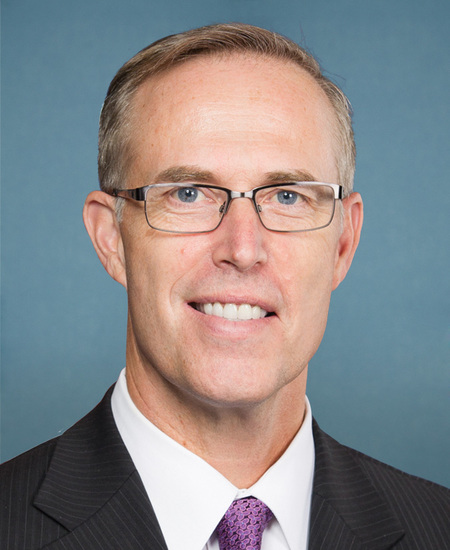
Rep. Jared Huffman
Sponsored bills
Washington, D.C. Admission Act This bill provides for the establishment of the State of Washington, Douglass Commonwealth, and its admission into the United States. The state is composed of most of the territory of the District of Columbia (DC), excluding a specified area that encompasses the U.S. Capitol, the White House, the U.S. Supreme Court building, federal monuments, and federal office buildings adjacent to the National Mall and the U.S. Capitol. The excluded territory shall be known as the Capital and serve as the seat of the government of the United States, as provided for in Article I of the Constitution. The state may not impose taxes on federal property except as Congress permits. The bill provides for the DC Mayor to issue a proclamation for the first elections to Congress of two Senators and one Representative of the state. The bill eliminates the office of Delegate to the House of Representatives. The bill applies current DC laws to the state. DC judicial proceedings and contractual obligations shall continue under the state’s authority. The bill also provides for specified federal obligations to transfer to the state upon its certification that it has funds and laws in place to assume the obligations. These include maintaining a retirement fund for judges and operating public defender services. The bill establishes a commission that is generally comprised of members who are appointed by DC and federal government officials to advise on an orderly transition to statehood.
Maddy summaryThis bill (HR 1555, Public Law 118-211) designates the U.S. Postal Service facility at 2300 Sylvan Avenue in Modesto, California, as the "Corporal Michael D. Anderson Jr. Post Office Building." It directly affects the postal facility and all official references to it, requiring future documents to use the new name. The bill has no policy provisions - its sole purpose is to honor Corporal Michael D. Anderson Jr. through this commemorative naming. It was passed by Congress and signed into law on January 2, 2025.
Maddy summaryThis bill requires the U.S. Secretary of the Interior to study whether Lahaina, Hawaii (specifically the census-designated place in Maui County) should become a National Heritage Area - a federal program recognizing places with significant cultural or historical resources. The study will assess if designating Lahaina as such is suitable and feasible, involving coordination with Maui County, Hawaii state officials, historic preservation groups, and tourism entities. It does not create the heritage area itself but evaluates the potential for future designation. The bill directly affects Lahaina residents, local historic preservation efforts, and tourism stakeholders in the area.
Maddy summaryHR 3324 extends the period for collecting user fees at the Shasta-Trinity Marina from ending in fiscal year 2019 to fiscal year 2029. This amendment to the 2008 appropriations law allows the marina to continue collecting fees without changing current fee amounts or structures. The bill directly affects the marina's revenue stream and its users, who pay the fees for access and services. This extension ensures operational stability for the facility through 2029.
Maddy summaryThis bill, HR 1097 (Everett Alvarez, Jr. Congressional Gold Medal Act of 2023), authorizes the award of a Congressional Gold Medal to Everett Alvarez, Jr., in recognition of his service as a U.S. Navy pilot and Vietnam War prisoner of war. It directly honors Alvarez, who was the first U.S. pilot shot down in the Vietnam War, spent over 8.5 years in captivity, and later served in the Peace Corps and Veterans Administration. The bill’s key mechanism is directing the U.S. Mint to strike a gold medal bearing his name and image, with bronze duplicates available for sale to cover costs. It does not create new policies or affect any group beyond the honoree.
Maddy summaryThe Promoting Accessibility on Federal Lands Act of 2024 requires the Secretaries of Agriculture and the Interior to conduct a comprehensive assessment of accessibility for individuals with disabilities at federal trails, campsites, boat docks, and outdoor recreation facilities on National Forest System lands and public lands. Within 180 days of receiving funding, these assessments must be completed and made publicly available on the Department of Agriculture and Department of the Interior websites. Existing accessibility evaluations conducted before the bill's enactment may be incorporated into the required assessment. This legislation establishes a standardized process to document current accessibility conditions without mandating immediate facility modifications.
Maddy summaryThis bill allows Medicaid programs to enter into value-based purchasing (VBP) arrangements with drug manufacturers for innovative treatments like gene therapies. It codifies these arrangements by requiring states to report pricing structures based on patient outcomes and best prices for drugs sold under these agreements. The bill enables payments to be tied to treatment effectiveness, potentially reducing long-term healthcare costs by decreasing hospitalizations and other medical expenses. It also creates a requirement for a GAO study to evaluate how these arrangements impact patient access, outcomes, and healthcare system costs. The bill will sunset after 5 years, though existing VBP arrangements will continue beyond that date.
Maddy summaryThe Blue Carbon Protection Act establishes a federal program to conserve and restore coastal ecosystems (like mangroves, marshes, and seagrasses) that store carbon long-term, directly affecting these habitats and communities relying on them for flood protection and fisheries. It creates a database of carbon stocks, explores market-based financing like blue carbon credits, and funds a $300 million grant program to protect or restore 1.5 million acres of these ecosystems over 10 years, prioritizing projects benefiting vulnerable communities. The bill designates "blue carbon areas of significance" where federal projects must avoid harming carbon storage, requiring agencies to seek alternatives or implement offsets if impacts occur. It mandates annual reporting on restored acres and carbon storage, with $16 million annually authorized for the program’s implementation.
Maddy summaryThe NO SPILLS Act of 2024 amends the Deepwater Port Act of 1974 to strengthen environmental protections and community engagement requirements for deepwater port projects. It increases financial liability limits for port owners (e.g., raising caps from $22 million to $70 million for certain damages), requires enhanced outreach to impacted communities with 90-day public comment periods, and mandates a programmatic environmental impact statement for all Gulf of Mexico deepwater ports before new licenses can be issued. The bill also prohibits liquefied natural gas research in certain maritime programs and clarifies definitions related to environmental justice communities and impacted communities. These changes directly affect deepwater port owners, coastal communities (especially environmental justice communities), and federal agencies responsible for issuing port licenses.