

Maddy summaryThis bill amends federal labeling rules for beef products sold in the U.S. It requires clear country-of-origin labeling for beef (including ground beef), expanding existing rules that previously covered lamb and venison. The key change increases penalties for non-compliance: $5,000 per pound of beef sold without required labeling, compared to $1,000 per violation for other meats. These rules directly affect meat producers, processors, and retailers selling beef products. The bill also ensures U.S. labeling authority cannot be overridden by international trade rulings.
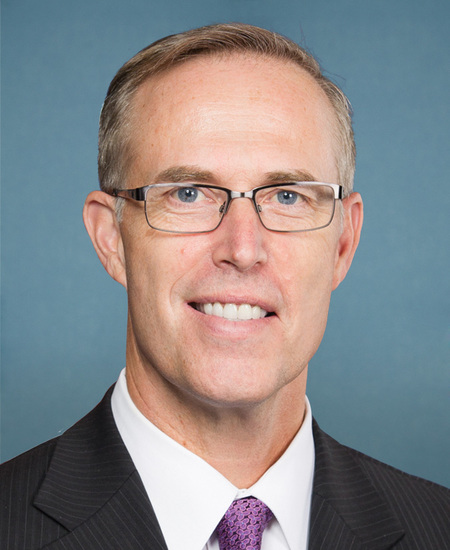
Rep. Jared Huffman
Sponsored bills
Maddy summaryHR 5541, the Every Kid Outdoors Reauthorization Act, expands eligibility for the program to include fifth graders (ages 10-11) and home-schooled learners in that age range, replacing the previous requirement for 10-year-olds. The bill authorizes $25 million annually for the National Park Service to support program operations, promote the initiative to schools and families, provide transportation assistance to financially needy schools and organizations, and conduct targeted outreach to underserved communities and children with disabilities. This reauthorization directly affects fifth-grade students and home-schooled learners aged 10-11, as well as schools and youth organizations participating in the program. The key change is broadening the age group served while maintaining the program's funding structure for operational support and equitable access.
Give Kids a Chance Act of 2025 This bill expands the Food and Drug Administration’s (FDA’s) authority with respect to research on rare pediatric diseases, including by permitting the FDA to take enforcement action against drug sponsors that fail to satisfy pediatric study requirements and by reauthorizing programs that support pediatric research. Specifically, the bill modifies requirements relating to molecularly targeted pediatric cancer investigations to permit research on new drugs in combination with active ingredients that have already been approved, provided certain conditions are met; permits the FDA to take enforcement action against drug sponsors that fail to comply with pediatric study requirements, if such sponsors demonstrated a lack of due diligence in satisfying the requirement; renews the FDA’s authority to award priority review vouchers to sponsors of new products intended to treat rare pediatric diseases through September 30, 2029; and reauthorizes through FY2027 certain funding for the National Institutes of Health to support priority pediatric research. The bill also provides statutory authority for the FDA’s interpretation of the orphan drug exclusivity period. The bill specifies, consistent with FDA regulations, that the seven-year market exclusivity period for drugs for rare diseases or conditions (i.e., orphan drugs) prohibits the approval of the same drug for the same approved use or indication with respect to the disease or condition. (In Catalyst Pharmaceuticals, Inc. v. Becerra , a court rejected the FDA’s interpretation and held that orphan drug exclusivity extends to all uses or indications for the disease or condition.)
Maddy summaryThis bill prohibits federal funding for White House construction or renovations during any government shutdown (funding gap), except for projects directly related to health or safety. It directly affects White House maintenance and development projects by blocking non-essential work when Congress fails to pass a budget. The key provision bans all non-essential spending on White House grounds during budget lapses, with explicit health/safety exceptions. The bill aims to prevent new projects from starting during shutdowns without altering existing contracts or ongoing work.
Maddy summaryHR 5652, the Wildfire Recovery Act, increases federal reimbursement for wildfire response by setting a minimum 75% federal cost share under Section 420 of the Stafford Act, directly benefiting states, local governments, and Tribal governments that deploy firefighting resources. It requires FEMA to develop rules within three years to determine when the federal share could exceed 75% based on a state's financial impact from wildfires. The bill also updates FEMA policy to allow reimbursement for predeployment of fire assets (like crews or equipment) before a fire occurs. These changes aim to provide more predictable and timely federal support for wildfire recovery efforts.
Maddy summaryThe FRESHER Act of 2025 requires the Secretary of the Interior to study stormwater runoff impacts from oil, gas, and mining operations on groundwater and aquifers. It mandates a specific analysis of measurable contamination, groundwater resources, and aquifer susceptibility to contamination in affected areas. The study must be completed within one year of the bill's enactment, with results reported to Congress. This bill directly affects oil, gas, and mining operations by establishing new federal study requirements for their stormwater runoff.
Maddy summaryHRES 906 would change House rules to require a 60% vote of members present and voting to censure, disapprove, or remove any House member, delegate, or resident commissioner from committee assignments. Currently, a simple majority (50%+1) could trigger these actions, but this bill raises the threshold to a supermajority. The change applies directly to all voting members of the House and affects disciplinary procedures for members. This is a procedural rule change that makes it harder to take formal disciplinary actions against House members.
Maddy summaryHRES 899 is a symbolic House resolution recognizing the Transgender Day of Remembrance and memorializing transgender people killed by violence in 2024-2025. It directly affects transgender individuals, particularly transgender women of color, by acknowledging the epidemic of violence against them - citing 27 U.S. victims (including names like Rick Alastor Newman and Kyla Jane Walker) and 241 global cases in 2025. The resolution’s key provisions include formally recognizing the violence epidemic, memorializing specific lives lost, and affirming the need for solutions to protect transgender people. It does not create new laws but expresses congressional support for addressing systemic violence and discrimination faced by transgender communities.
Maddy summaryThe Electricity Transmission Scorecard Act (HR 6176) requires electricity transmission owners and regional grid operators to publicly report on their performance using standardized metrics. It mandates biannual reports from transmission owners (TIAPS) and annual reports from regional grid operators (RIAPS) covering affordability, investment effectiveness, system reliability, interconnection fairness, and other key performance indicators. The bill establishes a framework for transparent, comparable data that would be publicly accessible through a government portal, allowing ratepayers and stakeholders to evaluate transmission service quality. This applies to all entities operating transmission facilities, including those not previously subject to FERC reporting requirements, aiming to improve transparency and accountability in electricity transmission.
Maddy summaryThis bill prevents the Secretary of Commerce from ending cloud storage contracts for NOAA data without meeting specific requirements. It directly affects the Secretary of Commerce and NOAA's data storage contracts with cloud providers. The law requires the Secretary to create a plan for transitioning data to another cloud provider and to work with NOAA's Administrator to maintain continuous data protection. This ensures NOAA's critical environmental and oceanographic data remains accessible and secure during any contract changes.