

Tribal Access to Clean Water Act of 2022 This bill provides funding for and expands access to water resources for Native communities (i.e., Indian tribes and Native Hawaiian communities). First, the bill provides funding for the Indian Health Service to (1) provide essential sanitation facilities to community structures (e.g., schools, hospitals, and tribal offices) that were not previously considered eligible for such service; (2) provide technical assistance; and (3) operate and maintain water facilities that serve Native communities. Next, the bill provides funding for the Department of Agriculture to provide water and wastewater facility grants to eligible entities (e.g., Native communities) that have residents facing significant health risks due to inadequate water supply systems. The bill specifies that these funds shall not require any matching contribution. In addition, the bill reauthorizes through FY2032 the Bureau of Reclamation's Rural Water Supply Program. Further, the bill provides funding for and establishes a grant program for tribal clean water access projects. It also provides funding for the Native American Affairs Technical Assistance Program.
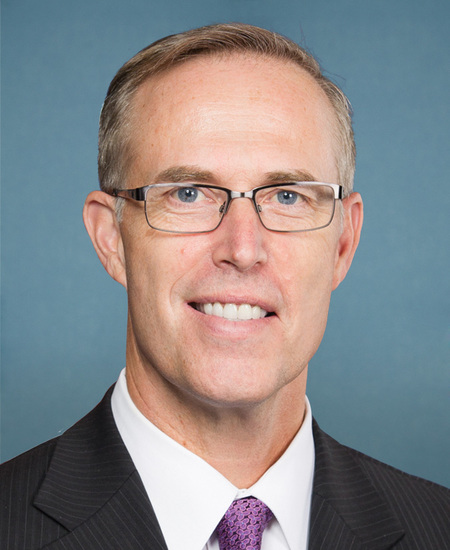
Rep. Jared Huffman
Sponsored bills
WaterSMART Access for Tribes Act This bill allows the Department of the Interior to reduce or waive the nonfederal share of certain grants and agreements for assisting Indian tribes in planning, designing, or constructing any water management improvement or carrying out any water-related activity if the tribe does not have sufficient funds to pay the cost share.
Federal Firefighters Fairness Act of 2022 This bill makes it easier for federally employed firefighters who contract certain illnesses to qualify for federal workers' compensation. Specifically, the bill provides that chronic obstructive pulmonary disease, mesothelioma, and specified other cancers of those employed in fire protection activities for at least five years are presumed to be proximately caused by such employment for purposes of a disability or death claim under the federal workers' compensation program. This presumption also applies to federal employees employed in fire protection activities for at least five years who experience a sudden cardiac event or stroke within 24 hours of performing a fire protection activity. The bill also requires the Department of Labor to conduct a review to determine whether breast cancer, gynecological cancer, and rhabdomyolysis should be included under the presumption and to conduct periodic reviews to determine whether other diseases should be included. In addition, a person may petition Labor to include another disease under the presumption. An employee in fire protection activities is a firefighter, paramedic, emergency medical technician, rescue worker, ambulance personnel, or hazardous material worker who (1) is trained in fire suppression; (2) has the legal authority and responsibility to engage in fire suppression; (3) is engaged in the prevention, control, and extinguishing of fires or response to emergency situations where life, property, or the environment is at risk, including the prevention, control, suppression, or management of wildland fires; and (4) performs such activities as a primary responsibility.
Clean Water Standards for PFAS 2.0 Act of 2022 This bill directs the Environmental Protection Agency to develop requirements to (1) limit the discharge of perfluoroalkyl and polyfluoroalkyl substances (PFAS) into certain waters of the United States, and (2) publish human health water quality criteria for PFAS. PFAS are man-made and may have adverse human health effects. A variety of products contain the compounds, such as nonstick cookware or weatherproof clothing.
Ensuring an Accurate Postal Fleet Electrification Act This bill prohibits the U.S. Postal Service (USPS) from procuring any delivery vehicle under the contract it entered into in February 2021 with Oshkosh Defense until the USPS issues a revised final environmental impact statement.
Supreme Court Ethics, Recusal, and Transparency Act of 2022 This bill provides for the establishment of a code of conduct for Supreme Court Justices, judges of the courts of appeals, judges of the district courts, and judges of the Court of International Trade.
Smith River National Recreation Area Expansion Act This bill expands the Smith River National Recreation Area in California into Oregon and designates specified segments of the North Fork Smith River as components of the National Wild and Scenic Rivers System (NWSRS). The management emphasis for any portion of the recreation area in Oregon shall be on roadless backcountry and white-water recreation. The Department of Agriculture (USDA) shall study the additions to the recreation area, including inventories and assessments of water features (e.g., streams and lakes). USDA shall modify any applicable management plan to protect the resources inventoried. USDA shall seek to enter into a memorandum of understanding with applicable Indian tribes to (1) provide them with access to the portions of the recreation area in Oregon to conduct historical and cultural activities; and (2) develop interpretive information to be provided to the public on the history of, and use of the area by, those tribes. On the adoption of a resolution by the State Land Board of Oregon, USDA shall acquire the 555 acres of land known as the Cedar Creek Parcel in Oregon. A streamside protection zone in which timber harvesting is prohibited (with exceptions) shall be established for each of the designated North Fork Smith River segments.
Benjamin Berell Ferencz Congressional Gold Medal Act This bill provides for the award of a Congressional Gold Medal to Benjamin Berell Ferencz in recognition of his service to the United States and the international community during the post-World War II Nuremberg trials and his lifelong advocacy for international criminal justice and the rule of law.
Roadless Area Conservation Act of 2021 This bill bars the Department of Agriculture from allowing the construction of roads, the reconstruction of roads, or logging in an inventoried roadless area where those activities are prohibited by the Roadless Rule (i.e., certain federal regulations relating to roadless area management).
This resolution extends collective bargaining rights prescribed in the Congressional Accountability Act of 1995 to employees of the House of Representatives.