

Global Malnutrition Prevention and Treatment Act of 2021 This act sets out programs and otherwise directs the U.S. Agency for International Development (USAID) to carry out activities to prevent and treat malnutrition globally. Specifically, USAID may leverage resources to address malnutrition through the Global Nutrition Coordination Plan (an interagency effort to strengthen the impact of U.S. investments in nutrition) and its role on the board of directors of the U.S. International Development Finance Corporation. USAID must also select countries based on specified malnutrition-related indicators for purposes of targeting malnutrition prevention and treatment programs and update the selection within five years. Additionally, USAID may establish the Nutrition Leadership Council to coordinate federal government activities to prevent and treat malnutrition; and target resources and nutrition interventions to the populations most susceptible to severe malnutrition and otherwise support efforts to prevent and treat malnutrition globally. The act also requires USAID to provide to Congress an implementation plan and annual reports concerning its programs for treating and preventing malnutrition. The act's provisions terminate seven years after its enactment.
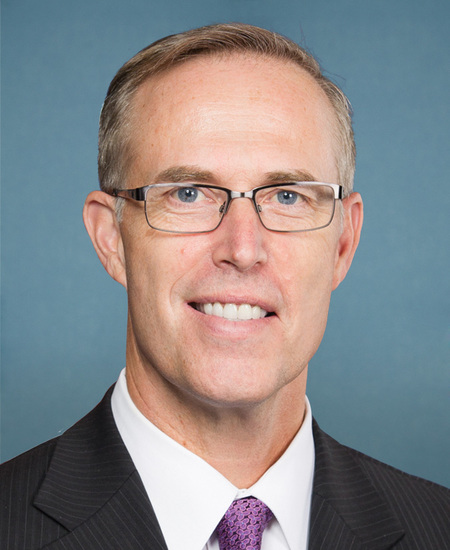
Rep. Jared Huffman
Sponsored bills
This concurrent resolution commemorates the 50th anniversary of the enactment of the Federal Water Pollution Control Act Amendments of 1972, commonly known as the Clean Water Act.
This act designates the outpatient clinic of the Department of Veterans Affairs in Ventura, California, as the Captain Rosemary Bryant Mariner Outpatient Clinic.
Credit Union Board Modernization Act This bill revises the frequency of meetings required to be held by a credit union's board of directors. Specifically, the bill requires monthly meetings for new credit unions during their first five years and for credit unions with a low soundness rating. All other credit unions must hold at least six meetings annually, with at least one meeting held during each fiscal quarter. Currently, all credit union boards must meet at least once a month.
This bill designates the facility of the United States Postal Service located at 1801 Town and Country Drive in Norco, California, as the Lance Corporal Kareem Nikoui Memorial Post Office Building.
Campus Accountability and Safety Act This bill addresses sexual harassment, sexual assault, and other violence and harassment on the campuses of institutions of higher education (IHEs). Among other provisions, the bill (1) requires additional information to be included in the annual campus security report provided to current and prospective students and employees, (2) requires each IHE to establish a campus security policy that meets certain requirements, and (3) authorizes grants to address these issues.
This bill designates the facility of the United States Postal Service located at 3900 Crown Road Southwest in Atlanta, Georgia, as the John R. Lewis Post Office Building.
National Museum of American LGBTQ+ History and Culture Act This bill establishes within the Smithsonian Institution the National Museum of American LGBTQ+ History and Culture. The museum (1) may carry out educational and liaison programs in support of its goals, and (2) shall establish specified grant and scholarship programs.
Non-Recognition of Russian Annexation of Ukrainian Territory Act This bill prohibits any federal agency from taking any action or extending any assistance that recognizes or implies recognition of Russia's sovereignty over any internationally recognized territory of Ukraine, including its airspace and territorial waters.
Reinvesting In Shoreline Economies and Ecosystems Act of 2022 or the RISEE Act of 2022 This bill expands the amount of revenue generated from leases for energy development on federal land or submerged lands in the Outer Continental Shelf that is shared with certain states and coastal communities. For example, the bill dedicates a percentage of the revenue generated from offshore wind leases for coastal states. Currently, this revenue is deposited in the U.S. Treasury. In addition, the bill increases the amount of revenue generated from offshore oil and gas leases that is shared with states under the Gulf of Mexico Energy Security Act. States must use the funding from the revenue for specified purposes, such as coastal restoration, conservation, or infrastructure.