

Maddy summaryHR 926 would require the Supreme Court to establish a code of conduct for justices within 180 days of enactment, along with procedures for handling ethics complaints against them. The bill mandates minimum disclosure standards for gifts, income, and reimbursements received by justices and their law clerks, and requires justices to recuse themselves when they or their family received gifts from parties in a case. It would also require parties and amici curiae to disclose gifts given to justices and lobbying contacts related to justices' nominations, and establish a judicial investigation panel to review complaints against justices. The legislation aims to increase transparency in Supreme Court ethics processes and provide clearer recusal standards for justices.
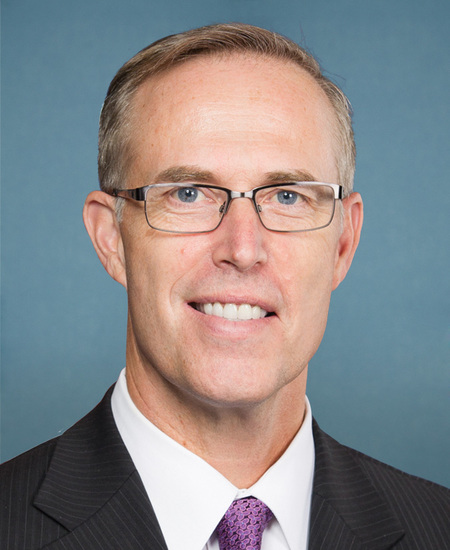
Rep. Jared Huffman
Sponsored bills
Maddy summaryThis bill makes significant changes to US corporate tax rules to prevent tax avoidance through foreign operations. It requires corporations to calculate foreign income tax liabilities country-by-country, limits interest deductions for large international financial reporting groups, and modifies rules for "inverted corporations" (where US companies move tax residence abroad). The bill also creates new rules treating foreign corporations managed primarily in the US as domestic corporations for tax purposes. These changes aim to close tax loopholes related to outsourcing and foreign tax planning.
Maddy summaryHR 932 repeals two key congressional authorizations for military force in Iraq: the 1991 resolution (Public Law 102-1) and the 2002 resolution (Public Law 107-243). This bill removes the legal foundation that has permitted U.S. military operations in Iraq for over two decades. It directly affects the executive branch’s authority to conduct military actions under these specific resolutions, requiring future operations to seek new congressional approval. The repeal is a procedural change that would end the statutory basis for ongoing military engagement in Iraq without altering other laws or policies.
Maddy summaryHRES 110 is a non-binding resolution supporting the designation of "Career and Technical Education (CTE) Month" to recognize CTE's role in preparing students for high-demand careers. It encourages educators, school counselors, and parents to promote CTE as a respected pathway for students seeking credentials in fields like healthcare, technology, and skilled trades. The resolution highlights CTE's benefits, including reducing high school dropout rates and aligning education with workforce needs, without creating new funding or policy changes. It directly affects schools, educators, and students by affirming CTE's value in workforce development.
This resolution condemns the attack against Brazil's government institutions on January 8, 2023. The resolution opposes any attempt to overturn Brazil's 2022 election results and calls for the U.S. government to cooperate with requests for assistance from Brazilian authorities investigating the attack.
Maddy summaryHR 866, the Equal COLA Act, changes how cost-of-living adjustments (COLAs) are calculated for federal retirees under the Federal Employees Retirement System (FERS). It requires that each year's COLA be based on the exact percent change in the price index from the previous year's base quarter, rounded to the nearest 0.1%, effective December 1. This applies to all FERS annuities starting before, on, or after the bill's enactment date, ensuring a standardized calculation method for retirees' annual adjustments.
Maddy summaryThe Better Care Better Jobs Act (HR 547) aims to improve access to home and community-based services (HCBS) for Medicaid beneficiaries by providing states with planning grants and enhanced federal funding. States that develop approved HCBS infrastructure improvement plans will receive a 10 percentage point increase in federal Medicaid funding for HCBS services, with additional incentives for self-directed care programs. The bill requires states to address barriers to access, expand workforce development, improve payment rates for direct care workers, and track demographic data on service utilization. It also establishes quality measurement requirements and mandates regular reporting on progress toward improving HCBS access and quality.
Maddy summaryHR 770, the ESP Family Leave Act, amends the Family and Medical Leave Act (FMLA) to create specific eligibility rules for education support professionals and school support staff in public schools and public higher education institutions. It changes the standard FMLA work-hour requirement (1,250 hours) to a new threshold: these workers qualify if they've worked at least 60% of their expected monthly hours for the previous school year. Employers must maintain records of each employee's expected monthly hours, and the bill defines "education support professionals" to include roles like paraeducators, secretaries, custodians, food service workers, security staff, and health support staff. The bill directly affects these support staff members, making it easier for them to qualify for FMLA leave under the revised hours calculation.
Maddy summaryThis bill clarifies that general sales taxes collected by states or localities cannot be counted as "excise taxes" for federal transportation funding purposes. It amends two sections of transportation law to specifically exclude "State or local general sales taxes" and "generally applicable sales taxes" from requirements meant for special taxes like fuel taxes. The change directly affects states and local governments that apply for federal transportation funds, ensuring those funds are supported by the intended tax sources. The bill makes no new tax rules but prevents states from using broad-based sales tax revenue to meet federal transportation funding criteria.
Maddy summaryHR 715, the Bipartisan Background Checks Act of 2023, requires background checks for all firearm transfers between private individuals, not just those through licensed dealers. It mandates that unlicensed sellers must involve a licensed dealer to conduct a background check before transferring a firearm, with exceptions for family transfers (like spouses or parents/children), law enforcement, temporary safety transfers, and certain hunting or range activities. The bill also requires licensed dealers to provide a notice and certification form in both English and Spanish to buyers. It explicitly states it won't create a national gun registry or override state laws on the same topic. The law would take effect 180 days after enactment.