

Maddy summaryThe Defending American Property Abroad Act of 2025 protects U.S. property interests in Western Hemisphere countries with U.S. free trade agreements. It requires the Secretary of Homeland Security to identify and list ports, harbors, or marine terminals where a foreign government has nationalized, expropriated, or seized U.S.-owned land (since January 2024) through actions like contract repudiation or forced control. Once listed, the President must prohibit vessels using these sites from importing goods, docking passenger vessels, or conducting maintenance in the United States. This directly affects U.S. persons (citizens or businesses) with property in designated locations.
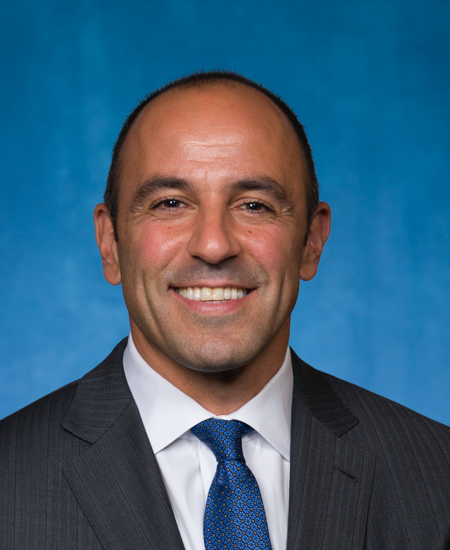
Rep. Jimmy Panetta
Sponsored bills
Maddy summaryThe SUPPLY Act establishes a federal program to insure second loans (additional financing) for building accessory dwelling units (ADUs) on single-family properties. This insurance, administered by the Department of Housing and Urban Development, covers up to 30% of a standard one-unit home loan amount or 100% of the property value after construction (with potential increases based on 50% of projected rental income). Homeowners seeking to add ADUs - such as backyard cottages, converted basements, or detached units - can use this insurance to secure financing, with a government premium of up to 1% annually. The bill also requires Fannie Mae and Freddie Mac to purchase and securitize these insured loans, potentially expanding access to ADU financing.
Maddy summaryThis bill creates new retirement savings credits for small tax-exempt nonprofits (like community centers or charities) that start or maintain retirement plans. It allows these organizations to claim a credit equal to either their calculated credit amount or their payroll taxes paid during the year, whichever is smaller. The credit applies to both startup costs for new plans and auto-enrollment features, capping the credit at the employer's payroll tax liability. The bill takes effect for taxable years after December 2024, with offsetting funds transferred to Social Security Trust Funds to maintain existing revenue streams.
Maddy summaryHR 4482, the Stop NOAA Closures Act, imposes a temporary moratorium on closing, suspending, or limiting access to National Oceanic and Atmospheric Administration (NOAA) facilities, effective until a report is submitted to Congress by January 21, 2029. The bill requires NOAA and the General Services Administration to submit detailed reports to specific congressional committees before any future facility closure, suspension, lease termination, or consolidation - outlining cost-benefit analyses, service impacts, and justification. Exceptions apply only for emergencies posing immediate threats to personnel safety. This bill directly affects NOAA's facility management decisions and mandates congressional oversight for future closures.
Maddy summaryHR 4481, the ARMS Act, modifies the Special Defense Acquisition Fund (SDAF) under the Arms Export Control Act to streamline foreign defense sales. It removes specific language requiring "sales made under" and "actual value" from the fund's authorization, allowing faster processing of defense articles for allied nations. This directly affects defense contractors and U.S. government agencies handling Foreign Military Sales (FMS) and Direct Commercial Sales (DCS), aiming to reduce delivery delays. The bill seeks to strengthen the U.S. defense industrial base by improving the efficiency of selling defense products internationally, where global demand currently exceeds domestic spending by a two-to-one ratio.
Maddy summaryThis bill establishes federal worker heat protection standards to prevent heat-related illness and injury. It requires employers to provide a workplace free from heat stress hazards, including access to cool water, scheduled rest breaks, shaded cooling areas, and training on heat illness symptoms. The Secretary of Labor must create these standards within one year, incorporating evidence-based practices like engineering controls (e.g., ventilation), administrative measures (e.g., adjusted schedules), and employer-paid personal protective equipment. The law directly affects all employers in high-heat work environments - such as construction, agriculture, and manufacturing - and strengthens whistleblower protections for workers reporting safety violations.
Maddy summaryHR 4382 authorizes the U.S. Mint to produce commemorative coins for the 2028 Los Angeles Olympics/Paralympics and 2034 Salt Lake City Winter Olympics/Paralympics. It specifies gold, silver, and half-dollar coin designs with defined mintage limits (e.g., up to 100,000 $5 gold coins for each event), all bearing inscriptions like "2028" or "2034" and standard coin features. A surcharge ($5-$50 per coin) is added to sales, with all funds directed to the respective Olympic committees to support event hosting and legacy programs like youth sports. The bill ensures no net cost to the government by requiring surcharge revenues to cover all design, production, and marketing expenses before funds are disbursed.
Maddy summaryThe AFIDA Improvements Act of 2025 amends the Agricultural Foreign Investment Disclosure Act to require foreign owners with at least a 1% interest in U.S. agricultural land (either directly or through other companies) to report their ownership. It creates new enforcement duties for the Farm Production and Conservation Business Center to validate reported data and ensure compliance with these requirements. The bill also mandates the Secretary of Agriculture to share foreign ownership reports with the Committee on Foreign Investment in the United States and update the Farm Service Agency's handbook on foreign investment disclosures to include recommendations from a 2024 Government Accountability Office report. Additionally, it directs an analysis of an electronic reporting system for these disclosures and requires a report on implementation steps.
Maddy summaryHRES 575 is a symbolic resolution designating July 10th as "Journeyman Lineworkers Recognition Day." It honors lineworkers who face significant risks daily - working at heights near live wires and responding to disasters like hurricanes and wildfires. The resolution specifically references Henry Miller, an early leader of the International Brotherhood of Electrical Workers, who died on July 10, 1896, while troubleshooting an outage. It encourages the public to recognize these workers' contributions but does not create new laws or allocate funding.
Maddy summaryHR 4354 establishes the Agricultural Emergency Relief Act of 2025, creating a new program to provide payments to farmers who suffer crop losses due to specific disasters like droughts, wildfires, floods, or extreme weather. Farmers must apply for payments by documenting "qualified losses" (such as prevented planting, crop quality damage, or wildfire smoke exposure) and agree to purchase Federal Crop Insurance or Noninsured Crop Disaster Assistance coverage for the next two crop years. Payments are calculated based on either past insurance data or farm revenue, with limits set at $125,000-$900,000 per farmer depending on their average farm income level, and capped at 70-90% of documented losses. The program requires the Secretary of Agriculture to administer both insurance-based and revenue-based payment calculations simultaneously during each crop year. This relief applies to eligible producers (excluding joint ventures or general partnerships) who experienced qualifying disasters during the crop year.