

Maddy summaryHRES 723 is a ceremonial resolution recognizing the 180th anniversary of the United States Naval Academy, established on October 10, 2025. It formally commemorates the Academy's founding, historical contributions, and legacy of producing naval and marine leadership. The resolution highlights the Academy's role in educating graduates who have served in major conflicts, earned military honors, and held significant national leadership positions. As a symbolic gesture with no policy changes or direct impact on constituents, it serves solely to honor the institution's history and ongoing mission.
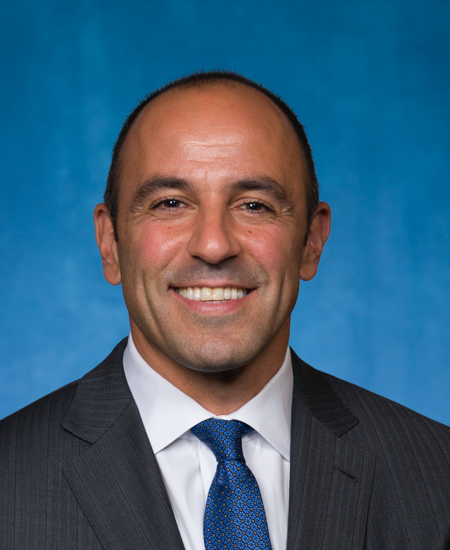
Rep. Jimmy Panetta
Sponsored bills
Maddy summaryHR 5401, the Pay Our Troops Act of 2026, ensures military personnel, civilian Defense workers, and supporting contractors receive pay during government funding gaps in fiscal year 2026. It appropriates emergency funds for active-duty service members, reserves, and their supporting personnel (including Coast Guard staff under DHS) if regular appropriations aren't enacted by the end of the fiscal year. The bill provides necessary pay and allowances during any period when full-year funding is unavailable, covering both active service and support roles. Funding expires when regular appropriations are passed, a funding resolution is enacted, or January 1, 2027, whichever comes first. This is a procedural measure to prevent pay delays for military and support staff during fiscal year 2026 funding lapses.
Maddy summaryHR 5382, the Health CARE Training Act, requires health profession opportunity grant programs to provide participants with training hours matching their state's certification standards (or a comparable amount if no standard exists). It directly affects individuals training for healthcare jobs through these federal grant programs. The bill's key provision excludes cash stipends and emergency assistance paid under these programs from federal income tax, meaning recipients won’t pay taxes on these payments. The training requirement and tax exclusion both take effect on October 1, 2025.
Maddy summaryThe Pathways to Health Careers Act creates federal grants to help low-income individuals (with family income up to 200% of the Federal poverty level) enter health profession careers. It funds training programs that include adult basic education, career coaching, child care, transportation, and legal assistance for people with arrest or conviction records. The bill specifically supports two demonstration projects: one helping individuals with criminal records enter health careers, and another focused on training doulas and midwives for pregnancy, birth, and postpartum care. Programs must provide structured career pathways to recognized health profession credentials and include support services like case management. The bill requires evaluations to assess effectiveness in addressing workforce shortages and improving participant outcomes.
Maddy summaryThe FAMILY Act would establish a national paid family and medical leave insurance program that provides wage replacement benefits for workers needing time off for caregiving or medical reasons. It defines "qualified caregiving" to include caring for a family member with a serious health condition, personal medical needs, or recovery from violence (including domestic violence, sexual assault, or stalking). Benefits would be calculated based on earnings, with a minimum monthly benefit of $580 and maximum of $4,000, administered by a new Office of Paid Family and Medical Leave within the Social Security Administration. Eligible individuals would need to have worked for at least 8 quarters in the previous year and file an application with required documentation, while existing state paid leave programs would continue to operate alongside this federal program.
Maddy summaryHR 3494 authorizes the Department of Veterans Affairs (VA) to purchase or develop a cloud-based inventory management system for medical supplies at VA hospitals. The bill requires a pilot program at one VA facility before full implementation and allocates $50 million in funding for this effort. It mandates that the VA complete the system's implementation across all VA hospitals within three years of the bill's enactment. This legislation directly affects VA medical facilities by changing how they track and manage medical supplies.
Equal COLA Act This bill applies a cost-of-living adjustment (COLA) for annuities paid under the Federal Employees Retirement System that is equal to the increase in inflation, regardless of the amount of the increase. Specifically, for any year in which the Consumer Price Index (CPI) has increased over the previous year, the COLA amount shall be increased by the change in the CPI from the previous year. Current law applies an adjustment equal to the change in CPI only if the change is 2% or less. If the change is between 2% and 3%, the adjustment is limited to 2%. If the change is more than 3%, the adjustment is limited to 1% less than the change.
Maddy summaryHJRES 117 is a joint resolution terminating a national emergency declared by the President on July 30, 2025, under Executive Order 14323. It directly ends the legal authority granted by that emergency declaration, which would have allowed the executive branch to use special powers under the National Emergencies Act (50 U.S.C. 1622). The resolution requires congressional action to formally end the emergency, as mandated by Section 202 of the National Emergencies Act. This is a procedural step affecting federal agencies' emergency powers, not a new policy.
Maddy summaryHRES 716 is a symbolic resolution designating September 15-19, 2025, as "National Clean Energy Week" to raise awareness about clean energy. It encourages voluntary actions like investing in clean energy technologies but does not create new laws, funding, or requirements. The resolution cites the clean energy sector's economic role (noting 8.5 million U.S. jobs in 2024 per the Department of Energy) and applauds national laboratories. As a non-binding gesture, it directly affects no individuals or entities but aims to promote existing clean energy initiatives.
Maddy summaryThis resolution expresses congressional support for designating the week beginning September 14, 2025, as "Celebrate Community Week." It recognizes Kiwanis International, Lions Clubs International, Optimist International, and Rotary International for their community service initiatives. The resolution encourages these organizations to continue promoting community service, particularly for youth development, and acknowledges their existing global volunteer efforts and impact. As a symbolic gesture with no binding policy changes, it has no direct effect on legislation or funding.