

COVID - 19 Hate Crimes Act This bill requires a designated officer or employee of the Department of Justice (DOJ) to facilitate the expedited review of COVID-19 (i.e., coronavirus disease 2019) hate crimes and reports of COVID-19 hate crimes. It defines COVID-19 hate crime as a violent crime that is motivated by two things: (1) the actual or perceived characteristic (e.g., race or ethnicity) of any person, and (2) the actual or perceived relationship to the spread of COVID-19 of any person because of that characteristic. The bill requires DOJ to issue guidance for state and local law enforcement agencies on (1) the establishment of online hate crime reporting processes and the availability of online reporting in multiple languages, and (2) the expansion of culturally competent education campaigns. Additionally, DOJ and the Department of Health and Human Services must issue guidance on best practices for mitigating racially discriminatory language in describing the COVID-19 pandemic.
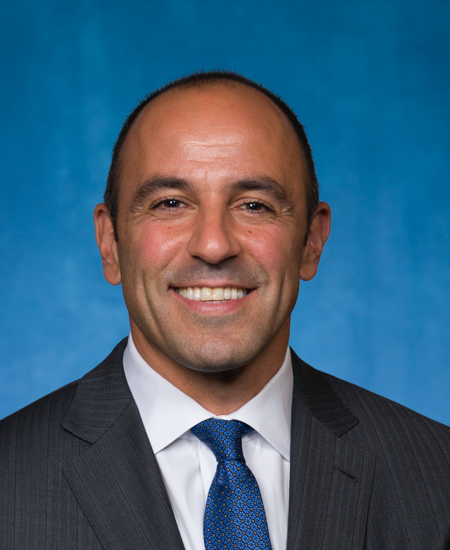
Rep. Jimmy Panetta
Sponsored bills
Farm Workforce Modernization Act of 2021 This bill contains provisions related to alien farmworkers, including provisions establishing a certified agricultural worker (CAW) status and changing the H-2A temporary worker program. The Department of Homeland Security (DHS) may grant CAW status to an applying alien who (1) performed at least 1,035 hours of agricultural labor during the two-year period prior to March 3, 2021; (2) on that date was inadmissible, deportable, or under a grant of deferred enforced departure or temporary protected status; and (3) has been continuously present in the United States from that date until receiving CAW status. The bill imposes additional crime-related inadmissibility grounds on CAW applicants and makes some other grounds inapplicable. CAW status shall be valid for 5.5 years and may be extended. DHS may grant dependent status to the spouse or children of a principal alien. An alien with a pending application may not be detained or removed by DHS and shall be authorized for employment until DHS makes a final decision on the application. A CAW alien (and dependents) may apply for lawful permanent resident status after meeting various requirements, including performing a certain amount of agricultural labor for a number of years. DHS shall create an electronic platform for (1) filing H-2A petitions, (2) facilitating the processing of H-2A cases, and (3) providing agencies a single tool for obtaining H-2A-related case information. The bill makes various changes to the H-2A program, such as (1) modifying the method for calculating and making adjustments to the H-2A worker minimum wage, (2) specifying how an employer may satisfy requirements that it attempted to recruit U.S. workers, (3) requiring H-2A employers to guarantee certain minimum work hours, (4) making the program available for agricultural work that is not temporary or seasonal, and (5) reserving a visa allocation for the dairy industry. DHS shall establish a pilot program allowing certain H-2A workers to apply for portable status, which gives the worker 60 days after leaving a position to secure new employment with a registered H-2A employer. DHS shall establish an electronic system patterned on the E-Verify Program for employers to verify an individual's identity and employment authorization. Employers hiring individuals for agricultural employment must use the system. This bill permanently establishes the Housing Preservation and Revitalization Program, which provides financing assistance for rural rental housing and off-farm labor housing and rental assistance for qualified tenants of such housing. It also authorizes the Department of Agriculture to provide various assistance, including funding for insuring loans and grants for new farmworker housing.
George Floyd Law Enforcement Trust and Integrity Act of 2021 This bill requires the Department of Justice (DOJ) to take specified steps to address accreditation standards, management operations, and misconduct of law enforcement. Specifically, it requires DOJ to develop uniform accreditation standards for law enforcement agencies and adopt policies and procedures to encourage law enforcement agencies to pursue accreditation. It authorizes DOJ to make grants to law enforcement agencies to obtain accreditation from certified organizations. The bill authorizes DOJ to make grants for studying law enforcement agency management and operations standards and developing pilot programs to address law enforcement misconduct. DOJ must study the prevalence and effect of any law, rule, or procedure that allows a law enforcement officer to delay the investigation and prosecution of complaints of law enforcement misconduct. The bill also establishes the Task Force on Law Enforcement Oversight to coordinate the detection and referral of complaints of alleged law enforcement misconduct. Law enforcement agencies must report data regarding practices on traffic violation stops, pedestrian stops, frisk and body searches, and use of deadly force. Finally, DOJ must create a medallion for survivors of each law enforcement officer killed in the line of duty and memorialized on the wall of the National Law Enforcement Officers Memorial.
Cost of Police Misconduct Act of 2021 This bill establishes a framework to collect and publish data on allegations of misconduct by law enforcement officers at the federal, state, and local levels. Specifically, the bill requires federal law enforcement agencies to report data to the Department of Justice (DOJ) about allegations of misconduct by federal law enforcement officers and amounts paid as judgments or settlements with respect to the allegations. State and local law enforcement agencies must report substantially similar data to DOJ to receive a full allocation of funds under the Edward Byrne Memorial Justice Assistance Grant program. The bill directs DOJ to release annual summaries of the data and create and maintain an online database with the reported data. The bill also directs the Government Accountability Office to report on costs and other issues related to law enforcement misconduct.
Non-Opioids Prevent Addiction In the Nation Act or the NOPAIN Act This bill temporarily establishes separate payments for certain non-opioid treatments under the Medicare prospective payment system for hospital outpatient department services and the payment system for ambulatory surgical center services. The bill applies to pain management treatments that are able to replace or reduce opioid consumption, as shown through clinical trials or data.
Behavioral Intervention Guidelines Act of 2021 This bill requires the Department of Health and Human Services (HHS) to develop best practices for establishing behavioral intervention teams in educational settings. These teams, comprised of experts, are responsible for identifying individuals who exhibit concerning behaviors and addressing associated behavioral health issues to prevent harm to the individual or others. HHS must also provide technical assistance on implementing these teams to elementary and secondary schools and institutions of higher education.
Pregnant Workers Fairness Act This bill prohibits employment practices that discriminate against making reasonable accommodations for qualified employees affected by pregnancy, childbirth, or related medical conditions. A qualified employee is an employee or applicant who, with or without reasonable accommodation, can perform the essential functions of the position, with specified exceptions. Specifically, the bill declares that it is an unlawful employment practice to fail to make reasonable accommodations to known limitations of such employees unless the accommodation would impose an undue hardship on an entity's business operation; require a qualified employee affected by such condition to accept an accommodation other than any reasonable accommodation arrived at through an interactive process; deny employment opportunities based on the need of the entity to make such reasonable accommodations to a qualified employee; require such employees to take paid or unpaid leave if another reasonable accommodation can be provided; or take adverse action in terms, conditions, or privileges of employment against a qualified employee requesting or using such reasonable accommodations. The bill sets forth enforcement procedures and remedies that cover different types of employees in relation to such unlawful employment practices. The Equal Employment Opportunity Commission must provide examples of reasonable accommodations that shall be provided to affected employees unless the employer can demonstrate that doing so would impose an undue hardship. The bill prohibits state immunity under the Eleventh Amendment to the Constitution from an action for a violation of this bill.
Teacher, Principal, and Leader Residency Access Act This bill expands the federal work-study programs at institutions of higher education (IHEs) to include work-study programs that compensate students serving in a residency program at the IHE. R esidency program refers to a school-based educator preparation program in which a prospective teacher, principal, or school leader (1) works for one academic year with a mentor teacher, principal, or other school leader; (2) receives concurrent instruction from the IHE; (3) acquires effective teaching or school leader skills; and (4) attains certification or licensure prior to completion of the program.
Metastatic Breast Cancer Access to Care Act This bill expedites payment of Social Security Disability Insurance (SSDI) benefits and eligibility for Medicare coverage for those with metastatic breast cancer (i.e., breast cancer that has spread to other sites in the body). Specifically, the bill eliminates the 5-month waiting period for SSDI benefits and the subsequent 24-month waiting period for Medicare coverage for individuals with metastatic breast cancer. Under current law, individuals generally must wait five months after the onset of disability to begin receiving SSDI benefits and an additional 24 months to become eligible for Medicare.
Fairness for Farm Workers Act This bill extends overtime pay protections to agricultural workers. The bill requires employers, beginning in 2022, to compensate agricultural workers for hours worked in excess of their regular hours (i.e., 55 hours in 2022, 50 hours in 2023, 45 hours in 2024, and 40 hours in 2025) at not less than one and one-half times the employee's regular rate. For employers with 25 or fewer employees, the overtime pay requirements begin in 2025. These overtime pay requirements do not apply, as under current law, to employees who are the parent, spouse, child, or other member of the employer's immediate family. The bill also repeals the exemption from overtime pay requirements for employers in various agriculture-related industries, including certain small farms, irrigation projects, sugar processing, and cotton ginning and compressing.