America's Red Rock Wilderness Act This bill designates specified lands in the following areas of Utah as components of the National Wilderness Preservation System: (1) Great Basin, (2) Grand Staircase-Escalante, (3) Moab-La Sal Canyons, (4) Henry Mountains, (5) Glen Canyon, (6) San Juan-Anasazi, (7) Canyonlands Basin, (8) San Rafael Swell, and (9) Book Cliffs and Uinta Basin. The bill sets forth administrative requirements for (1) the exchange of state-owned lands within such areas, (2) federal reservation of water rights, (3) measurement of setbacks for roads with adjacent wilderness, (4) authorized livestock grazing, and (5) withdrawal of such lands from disposition under certain public land laws.
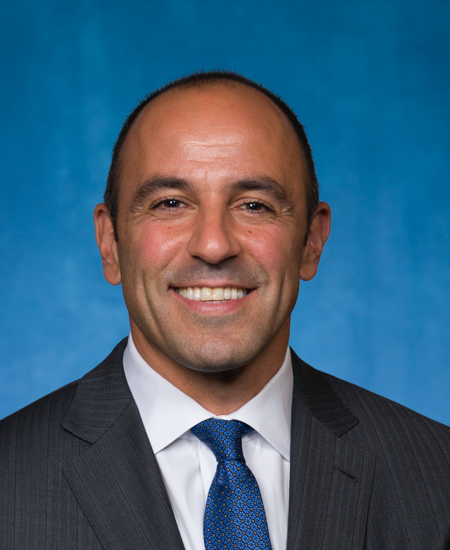
Rep. Jimmy Panetta
Sponsored bills
National Infrastructure Bank Act of 2021 This bill creates the National Infrastructure Bank to facilitate the long-term financing of infrastructure projects. Specifically, the bank must provide loans to public and private entities for financing, developing, or operating eligible infrastructure projects. An eligible project must have a public sponsor as well as local, regional, or national significance. The bill treats the bank as a government corporation exempt from tax and treats contributions to the bank as charitable contributions. The bill also provides for criteria and preferences for deciding whether to provide a loan, such as whether a project promotes job creation or provides environmental benefits. Projects that receive a loan must (1) pay all laborers and mechanics locally prevailing wages, and (2) use only certain U.S.-produced construction materials unless a waiver is secured from the bank. The bank shall issue stock and may also issue bonds and maintain a discount line of credit with the Federal Reserve System. The bank must apply for a national bank charter and, once chartered, accept deposits from individuals, corporations, and public entities and pay interest on those deposits. The bill imposes requirements related to the bank's operation, such as minimum reserve requirements and requirements for handling loan losses. In addition, the bank must facilitate the organization of at least seven regional economic accelerator planning groups to, among other activities, identify infrastructure needs and priorities. Within five years, the Government Accountability Office must report on the bank's activities.

Patriot Retention Act This bill allows a retired service member who has more than 20 years of service, and who possesses a skill for which a critical shortage exists, to serve as a paid member of the Ready Reserve of the Armed Forces and concurrently receive retired pay.
Safe Schools Improvement Act of 2021 This bill requires states to direct their local educational agencies (LEAs) to establish policies that prevent and prohibit bullying and harassment of elementary and secondary school students. In particular, these policies must prohibit bullying and harassment based on race, color, national origin, sex, sexual orientation, gender identity, disability, or religion. Further, LEAs must provide (1) students, parents, and educational professionals with annual notice of the conduct prohibited in their disciplinary policies; (2) students and parents with grievance procedures that target such conduct; and (3) the public with annual data on the incidence and frequency of that conduct at the school and LEA level. The Department of Education must conduct and report on an independent biennial evaluation of programs and policies to combat bullying and harassment in elementary and secondary schools. The National Center for Education Statistics must collect state data to determine the incidence and frequency of the conduct prohibited by LEA disciplinary policies.
Health Career Advancement and Remuneration Exclusion for Training Act or the Health CARE Training Act This bill adds requirements to and otherwise modifies the Health Profession Opportunity Grants program. The program awards grants for demonstration projects to provide Temporary Assistance for Needy Families recipients and other low-income individuals with education and training for health care occupations that pay well and have labor shortages or are in high demand. Specifically, entities administering the projects must provide participants with education and training to obtain a post-secondary credential that meets the standards of the state in which the project is conducted or that meets standards set by the Department of Health and Human Services, as applicable. In addition, the bill expressly excludes cash stipends or emergency assistance paid to project participants from income for federal income tax purposes.
Federal Retirement Fairness Act This bill modifies the federal civilian service that is creditable service under the Federal Employees Retirement System (FERS). Specifically, it expands the nondeduction service that may be creditable under FERS. Nondeduction service is federal service where an employee's pay is not subject to retirement deductions (e.g., service under a temporary appointment). Currently, nondeduction service performed before January 1, 1989, is creditable under FERS so long as a deposit is made into the retirement fund to cover the period of nondeduction service. This bill allows nondeduction service performed on or after January 1, 1989, to be creditable under FERS so long as a deposit is made into the retirement fund.
Fair Repair Act This bill requires an original equipment manufacturer (OEM) to make diagnostic, maintenance, and repair equipment available to independent repair providers. Specifically, for digital electronic equipment sold or used in the United States, an OEM shall make documentation, parts, and tools available to independent repair providers in a timely manner and on fair and reasonable terms. Further, if an OEM has made an express warranty for digital electronic equipment with a wholesale price of $100 or more, the OEM must provide such items at an equitable price and convenience of delivery to enable the repair of the equipment during the warranty period. The bill provides for enforcement of its provisions by the Federal Trade Commission and state attorneys general.
Sgt. Ketchum Rural Veterans Mental Health Act of 2021 This bill requires the Department of Veterans Affairs (VA), during FY2022, to establish and maintain three new centers of the Rural Access Network for Growth Enhancement (RANGE) Program in areas with interest from personnel and a need for additional mental health care for rural veterans. The RANGE Program serves veterans in rural areas who are experiencing mental illness. The bill requires the Government Accountability Office to conduct a study and report on whether the VA has sufficient resources to serve rural veterans who need mental health care that is more intensive than traditional outpatient therapy.
National Climate Service Corps and Careers Network Act of 2021 This bill establishes the Climate Resiliency Service Corps as a national service program to assist communities in mitigating the effects climate change and establishes the Climate Careers Network to connect individuals with jobs in green industries.
United States and Republic of Korea Alliance Support Act This bill prohibits the Department of Defense (DOD) from reducing below 22,000 the number of active-duty service members deployed to South Korea unless DOD makes specified reports and certifications, including that such a reduction is in the interest of national security.