

Disaster Equity and Fairness Act This bill makes changes in the provision of federal disaster assistance to underserved communities and other specified recipients. Underserved community means populations sharing a particular characteristic and geographic communities that have been systematically denied a full opportunity to participate in aspects of economic, social, and civic life. Specifically, the bill increases the federal cost share to a local government or Indian tribal government in connection with a second or subsequent major disaster during any three-year period. The Federal Emergency Management Agency (FEMA) may provide assistance to a state, local government, or Indian tribal government to reimburse the cost of coordinating food delivery, production, and distribution in the event of a major disaster. FEMA must provide direct technical assistance to eligible entities for applications and prioritize specified categories of communities, including underserved communities, those that have demonstrated a compelling need, and those that are exposed to increased hazards or vulnerabilities. The bill increases the federal cost share for a recipient (1) that will use the assistance in, or for the benefit of persons who are members of, an undeserved community; or (2) who is in, or who is a member of, an underserved community.
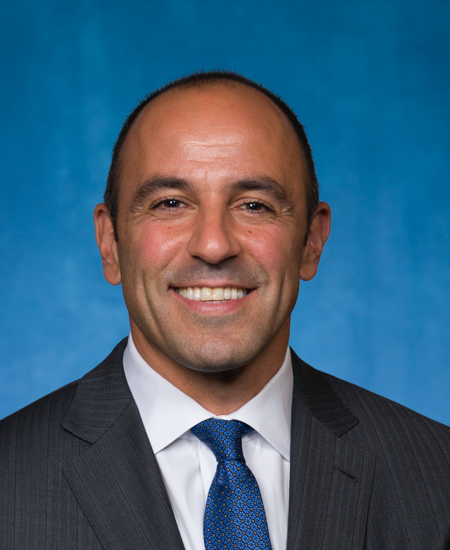
Rep. Jimmy Panetta
Sponsored bills
FEMA Improvement, Reform, and Efficiency Act of 2021 or the FIRE Act This bill addresses the federal government's approach to wildfires. Specifically, the bill authorizes a public mitigation assistance applicant to relocate an eligible structure upon demonstrating that the structure is at risk from future damage and the relocation reduces the risk to the structure, is cost effective, and does not increase risk to adjacent structures. The Federal Emergency Management Agency (FEMA), in coordination with the National Weather Service, must conduct a study on Red Flag Warnings and similar weather and notification methods to implement plans and actions prior to a wildfire that can limit the impact, duration, or severity of the fire. The President must ensure that those providing counseling or case management services to victims of a major disaster are trained to address cultural competency. FEMA must (1) conduct a study and develop a plan to address providing housing assistance to survivors of major disasters or emergencies when presented with challenges such as the lack of proof of ownership, and (2) seek to contract with the National Academy of Sciences to study solutions to address the availability and affordability of insurance for wildfire perils and other related matters. The bill allows Indian tribal governments to apply for grants for equipping, upgrading, and constructing state and local emergency operations centers.
Securing Access for the central Valley and Enhancing (SAVE) Water Resources Act This bill authorizes assistance for water management and infrastructure projects and awards grants for water recycling and reuse projects. The bill (1) establishes the Water Infrastructure and Drought Solutions Fund to finance various water-related projects; (2) modifies the grant program for the funding of water recycling and reuse projects to assign priorities, including to projects that provide a more reliable water supply for states and localities; and (3) reauthorizes through FY2026 the Rural Water Supply Program. In addition, the Department of the Interior must establish a pilot program to provide financial assistance to certain water supply projects that contribute to a safe, adequate water supply for domestic, agricultural, environmental, municipal, or industrial use. The Bureau of Reclamation must award prizes for achievements for certain applications of water technology.
Companion Animal Release from Experiments Act of 2021 or the CARE Act of 2021 This bill requires, as a condition of receiving funding from the National Institutes of Health, entities that carry out animal-based research to establish adoption policies for dogs, cats, and rabbits when they are no longer used for research. It also limits, under certain conditions, an entity's liability related to these adoptions.
Social Security 2100: A Sacred Trust This bill makes changes to Social Security benefits, taxes, and other aspects of the program, including by raising the primary insurance amount, increasing the maximum taxable earnings that are subject to Social Security payroll taxes, and requiring Social Security account statements to be mailed unless the individual recipient opts for electronic delivery.
Wildland Firefighter Fair Pay Act This bill exempts federal wildland firefighters in the Department of the Interior, the Department of Agriculture (USDA), and the Department of Commerce from certain premium pay limitations for work relating to wildfire emergencies. The bill applies retroactively to January 1, 2020. Interior and USDA must each separately submit a report to specified congressional committees on the resources, policies, personnel or structural changes, and other investments necessary to support an expanded full-time, year-round firefighting workforce.
Family Violence Prevention and Services Improvement Act of 20 21 This bill modifies, expands, and reauthorizes through FY2026 the Family Violence and Prevention Services program, which funds emergency shelters and supports related assistance for victims of domestic violence. Specifically, the bill requires the Department of Health and Human Services (HHS) to award grants and enter cooperative agreements with state and tribal domestic violence coalitions, and community-based organizations, to support prevention services. Depending on the type of organization, grant recipients must use funding to (1) provide technical assistance; (2) promote evidence-informed prevention strategies; (3) implement coordinated, community responses to reduce risk factors for family violence; and (4) develop prevention partnership strategies. Further, HHS must award specified grants to organizations that provide population-specific services in underserved communities and to community-based organizations that provide culturally specific domestic violence services to racial and ethnic minority groups. The bill also establishes a grants program for tribal domestic violence coalitions to support the provision of local, tribal, family domestic or dating violence services and requires HHS to award a grant for the administration of a hotline dedicated to serving Indians affected by domestic violence. In addition, the bill modifies certain program-wide definitions; changes the requirements for specified grant applications, eligibility criteria, and use of funds; and makes other technical revisions.
Catastrophic Risk Transfer Act of 2021 or the CART Act This bill establishes a system for the taxation of catastrophic risk transfer companies and their security holders to ensure sufficient capital to cover catastrophic insurance losses. The bill defines catastrophic risk as a risk of loss that has a low likelihood of occurring but that would be large in amount. The bill defines catastrophic risk transfer company as any domestic corporation created and regulated under state law with the purpose of entering into one or more insurance or reinsurance agreements covering catastrophic risk.
Public Service Freedom to Negotiate Act of 20 21 This bill provides minimum collective bargaining rights and procedures for public employees and prohibits strikes by certain public safety workers. The Federal Labor Relations Authority (FLRA) shall determine for each state whether the laws of such state substantially provide for each of the minimum standard collective bargaining rights and procedures specified by this bill, including the right of public employees and supervisory employees to self-organize, form or join a labor organization, or collectively bargain. The FLRA must issue rules and take actions to establish and administer bargaining rights and procedures for those states that do not substantially provide for them. No employers, emergency services employees, or law enforcement officers may engage in a lockout, strike, or any other organized job action that is likely to result in a measurable disruption of the delivery of emergency or public safety services. Furthermore, no labor organization may be the cause of a violation of such prohibition.
State, Local, Tribal, and Territorial Fiscal Recovery, Infrastructure, and Disaster Relief Flexibility Act This bill allows states, tribes, territories, and localities to use certain COVID-19 relief funds for new categories of spending, including for natural disasters and infrastructure projects. It also makes changes to expenditure deadlines and other aspects of this funding. Specifically, recipients may use funds for emergency relief from natural disasters and associated negative economic impacts of natural disasters. In addition, recipients may use a portion of their COVID-19 relief funds for designated infrastructure projects, such as nationally significant freight and highway projects. Furthermore, the bill allows recipients to expend COVID-19 relief funds on these types of infrastructure projects until September 30, 2026. Under current law, recipients must expend the funds by December 31, 2024. Other changes in the bill include (1) modifying eligibility and allocation requirements for funding set aside for counties and Indian tribes that are near public lands, (2) allowing Indian tribes an additional year to expend their COVID-19 relief funds, and (3) establishing a process for government entities to decline COVID-19 relief funds and requiring any declined funds to be used to reduce the federal deficit.