

Gas Prices Relief Act of 2022 This bill provides for a temporary exemption through 2022 from the excise tax on gasoline (other than aviation gasoline) and from the Leaking Underground Storage Tank Trust Fund financing rate. The Department of the Treasury must transfer from the general fund to the Highway Trust Fund and the Leaking Underground Storage Tank Trust Fund amounts resulting from the exemption provided by this bill. The bill also expresses congressional policy that consumers immediately receive the benefit of this exemption.
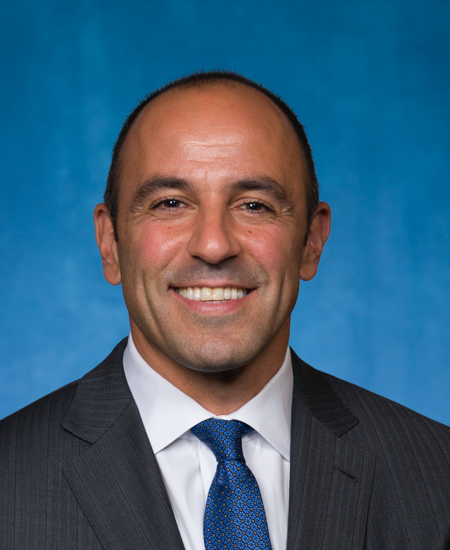
Rep. Jimmy Panetta
Sponsored bills
This resolution extends collective bargaining rights prescribed in the Congressional Accountability Act of 1995 to employees of the House of Representatives.
Designates the facility of the United States Postal Service located at 120 4th Street in Petaluma, California, as the "Lynn C. Woolsey Post Office Building."
This joint resolution honors the contributions of school counselors to the success of students in elementary and secondary schools. The resolution encourages the observation of National School Counseling Week with ceremonies and activities that promote awareness of the crucial role school counselors play in preparing students for fulfilling lives as contributing members of society.
Transatlantic Legislators' Dialogue Act This bill establishes a delegation of up to 24 Members of Congress to periodically meet with European Parliament representatives to discuss issues of interest to the United States and the European Union.
Keeping School Meals Flexible Act This bill extends authority through June 30, 2023, for the Department of Agriculture (USDA) to waive certain requirements for the school meal programs to address COVID-19. The bill extends the authority for USDA to issue a single waiver of child nutrition program requirements to all states under the National School Lunch Program for purposes of providing meals and snacks with appropriate safety measures with respect to COVID-19; grant waivers of requirements to allow non-congregate feeding in the Child and Adult Care Food Program for purposes of providing meals and snacks with appropriate safety measures with respect to COVID-19; and grant waivers related to the nutritional content of meals served in child nutrition programs if it determines the waiver is necessary to provide meals and snacks, and there is a food supply chain disruption due to COVID-19.
Stop the Wait Act of 2022 This bill allows individuals with disabilities to begin receiving Social Security Disability Insurance (SSDI) benefits in the month they become eligible for the benefits. It also allows these individuals to immediately enroll in Medicare if they cannot afford minimum essential coverage. (Under current law, an individual must generally wait 5 months after the onset of disability to begin receiving SSDI benefits and an additional 24 months to become eligible for Medicare.)
Diverse and Equitable Participation in Clinical Trials Act or the DEPICT Act This bill requires applications for an investigational use exemption of a new drug or medical device to include information about the demographic diversity of the clinical trial population and addresses related issues. (Generally, a developer of a new drug or device may seek an investigational use exemption to facilitate clinical investigations, as part of the process to obtain approval to sell that drug or device.) Specifically, the Food and Drug Administration (FDA) must issue regulations to require applications for such exemptions to include certain information, including (1) demographic data disaggregated by subgroup, where such data is available, about the expected or potential patient population; (2) the applicant's enrollment targets for the clinical trials involved, disaggregated by age group, sex, race, and ethnicity; (3) a diversity plan for how the applicant will meet these targets; and (4) what is known about the patient population, such as comorbidities. The regulations must also require certain applicant reports to the FDA to address issues related to demographic diversity in clinical trials and product safety and effectiveness for demographic subgroups. The bill also authorizes the FDA to, in certain instances, require additional studies or surveillance after a drug or device has been approved if the clinical trials used in the application process did not meet the demographic enrollment targets.
Office of Technology Assessment Improvement and Enhancement Act This bill renames and revises the functions and duties of the Office of Technology Assessment which, composed of a Technology Assessment Board and a director, provides Congress with assessments of probable technology application impacts. Specifically, the bill renames the office the Congressional Office of Technology, and it requires the office to undertake additional duties, such as providing to Members of Congress (1) certain information without the need for board review, (2) certain technical assistance on legislation related to science and technology without the need for board review, and (3) objective policy options on how Members may achieve goals with respect to science and technology policy. The bill authorizes individual Members of Congress to submit to the board a request that the office undertake an assessment activity. Additionally, the bill requires the Congressional Research Service and the Government Accountability Office to coordinate technology assessment activities with the office to avoid duplication or overlapping of research activities. The bill also (1) allows the office to temporarily appoint specified technical and professional personnel to work for the office, (2) requires the office to make the findings of completed analyses publicly available, (3) revises the appointment of board members, (4) requires the board to hold an annual meeting at which Members of Congress may appear and present information regarding technology assessment activities, and (5) requires the board to report annually on the activities of the office.
Hear our Heroes Act of 2022 This bill provides a presumption of service-connection for hearing-related issues in certain veterans for purposes of wartime disability compensation. Under a presumption of service-connection, specific conditions diagnosed in certain veterans are presumed to have been caused by the circumstances of their military service. Health care benefits and disability compensation may then be awarded. Per the bill, certain veterans with diagnosed hearing loss, tinnitus, or both shall be presumed to have incurred or aggravated such conditions during active military, naval, or air service. This bill applies to veterans who (1) served in combat, or (2) were assigned to a military occupational specialty that likely exposed them to a sufficiently high level of acoustic trauma. The bill also requires the Department of Veterans Affairs to adjust the schedule of rating disabilities to establish a minimum disability rating for a veteran who requires a hearing aid because of a service-connected disability.