

Broadband Grant Tax Treatment Act This bill excludes from gross income, for income tax purposes, certain broadband grants made for broadband deployment.
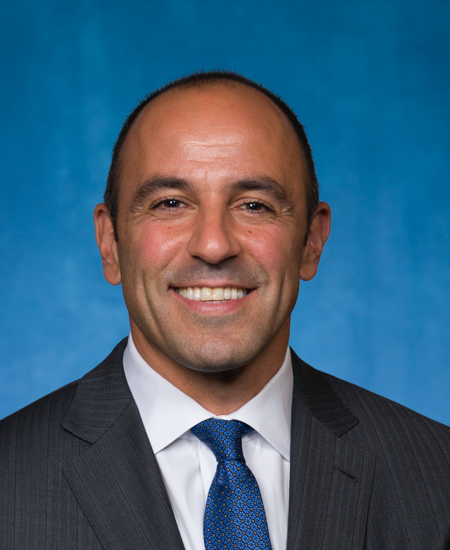
Rep. Jimmy Panetta
Sponsored bills
Coral Reef Sustainability Through Innovation Act of 2022 This bill authorizes the federal agencies on the U.S. Coral Reef Task Force, which includes the National Oceanic and Atmospheric Administration, to carry out prize competitions that promote coral reef research and conservation. The prize competitions must be designed to help the United States achieve its goal of developing new and effective ways to advance the understanding, monitoring, and sustainability of coral reef ecosystems. Priority is given to establish programs that address communities, environments, or industries that are in distress due to the decline or degradation of coral reef ecosystems.
Veteran Service Recognition Act of 2022 This bill addresses immigration-related issues pertaining to noncitizen (or non-U.S. national) military veterans, including by authorizing the Department of Homeland Security (DHS) to provide lawful permanent resident status to a veteran subject to removal. If a noncitizen veteran appears to be eligible for lawful permanent resident status under this bill, that veteran must receive a reasonable opportunity to apply for such status and may not be removed until there is a final administrative decision on the veteran's eligibility. For the purposes of providing such status under this bill, DHS may waive any applicable grounds of inadmissibility, except for certain crime- or security-related grounds. The bill also extends certain deadlines relating to obtaining citizenship after serving in the Armed Forces. DHS must create a system for identifying noncitizens who are or may be veterans. Before initiating removal proceedings against a noncitizen, DHS must attempt to determine whether the noncitizen is a veteran. DHS must ensure that veteran status is considered in immigration proceedings. The bill also requires U.S. Citizenship and Immigration Services (USCIS) and the Department of Defense to take certain actions to facilitate opportunities for military recruits and veterans to obtain U.S. citizenship, such as by training Judge Advocate General Corps members to act as liaisons between the Armed Forces and USCIS on servicemember citizenship applications. The bill also establishes the Military Family Immigration Advisory Committee to provide recommendations on cases involving the removal of a servicemember, veteran, or certain family members of a servicemember or veteran. Such an individual may not be removed until the committee has provided a recommendation to DHS about the individual's case, unless the individual is inadmissible due to a conviction for an aggravated felony. The bill also waives certain grounds of inadmissibility (e.g., being unlawfully present in the United States) for certain noncitizens applying for lawful permanent resident status as an immediate relative of a U.S. citizen who has served at least two years in the Armed Forces.
Designates the facility of the United States Postal Service located at 6444 San Fernando Road in Glendale, California, as the "Paul Ignatius Post Office."
Sustainable Cardiopulmonary Rehabilitation Services in the Home Act This bill permanently allows services relating to cardiac rehabilitation programs, intensive cardiac rehabilitation programs, and pulmonary rehabilitation programs to be furnished via telehealth at a beneficiary's home under Medicare.
The Jackie Walorski Maternal and Child Home Visiting Reauthorization Act of 2022 This bill reauthorizes through FY2027, increases funding for, and modifies the Maternal, Infant, and Early Childhood Home Visiting Program. This program supports home visits for expectant and new parents who live in communities that are at-risk for poor maternal and child health outcomes. Changes to the program include setting out requirements for allocating program funds; increasing the percentage of funds reserved for tribal entities; establishing a publicly available dashboard that reports program outcomes; requiring activities to reduce unnecessary data collection, reporting, and other administrative requirements of the program; and allowing for virtual home visits (provided certain conditions are met). The bill also reduces funding for the Medicare Improvement Fund.
Commitment to Veteran Support and Outreach Act This bill authorizes the Department of Veterans Affairs (VA) to provide grants to states and Indian tribes to implement programs that improve outreach and assistance to veterans and their families to ensure that such individuals are fully informed about veterans' benefits and programs. Specifically, the VA may provide grants to states and tribes to (1) implement or enhance outreach activities; (2) increase the number of county or tribal veterans service officers in the state or tribe; or (3) expand, implement, or otherwise enhance existing programs and services of the existing state or tribal organization that is recognized by the VA in the preparation, presentation, and prosecution of claims for veterans benefits through representatives who hold positions as county or tribal veterans service officers. The VA must prioritize awarding grants in areas with a critical shortage of county or tribal veterans service officers, areas with high rates of suicide among veterans, and areas with high rates of referrals to the Veterans Crisis Line. The bill also extends certain loan fee rates through February 10, 2031, under the VA's home loan program. During FY2024-FY2028, the VA is authorized to hire two or more additional full-time equivalent employees in the VA's Office of General Counsel to carry out duties under the accreditation, discipline, and fees program.
Protecting Communities from Plastics Act This bill sets forth a variety of requirements and incentives to reduce the production and use of plastics and other petrochemicals, including by directing the Environmental Protection Agency to place a temporary pause on certain new permits for petrochemical facilities under the Clean Air Act and the Clean Water Act.
Maddy summaryThis bill changes the service requirement for military members to transfer unused Post-9/11 GI Bill educational benefits to family members. Currently, service members need 10 years of service to transfer benefits, but this bill would raise that requirement to 12 years. It directly affects active-duty service members with at least 12 years of service and their eligible family members who would gain access to transferred education benefits. The key change is the increased service threshold for eligibility under Section 3319(b) of Title 38, United States Code.
Supporting Market Access to Reinvigorate Trade Act of 2022 or the SMART Act This bill increases through FY2029 funding to carry out the Market Access Program and the Foreign Market Development Cooperator Program, which are programs administered by the Department of Agriculture to promote exports of U.S. agricultural products.