Maddy summaryHR 3220 establishes a "quantum sandbox" program to accelerate near-term quantum technology applications. The bill requires the Commerce Secretary, working with NIST, to create a public-private partnership focused on developing and testing quantum computing, communication, and sensing solutions that can be deployed within 24 months. This program will engage industry groups, national labs, and research centers to break down barriers to accessing quantum hardware for practical uses. The goal is to deliver tangible benefits to U.S. businesses and consumers through faster innovation in quantum applications.
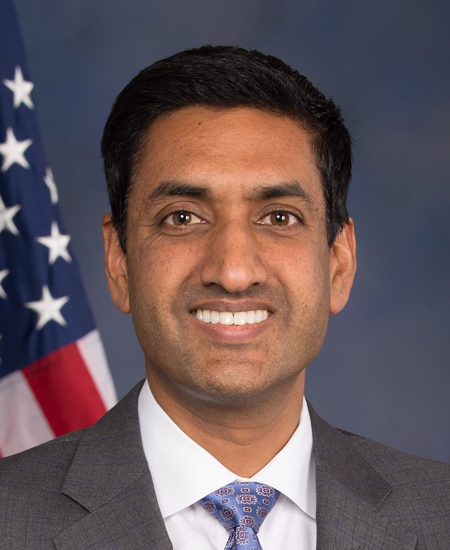
Rep. Ro Khanna
Sponsored bills
Maddy summaryHR 3184, the PFAS Alternatives Act, funds research to develop turnout gear (firefighter safety clothing) without harmful PFAS chemicals, directly affecting firefighters who wear this gear. It authorizes $25 million annually (2025-2029) for grants to eligible organizations to research and test PFAS-free gear, requiring partnerships with firefighting groups to translate findings into practice. The bill also allocates $2 million yearly (2027-2031) for training programs on safe gear use and decontamination. Its goal is to reduce firefighters' exposure to chemicals linked to occupational illnesses during operations.
Maddy summaryHRES 383 is a symbolic resolution expressing congressional support for designating May 4-10, 2025, as Wildfire Preparedness Week. It aims to raise public awareness about wildfire safety and preparedness through educational initiatives, encouraging communities to adopt preventive measures like evacuation planning and reducing human-caused ignitions. The resolution does not create new laws, allocate funds, or directly affect any specific group - it solely promotes awareness of existing wildfire safety practices. It references wildfire statistics and safety strategies but only formally recognizes the week without implementing policy changes.
Maddy summaryHR 3204, the BASIC ACT, increases tax incentives for semiconductor manufacturing. It raises the advanced manufacturing investment credit from 25% to 35% for qualifying semiconductor production facilities and extends the deadline for claiming the credit from 2026 to 2030. The bill directly affects companies building or expanding semiconductor manufacturing plants in the U.S. The changes apply to property placed in service after the bill's enactment date. This provides longer-term financial support for domestic semiconductor investment.
Maddy summary# Summary of the SHIPS for America Act This comprehensive legislation focuses on strengthening the U.S. maritime industry, shipbuilding capacity, and maritime workforce to enhance national security and economic competitiveness. ## Key Areas of Focus 1. **Shipbuilding & Maritime Infrastructure** - Establishes a United States Center for Maritime Innovation to accelerate adoption of commercial technologies - Creates a National Shipbuilding Research Program - Requires an annual survey of anticipated commercial vessel construction - Includes provisions for streamlined environmental reviews of maritime infrastructure 2. **Workforce Development** - Establishes the United States Merchant Marine Career Retention Program to maintain mariner qualifications - Creates Centers of Excellence for Domestic Maritime Workforce Training and Education - Implements military-to-maritime transition programs - Establishes a Maritime Career and Technical Education Advisory Committee 3. **Education & Training** - Expands educational assistance for merchant mariners - Creates eligibility for Naval Postgraduate School for merchant mariners - Establishes maritime education programs from K-12 through higher education - Provides for international exchanges for mariners and naval architects 4. **National Security & Strategic Readiness** - Requires reports on National Defense Reserve Fleet utilization - Includes measures to de-risk the maritime sector from Chinese influence - Enhances shipbuilding capacity for national security needs - Establishes programs to ensure sufficient mariner workforce for national defense 5. **Funding Mechanisms** - Authorizes appropriations from the Maritime Security Trust Fund - Includes funding for workforce programs, education, and shipbuilding initiatives - Establishes specific funding levels for various programs over multiple fiscal years The legislation aims to create a sustainable domestic maritime industrial base that supports both commercial shipping and national defense requirements, with a particular emphasis on developing and retaining a skilled U.S. maritime workforce.

Maddy summaryHRES 366 is a non-binding resolution recognizing the 50th anniversary of the Fall of Saigon on April 30, 1975, known as Black April in Vietnamese history. It honors the Vietnamese American community - now over 2.3 million strong - who resettled in the U.S. after 1975 and have contributed to American society through diverse fields like public service and business. The resolution commemorates the service of U.S. and South Vietnamese military personnel during the Vietnam War and reaffirms U.S. support for democracy and human rights in Vietnam. As a symbolic gesture, it does not create new laws but encourages public observance of this historical event and the community's resilience.
Maddy summaryThis resolution requests the President to provide unredacted documents within 14 days about government use of electronic communication platforms like Signal, WhatsApp, and Slack for official communications. It specifically seeks information on how the administration preserves national security communications sent via these platforms and ensures compliance with federal recordkeeping laws. The resolution targets communications containing highly sensitive national security information, whether sent on government or personal devices. It does not change policy but seeks transparency regarding current practices.
Maddy summaryHRES 286 is a non-binding House resolution (not a law) requesting the President to provide specific documents about a fictional "United States DOGE Service" and its AI use. It asks for records related to AI deployments at federal agencies since January 2025, including data sources, personnel involved in decisions, and analyses of potential program cuts, all framed around alleged violations of privacy laws and transparency requirements. The resolution specifically targets documents concerning "Elon Musk or an individual associated with the United States DOGE Service," which does not exist as a government entity. This is a procedural request for information, not a policy change, and references fictional elements (e.g., "Trump Administration" in 2025).
Maddy summaryThis resolution (HRES 264) requests the President to provide the House of Representatives with unredacted documents about security clearances held by specific individuals, including Elon Musk and six others (Akash Bobba, Edward Coristine, Ethan Shaotran, Luke Farritor, Gautier Cole Killian, and Gavin Kliger). It specifically targets documents related to security clearances for people associated with the "United States Department of Government Efficiency Service" (referred to as "DOGE" in the bill). The request requires the President to submit all relevant communications and background investigations within 14 days of the resolution's adoption. This is a procedural inquiry resolution, not a policy bill, and references fictional government entities (DOGE is not a real agency).
Maddy summaryThe Vietnam Human Rights Act would impose sanctions on Vietnamese officials responsible for human rights abuses, including arbitrary detention, torture, corruption, and internet censorship. It requires U.S. companies to report when pressured by Vietnam to censor content or disclose personal information of users. The bill mandates annual reports on U.S.-Vietnam human rights dialogues and includes provisions to promote internet freedom and religious freedom. These measures directly affect Vietnamese government officials, U.S. companies operating in Vietnam, and U.S. diplomatic engagement with Vietnam.