

Maddy summaryHR 4621, the 320th Barrage Balloon Battalion Gold Medal Act, authorizes a single gold medal to honor the 320th Barrage Balloon Battalion - a segregated African-American unit that served during the D-Day invasion in World War II. The medal, struck by the U.S. Mint, will be presented by Congress and displayed at the Smithsonian Institution, with bronze duplicates available for sale to cover costs. The bill recognizes the unit’s role in deploying barrage balloons to protect Allied troops from air attacks on Omaha Beach and their overall contributions to the D-Day success. It does not create new laws or affect any policies, as it is purely a commemorative gesture for historical recognition.
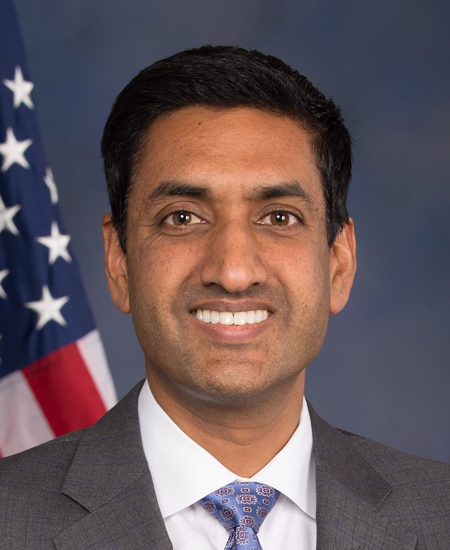
Rep. Ro Khanna
Sponsored bills
Maddy summaryHR 4140, the Burma GAP Act, requires the U.S. to prioritize accountability for genocide and crimes against humanity committed against Rohingya in Myanmar. It establishes a U.S. Special Representative for Burma to coordinate international sanctions, support Rohingya protection efforts, and advance transitional justice, with specific funding authorizations of $5 million annually for atrocity investigations and $4 million for evidence collection. The bill directs the State Department to support Rohingya refugees in Bangladesh through humanitarian aid, gender-based violence prevention, education, and legal assistance, while promoting durable solutions like safe repatriation and citizenship rights. It mandates annual reports to Congress on U.S. efforts to address atrocity risks, document crimes, and advance accountability, directly affecting Rohingya communities, the Burmese military junta, and U.S. foreign assistance programs.
Maddy summaryThe Price Gouging Prevention Act of 2025 prohibits selling goods or services at grossly excessive prices during exceptional market shocks like natural disasters, energy shortages, or public health emergencies. It creates a presumption of violation when companies with "unfair leverage" (revenue over $1 billion, dominant market position, or other factors) increase prices beyond normal market fluctuations. The law requires public companies to disclose detailed pricing information in SEC filings during these emergencies, including explanations for price increases and how costs affected pricing. The Federal Trade Commission and state attorneys general would enforce the law, with civil penalties up to 5% of a company's revenue for violations. The bill also appropriates $1 billion to fund FTC enforcement efforts.
Maddy summaryHCONRES 44 is a symbolic resolution recognizing a health and safety emergency for children linked to the Trump administration's climate policies. It claims these policies - unleashing fossil fuel production, blocking renewable energy, and suppressing climate science - disproportionately harm children through increased air pollution, extreme weather, and denied access to climate data. The resolution calls for reversing these policies, restoring the EPA's mission, and ensuring climate action aligns with protecting children's rights. It does not enact new laws or change policy, but serves as a formal congressional statement of concern.
Maddy summaryThis bill would require cosmetic suppliers to provide brand owners with detailed safety information about ingredients, including environmental and health hazards, chemical properties, and testing results. It creates a new FDA list of "nonfunctional constituents" (chemicals with no purpose in the product but potentially harmful to health or the environment) and mandates testing for these substances. Suppliers must provide certificates of analysis showing levels of these substances before selling to brand owners. The bill also establishes recordkeeping requirements for the entire cosmetic supply chain to facilitate recalls or investigations. These requirements apply to cosmetic manufacturers, suppliers, and brand owners, with the FDA responsible for implementation and enforcement.
Maddy summaryThis bill would fund research into health impacts from chemicals in cosmetics used by communities of color and professional salon workers, with $7.5 million allocated for each research area. It requires cosmetic manufacturers to provide safety data sheets in multiple languages (English, Spanish, Vietnamese, Chinese, Korean) for salon products containing hazardous chemicals. The bill establishes two national resource centers to provide education, training, and culturally appropriate materials about safer cosmetic choices for underserved populations. It also regulates synthetic braids as cosmetics under FDA safety standards, requiring warning labels if safety standards aren't met.
Maddy summaryThis bill would require cosmetic brand owners to disclose all ingredients, including fragrances and flavors, on their websites and product packaging. Starting 1 year after enactment, brand owners must list all ingredients in descending order on their websites, including the functional purpose of fragrance ingredients. By 2 years after enactment, product packaging must list all ingredients and include a link to health information for products containing certain hazardous chemicals identified in EPA, California, EU, and other official lists. The bill creates a master list of hazardous chemicals that the Food and Drug Administration must maintain and update, which would be publicly available. This affects all cosmetic manufacturers and brand owners selling products in interstate commerce, giving consumers more transparency about potentially harmful ingredients.
Maddy summaryThis bill prohibits U.S. Immigration and Customs Enforcement (ICE) from using federal funds to detain or transport U.S. citizens during civil immigration enforcement actions. It directly affects ICE operations by blocking funding for any activity that would hold or move citizens outside the U.S. under immigration laws. The key mechanism is a specific funding restriction in the bill text, stating no funds may be used for detaining or transporting citizens. This applies to all civil immigration enforcement activities defined under the Immigration and Nationality Act. The bill does not create new enforcement powers but limits how existing funds can be spent.
Maddy summaryThe Toxic-Free Beauty Act of 2025 bans 15 specific harmful chemicals and contaminants in cosmetic products, directly affecting manufacturers and retailers selling cosmetics in the U.S. market. It prohibits ingredients like formaldehyde, mercury, certain parabens, phthalates, and triclosan, while setting strict limits for contaminants such as lead and 1,4-dioxane in products. The law includes a non-preemption clause allowing states to maintain or enforce stricter rules than federal standards, and the ban will take effect for products introduced into interstate commerce starting January 1, 2027. This legislation aims to reduce consumer exposure to chemicals linked to health risks by defining key terms like "contaminant" and "intentionally added ingredient."
Maddy summaryThis bill establishes federal worker heat protection standards to prevent heat-related illness and injury. It requires employers to provide a workplace free from heat stress hazards, including access to cool water, scheduled rest breaks, shaded cooling areas, and training on heat illness symptoms. The Secretary of Labor must create these standards within one year, incorporating evidence-based practices like engineering controls (e.g., ventilation), administrative measures (e.g., adjusted schedules), and employer-paid personal protective equipment. The law directly affects all employers in high-heat work environments - such as construction, agriculture, and manufacturing - and strengthens whistleblower protections for workers reporting safety violations.