

This resolution extends collective bargaining rights prescribed in the Congressional Accountability Act of 1995 to employees of the House of Representatives.
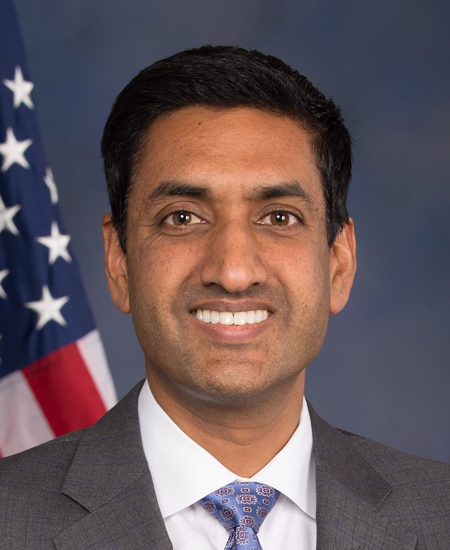
Rep. Ro Khanna
Sponsored bills
This resolution condemns the military coup that took place in Burma (Myanmar) on February 1, 2021. The resolution denounces the Tatmadaw (the military of Burma) for perpetrating gross violations of human rights as part of its brutal campaign to suppress the democratic aspirations of the people of Burma and calls on the Tatmadaw to cease all violence against prodemocracy activists and reach a cease-fire with ethnic armed organizations, release all political prisoners, and engage in constructive dialogue with all parties to negotiate a pathway toward a government that reflects the will of the Burmese people. The resolution also calls on the President to enact new targeted sanctions on individuals and entities affiliated with the Tatmadaw, including an international arms embargo and a prohibition on the sale of aviation fuel.
First Rhode Island Regiment Congressional Gold Medal Act This bill provides for the award of a single Congressional Gold Medal to the First Rhode Island Regiment, collectively, in recognition of their dedicated service during the Revolutionary War.
Global Respect Act This bill imposes visa-blocking sanctions on foreign persons responsible for or complicit in violating the human rights of individuals due to actual or perceived sexual orientation, gender identity, or sex characteristics. The President must report and periodically update a list of foreign persons responsible for such human rights violations and apply sanctions accordingly. The Department of State must designate at least one senior officer who shall be responsible for tracking violence and discrimination against individuals based on actual or perceived sexual orientation, gender identity, or sex characteristics in foreign countries.
Designates the facility of the United States Postal Service located at 120 4th Street in Petaluma, California, as the "Lynn C. Woolsey Post Office Building."
Stop the Wait Act of 2022 This bill allows individuals with disabilities to begin receiving Social Security Disability Insurance (SSDI) benefits in the month they become eligible for the benefits. It also allows these individuals to immediately enroll in Medicare if they cannot afford minimum essential coverage. (Under current law, an individual must generally wait 5 months after the onset of disability to begin receiving SSDI benefits and an additional 24 months to become eligible for Medicare.)
Algorithmic Accountability Act of 2022 This bill requires certain businesses that use automated decision systems to make critical decisions to study and report about the impact of those systems on consumers. Critical decisions include those that have a significant effect on a consumer's life such as the cost or availability of health care, housing, educational opportunities, or financial services. The Federal Trade Commission (FTC), in consultation with relevant stakeholders, must issue regulations to implement the bill. The bill provides for enforcement by the FTC and specified state officials. Further, the bill establishes a Bureau of Technology to advise the FTC about the technological aspects of its functions.
Blockchain Solutions for Small Businesses Act This bill requires the Small Business Administration to study the current and potential uses of blockchain technology (i.e., the technology that supports digital currencies such as Bitcoin) in making loans to qualified small businesses.
Accelerating Charitable Efforts Act or the ACE Act This bill modifies tax rules relating to donor advised funds (DAFs) (separately identified funds maintained and operated by a tax-exempt charitable organization for which a donor retains advisory privileges with respect to the distribution of funds and the investment of assets). Specifically, the bill places certain restrictions on charitable contribution deductions for gifts made to a nonqualified DAF. It also sets forth rules for the treatment of private foundation administrative expenses paid to disqualified persons and for the treatment of distributions to DAFs from private foundations. The bill imposes a 50% penalty on contributions held in a DAF that are not timely distributed. The bill also sets forth special rules for the treatment of contributions from DAFs for purposes of meeting the public support test (the requirement that charitable organizations receive a certain percentage of their support from public sources). The bill exempts from the tax on the investment income of a private foundation (1) distributions to a DAF of not less than 7% of the foundation's assets, and (2) for foundations that have a duration, specified in their governing documents, of not more than 25 years.
Funding Early Childhood is the Right IDEA Act This bill authorizes through FY2027 specified provisions of the Individuals with Disabilities Education Act for early childhood education. Specifically, the bill authorizes Part B, Section 619 (grants to states for preschool programs serving children with disabilities ages three to five) and Part C (grants to aid states in implementing early intervention services for infants and toddlers with disabilities and their families).