

Maddy summaryThe SHIP Act imposes sanctions on foreign entities that knowingly handle Iranian petroleum, targeting those involved in port operations, transportation, refining, or ship-to-ship transfers of Iranian oil. Starting 90 days after enactment, the President must block assets, deny visas, and impose penalties on individuals or companies engaging in these activities, including family members or owners of sanctioned entities. It requires annual reports tracking Iran's oil exports, revenues, and key players like shipping companies and ports. The sanctions terminate if the President certifies Iran has stopped supporting terrorism and dismantled weapons programs.
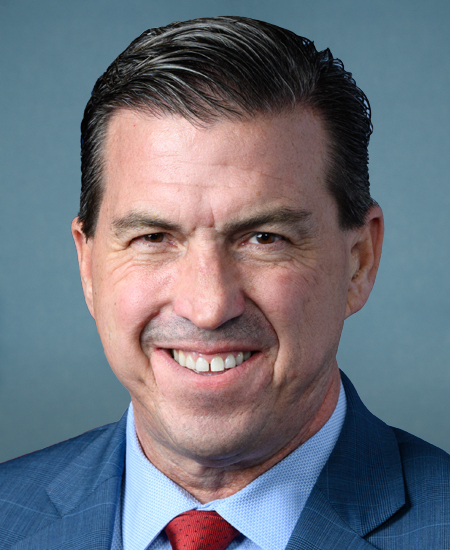
Rep. Kevin Mullin
Sponsored bills
Maddy summaryHRES 815 is a non-binding resolution expressing the U.S. House of Representatives' support for recognizing October 26, 2023, as "Intersex Awareness Day," which commemorates the 1996 demonstration by intersex individuals and promotes bodily autonomy. It encourages federal, state, local, and community organizations to observe the day through educational programs and to provide culturally competent care to intersex people. The resolution also urges healthcare providers and schools to connect intersex individuals and families to resources and support education about intersex diversity. As a symbolic gesture, it does not create new legal requirements but aims to raise public awareness and affirm the rights of intersex people.
Maddy summaryThe SMOKE Act establishes new federal workplace safety standards to protect employees from wildfire smoke exposure. It requires employers to monitor PM2.5 air quality (AQI ≥151), implement engineering controls (like filtered buildings), provide respirators, and communicate risks when smoke levels are hazardous. Employees at risk of health harm from smoke can take up to 12 weeks of unpaid leave per year, with job protection upon return. The law excludes emergency responders and workplaces with certified filtered air systems (e.g., closed vehicles or buildings with filtered ventilation). OSHA must finalize these standards within 42 months of enactment.
Maddy summaryHR 6172, the AMMO Act, requires federal firearms licensees (dealers/manufacturers) to implement new rules for selling ammunition to non-licensed buyers. It prohibits transfers exceeding 100 rounds of .50 caliber or 1,000 rounds of other calibers within any 5-day period and mandates written certification from buyers confirming they haven’t exceeded these limits. Licensees must also conduct background checks through the National Instant Criminal Background Check System (NICS) before selling ammunition to non-licensed individuals, similar to firearm sales. The bill includes recordkeeping, signage, and reporting requirements for violations, with penalties including fines up to $250,000 for licensees and $50,000 for buyers making false statements.
Maddy summaryHR 5976, the Youth Mental Health Research Act, establishes a new NIH research initiative led by the National Institute of Mental Health. The bill directs collaboration between three NIH institutes to coordinate research on youth mental health, focusing specifically on building community resilience for at-risk youth and improving how mental health services reach young people in schools, communities, and other settings where they live and work. It authorizes $100 million annually for fiscal years 2024 through 2028 to fund this research. The bill does not create direct services but aims to generate evidence to inform future mental health support strategies for young people.
Maddy summaryHR 6201, the Iranian Sanctions Enforcement Act of 2023, creates the Iran Sanctions Enforcement Fund to cover costs related to seizing and forfeiting property from Iran or its designated proxies (like Hezbollah or the Revolutionary Guard Corps) that violate U.S. sanctions. The fund, initially $150 million, pays for investigative costs, property management, informant rewards, and equipment for federal, state, and local agencies involved in enforcement. It also establishes an Export Enforcement Coordination Center within Homeland Security to improve interagency cooperation on enforcing export controls targeting Iran. The bill requires annual reports on fund usage and mandates repayment of the initial $150 million by 2034, unless waived for national security reasons.
Maddy summaryHRES 831 is a symbolic congressional resolution supporting October as "National Domestic Violence Awareness Month." It does not create new laws or allocate funding, but formally expresses the House of Representatives' support for the goals of raising awareness about domestic violence. The resolution urges Congress to continue highlighting domestic violence's impact and backing programs that prevent and address it. It directly affects public awareness efforts and serves as a non-binding statement of congressional support for victims and advocacy organizations.
Maddy summaryThis bill updates legal terminology in District of Columbia court codes to replace outdated and potentially stigmatizing terms. It specifically replaces "substantially retarded persons" and similar phrases with "persons with moderate intellectual disabilities" in three sections covering U.S. District Court, Superior Court, and Family Court jurisdiction. The change directly affects how DC courts formally reference individuals in legal contexts, aligning terminology with current standards. It is a purely procedural update to court codes with no new policy or funding provisions. The bill does not alter eligibility, rights, or court procedures - only the language used in the legal text.
Maddy summaryThe PHASE Act of 2023 directs the National Institute of Standards and Technology (NIST) to identify innovative traffic control technologies that improve safety for pedestrians and cyclists without causing distraction. It requires the Transportation Secretary to conduct a study analyzing urban areas with rising pedestrian fatalities and test physical safety measures like crosswalk technology, better lighting, and accessible sidewalks. The bill also creates a $5 million annual grant program for cities, tribes, and municipalities to fund specific pedestrian safety infrastructure, including marked crosswalks, adaptive lighting, accessible curb ramps, and upgraded traffic signals. These grants must comply with federal regulations and the Americans with Disabilities Act. The law directly affects local governments seeking funding and aims to protect pedestrians and vulnerable road users through concrete infrastructure improvements.
Maddy summaryHR 5983, the Clean Water Act of 2023, redefines "protected water resources" under federal law to explicitly include all interstate and intrastate waters (such as intermittent and ephemeral streams), wetlands, and their tributaries. This directly affects federal agencies like the EPA, states managing water quality, and developers or landowners needing permits for activities near these waters. The bill eliminates the Supreme Court’s narrow "navigable waters" definition from Sackett v. EPA (2023), restoring protections for tens of millions of acres of wetlands and millions of miles of small streams. Key mechanisms require the EPA to annually review and adjust exclusions from protections based on scientific evidence, ensuring water bodies critical to drinking water, flood control, and ecosystems remain safeguarded.