

Maddy summaryHRES 1448 is a non-binding House resolution stating that the House believes every person has the right to emergency health care, including abortion care, during medical emergencies. It specifically addresses concerns that abortion restrictions force medical providers to choose between treating patients in life-threatening situations or risking criminal charges. The resolution highlights that such restrictions disproportionately harm Black, Indigenous, people of color, immigrants, low-income individuals, and LGBTQI+ patients. It does not change existing laws but expresses congressional support for ensuring access to emergency care without legal barriers. The resolution was introduced by multiple House members and referred to the Energy and Commerce Committee.
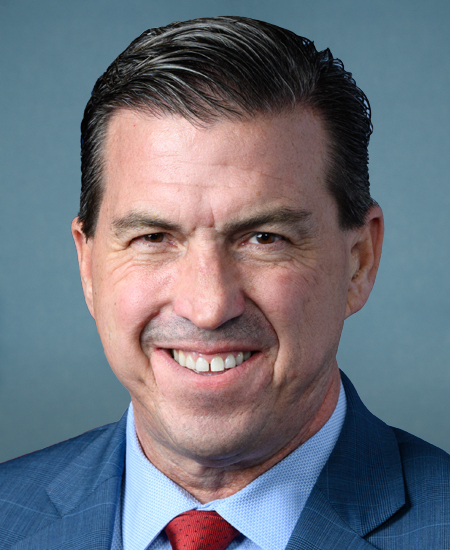
Rep. Kevin Mullin
Sponsored bills
Maddy summaryHRES 1437 is a ceremonial resolution designating the week beginning September 9, 2024, as "National Hispanic-Serving Institutions Week." It recognizes Hispanic-serving institutions (HSIs) - colleges and universities with at least 25% Hispanic enrollment - and their role in educating low-income students, advancing economic mobility, and serving 31.7% of all undergraduate students. The resolution calls for the public and organizations to observe this week with ceremonies and activities during Hispanic Heritage Month. It does not create new laws, allocate funding, or change existing policies - it is purely a symbolic gesture of recognition.
Maddy summaryThis bill designates the U.S. Postal Service facility at 130 South Patterson Avenue in Santa Barbara, California, as the "Brigadier General Frederick R. Lopez Post Office Building." It updates all official U.S. government references to the building to reflect this new name, with no policy changes or funding impacts.
Maddy summaryThe CREATE AI Act of 2023 establishes a National Artificial Intelligence Research Resource (NAIRR) to improve access to AI research tools, computational resources, data, and educational materials for researchers and students across the United States. The NAIRR will provide computational resources, curated datasets, educational tools, and access to AI testbeds, with special emphasis on supporting groups historically underrepresented in STEM fields. Governed by a Steering Subcommittee chaired by the Director of the Office of Science and Technology Policy and managed by a Program Management Office within the National Science Foundation, the NAIRR includes specific requirements for ethical AI development, privacy protections, and security measures. The resource will be accessible to researchers at U.S. institutions of higher education, nonprofits, government agencies, and certain businesses, with priority given to projects addressing privacy, ethics, civil rights, and AI safety.
Maddy summaryHRES 1436 is a symbolic resolution (not a law) introduced in the U.S. House of Representatives. It recognizes suicide as a preventable public health crisis by citing statistics from the CDC, VA, and SAMHSA showing rising suicide rates across age groups, including veterans and adolescents. The resolution formally supports designating September as "National Suicide Prevention Month" and September 10, 2024, as "World Suicide Prevention Day." It does not create new policies, allocate funding, or directly affect any individuals - its purpose is solely to express congressional support for suicide prevention awareness and efforts.
Maddy summaryHR 9498, the TAME Extreme Weather Act, directs the National Oceanic and Atmospheric Administration (NOAA) to develop and use artificial intelligence (AI) for improved weather forecasting and extreme weather response. The bill requires NOAA to create comprehensive AI training datasets, build AI-based weather models (Section 3), and explore AI applications to enhance forecasts, fire prediction, and emissions monitoring (Sections 4-7). It mandates technical assistance for forecasters and emergency managers on using AI models alongside traditional methods (Section 5), and establishes programs to predict wildfires and monitor greenhouse gas emissions (Sections 6-7). The legislation also requires public data sharing under open licenses where feasible, while safeguarding national security and intellectual property (Section 10). This primarily affects NOAA, federal agencies coordinating on weather and fire response, and the broader weather enterprise including private sector partners.
Maddy summaryHRES 1423 expresses the U.S. House of Representatives' support for designating the week of September 21-28, 2024, as "National Estuaries Week." The resolution highlights estuaries' economic and ecological importance, noting they support over 3.5 million jobs, contribute $476 billion to the U.S. GDP, and provide critical services like flood control and water filtration. It does not create new laws or funding but aims to raise public awareness about protecting estuaries, which face threats like pollution and habitat loss. The resolution acknowledges ongoing restoration efforts by federal, state, tribal, and community partners.
Maddy summaryHRES 1421 is a symbolic House resolution designating September as Blood Cancer Awareness Month and urging the public to support related efforts. It does not create new laws or allocate funding but formally recognizes blood cancer as a significant health issue affecting over 1.6 million people in the U.S. and highlights research advances like immunotherapy. The resolution encourages Americans to educate themselves about blood cancer, advocate for research and care, and support those affected. It directly affects no specific group through policy changes, serving only as a non-binding expression of support.
Maddy summaryHRES 1422 is a resolution recognizing the 60th anniversary of the Wilderness Act (enacted in 1964), which established the National Wilderness Preservation System. The resolution commends advocates for the Act, acknowledges wilderness areas' role in protecting over 112 million acres of public lands, and highlights their benefits for recreation, clean water, wildlife habitat, and climate resilience. It specifically emphasizes the importance of including Tribal governments in wilderness designation and management. As a commemorative resolution, it does not create new laws or directly affect any group.
Maddy summaryThe School Hunger Elimination Act of 2024 automatically certifies children for free or reduced-price school meals if they are already receiving Medicaid benefits (with household income at or below 133% of the federal poverty line for free meals) or Supplemental Security Income (SSI). It requires states to establish data-sharing agreements with Medicaid agencies by the 2025 school year, eliminating the need for families to submit separate applications for meal eligibility. This change directly affects children in low-income households already enrolled in Medicaid or SSI, streamlining access to school meals without additional paperwork.