

Maddy summaryHR 2269, the WIPPES Act, requires manufacturers and retailers to clearly label certain premoistened wipes with "Do Not Flush" text and a specific symbol on packaging. It directly affects baby wipes, disinfecting wipes, and other household/personal care wipes (like feminine hygiene or hand sanitizing wipes) that contain petrochemical fibers and could be flushed. The bill mandates specific visibility requirements for labels - such as minimum size, high contrast, and placement on packaging - while banning any claims that these wipes are flushable. The Federal Trade Commission will enforce these labeling rules as deceptive practices under existing law.
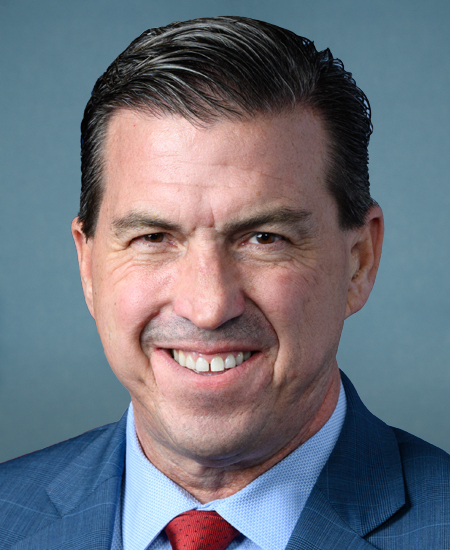
Rep. Kevin Mullin
Sponsored bills
Maddy summaryThe Caring for Survivors Act of 2025 increases monthly dependency and indemnity compensation for surviving spouses of veterans. It changes the calculation method from a fixed $1,154 to 55% of a specific veteran compensation rate, effective six months after enactment. The bill also reduces the required continuous disability rating period for survivors from 10 years to 5 years, and provides a proportional payment for cases where the rating period is shorter than 10 years. Surviving spouses of veterans who died before January 1, 1993, receive the greater of their current benefit or the new calculation. This directly affects surviving spouses eligible for benefits under Title 38, U.S. Code, particularly those with veterans who died prior to 1993.
Maddy summaryHRES 533 is a non-binding House resolution calling on the President to lift the indefinite suspension of U.S. refugee admissions, which has left over 100,000 refugees stranded in limbo since January 2025. It specifically references Executive Order 14163 (2025) that halted refugee arrivals, citing the plight of refugees conditionally approved for resettlement, including Afghans, Rohingya, and Sudanese. The resolution reaffirms U.S. commitments under the Refugee Act of 1980 and international obligations, urging restoration of the U.S. Refugee Admissions Program to protect vulnerable refugees. It also calls for increased international cooperation, support for frontline host countries, and meeting global refugee protection pledges. The resolution does not create new law but expresses congressional intent to address the refugee crisis.
Maddy summaryHCONRES 37 is a non-binding congressional resolution urging the President to establish a U.S. Commission on Truth, Racial Healing, and Transformation. The resolution does not create the commission itself but calls for its formation to acknowledge historical racial injustices (like discriminatory housing policies, the Chinese Exclusion Act, and forced Native American boarding schools) and catalyze efforts to eliminate racial inequities. The commission would focus on dismantling the "belief in a hierarchy of human value" and advancing racial healing, complementing ongoing efforts like H.R. 40 (the reparations study bill). It directly affects federal leadership (via the President) and aims to guide national policy, though it has no legal force.
Maddy summaryHRES 514 is a resolution commemorating the ninth anniversary of the June 12, 2016, Pulse nightclub shooting in Orlando, Florida, which killed 49 people. It honors the victims and their families, recognizes the bravery of first responders, and affirms the need for continued efforts on gun safety and mental health legislation. The resolution does not create new laws or policies but serves as a symbolic statement of remembrance and support for the affected community. It directly addresses the House of Representatives and the public, emphasizing unity in the face of hate.
Maddy summaryHR 3946, the FIGHT Act of 2025, amends the Animal Welfare Act to specifically prohibit gambling on animal fighting events and restrict the interstate transport of roosters used in such ventures. It defines "rooster" as male chickens over six months old and makes it unlawful to sponsor, exhibit, attend (for those under 16), or gamble on animal fighting events - whether in-person or broadcast. The bill creates a civil enforcement mechanism allowing any person to file a lawsuit to stop violations after providing 60 days' notice to authorities, with potential fines up to $5,000 per violation. It also establishes seizure of property used to facilitate violations and clarifies that state laws on animal fighting remain in effect unless directly conflicting with federal provisions.
Maddy summaryThis bill requires colleges receiving federal work-study funds to notify eligible students about potential eligibility for the SNAP food assistance program. It specifically targets students participating in federal work-study or receiving Pell Grants, mandating that institutions send email notifications with state-specific SNAP eligibility details and a document confirming their work-study status to overcome a key ineligibility barrier. The notifications, developed jointly by the Education and Agriculture Departments, include application contacts and guidance for schools on identifying eligible students. The policy change directly enables more college students to access nutrition assistance by clarifying their SNAP eligibility through institutional outreach.
Maddy summaryHR 3988 requires the Department of Housing and Urban Development (HUD) and the Census Bureau to jointly study how federal agencies track and record "housing loss" in the U.S. Housing loss is defined as involuntary displacement, including evictions, foreclosures, or displacement from natural disasters. The study must identify common types of housing loss, review existing federal data sources, assess data quality, and recommend improvements for better tracking. HUD and the Census Bureau must submit a report to Congress within six months detailing these findings and recommendations. This bill does not change current laws but mandates a federal review to improve how housing loss is measured.
Maddy summaryThe PHARA Act of 2025 requires the National Institutes of Health (NIH) to immediately release all required funding for existing research grants and rapidly pay pending reimbursements. It prohibits NIH from terminating active research grants (entered after the bill's enactment) solely due to shifting agency priorities or program goals, and mandates new termination clauses requiring 90 days' written notice and attempts to amend terms before ending agreements. This directly affects researchers and institutions receiving NIH grants, ensuring funding continuity for ongoing projects. The bill aims to prevent abrupt halts in scientific research by restructuring grant termination processes.
Maddy summaryThe Domestic Workers Bill of Rights Act (HR 3971) would establish key labor protections for domestic workers, including nannies, housekeepers, and caregivers who work in private homes. The bill requires written agreements for workers employed 8+ hours per week, provides earned sick days (1 hour for every 30 hours worked), mandates fair scheduling practices with 72-hour notice for schedule changes, and extends overtime protections to live-in domestic employees. It also prohibits unfair wage deductions, guarantees meal and rest breaks, and ensures privacy protections including no monitoring in private living spaces. The bill directly affects approximately 2.2 million domestic workers across the U.S., who are disproportionately women of color and immigrants. Enforcement would be handled by the Department of Labor through new complaint resolution mechanisms and oversight.