

Maddy summaryHR 5830, the Guaranteed Income Pilot Program Act of 2025, would establish a 3-year pilot program providing monthly cash payments to 20,000 eligible low-income individuals aged 18-65. Participants would receive payments equal to the fair market rent for a 2-bedroom apartment in their ZIP code, paid monthly on the 15th, with these payments not counting as income for other federal benefits. The program, funded at $495 million annually for fiscal years 2026-2030, requires a study tracking impacts on participants' financial stability, health, housing, and other outcomes. The final report would assess the program’s feasibility for broader expansion.
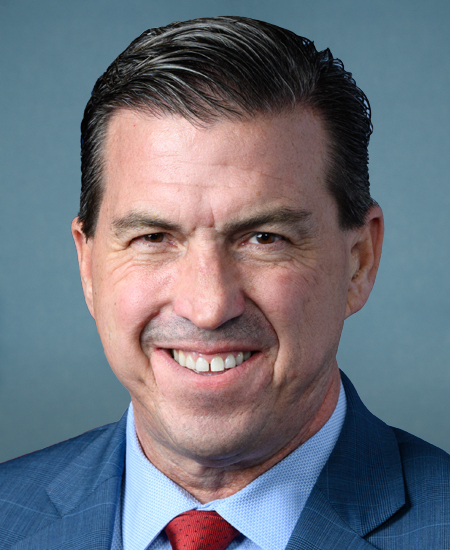
Rep. Kevin Mullin
Sponsored bills
Head Start Shutdown Protection Act of 2025 This bill requires the Department of Health and Human Services to reimburse a state, local government, or school district that uses its funds to maintain participation in the Head Start program or the Early Head Start program during a government shutdown in which there is a lapse in federal appropriations for the programs. The Head Start programs provide comprehensive early childhood education and development services to low-income children. The programs seek to promote school readiness through the provision of educational, health, nutritional, social, and other services.
Maddy summaryThis bill prohibits the Department of Veterans Affairs (VA) from discriminating against transgender veterans in healthcare, specifically requiring the VA to provide medically necessary treatments for gender dysphoria. It directly affects transgender veterans seeking VA health services by mandating that the VA cannot deny such care or misgender patients based on gender identity. The law adds a new section to VA healthcare law explicitly banning gender identity discrimination and ensuring access to gender dysphoria treatments, aligning with existing protections under the Affordable Care Act. Additionally, it requires the VA to provide quarterly reports to Congress on how transgender veterans receive healthcare services under this new standard.
Maddy summaryThis resolution formally recognizes the vital role of Spanish-language media in serving over 41 million U.S. residents who speak Spanish at home. It affirms that access to Spanish-language news and entertainment is essential for community engagement, combating misinformation, and supporting democratic participation. The House resolution specifically commends Spanish-language media professionals and encourages policies that sustain this media sector, which provides culturally relevant information on elections, health, and civic life. As a symbolic gesture (not a law), it has no direct policy changes but highlights the sector's importance to Latino communities and national inclusivity.
Maddy summaryThis bill makes federal funding for the WIC program mandatory by requiring Congress to appropriate necessary funds annually for fiscal year 2026 and each subsequent year. It removes discretionary language from WIC funding requirements and clarifies that eligible participants must be served without participation limits. The bill directly affects low-income pregnant women, new mothers, and young children who rely on WIC for nutrition assistance, ensuring continued access to critical food, health, and education services.
Maddy summaryHR 5707, the Voter Purge Protection Act, sets strict standards for states removing voters from registration lists. It requires states to use only objective, reliable evidence (like proof of death or moved residence) to remove voters - not factors like not voting or not responding to notices - and mandates 48-hour written notice to affected voters with reinstatement instructions. States must also issue public notices about removal programs to help voters verify their status. This bill directly affects state election officials and voters whose registration might be challenged, aiming to prevent improper removals under the National Voter Registration Act. It amends existing federal voting laws to enforce these new verification and notice requirements.
Maddy summaryHR 5673, titled "Stop the Trump Electricity Price Hikes Act," would reinstate financial assistance awards terminated by the Department of Energy under a May 15, 2025, secretarial memorandum. It directly affects recipients of these awards - likely energy or infrastructure projects - that had their funding cut, by restoring their financial support as if the terminations never occurred. The key mechanism requires the Department to treat all such terminated awards as valid and continuing, overriding prior termination actions. This bill does not address electricity pricing, consumer rates, or introduce new energy regulations.
Maddy summaryThis bill adds Medicare coverage for multi-cancer early detection screening tests (blood or biological tests analyzing cell-free DNA) starting January 1, 2028. It directly affects Medicare beneficiaries aged 68 and older (starting in 2028, with the age limit increasing by 1 year annually), requiring tests to be FDA-cleared and deemed reasonable/necessary by the Secretary for early cancer detection across multiple organ sites. Payment will initially match current stool DNA test rates before 2031, then shift to a lower rate or new payment system after 2031, with limits preventing more than one test per year. The bill explicitly states it does not alter coverage for existing cancer screenings like breast, colorectal, or prostate cancer tests.
Maddy summaryHRES 774 is a non-binding resolution that expresses congressional support for recognizing October 2025 as Filipino American History Month. It celebrates the historical contributions of Filipino Americans to U.S. society, including their roles in military service (such as World War II veterans), healthcare, labor movements, and cultural achievements. The resolution does not create new laws or benefits but urges the public to observe the month through educational programs and activities that highlight Filipino American history and culture. It directly affirms the heritage of the Filipino American community - approximately 4.6 million people - who are the third-largest Asian American group in the U.S. and have made significant contributions across multiple fields.
Fair Pay for Federal Contractors Act of 2025 This bill provides back pay to employees of federal contractors who lost pay due to a lapse in appropriations (i.e., government shutdown) in FY2026. Specifically, the bill provides appropriations for federal agencies that are subject to a lapse in appropriations in FY2026 to adjust the price of contracts to compensate federal contractors for providing back pay to employees who were affected by the lapse in appropriations. The agencies must adjust the price of any contract for which the contractor stopped, suspended, delayed, or interrupted all or part of the work under the contract due to the lapse in appropriations. The price adjustment must compensate the contractor for reasonable costs incurred to (1) compensate employees who were furloughed or laid off, were not working, or experienced a reduction of hours or compensation due to the lapse in appropriations; or (2) restore paid leave taken by employees during the lapse in appropriations if the contractor required or permitted employees to use paid leave as a result of the lapse in appropriations. The maximum amount of weekly compensation of an employee for which an adjustment may be made under this bill may not exceed the lesser of (1) the employee's actual weekly compensation, or (2) $1,442 (or a lesser amount pro-rated for an employee who works less than 40 hours per week). The bill also requires the Office of Federal Procurement Policy to submit a report to Congress on the adjustments made under this bill.