

Maddy summaryHR 3306, the Truth in Tariffs Act, requires retailers selling goods to U.S. consumers to clearly display the portion of a product's price caused by applicable tariffs (called a "tariff surcharge"). This applies to most retailers but exempts small businesses as defined by the Small Business Act. The Federal Trade Commission (FTC) will enforce this rule, treating violations as unfair or deceptive practices under existing law, with penalties similar to those for other FTC violations. The law takes effect 30 days after enactment, covering tariffs imposed by the President after January 20, 2025.
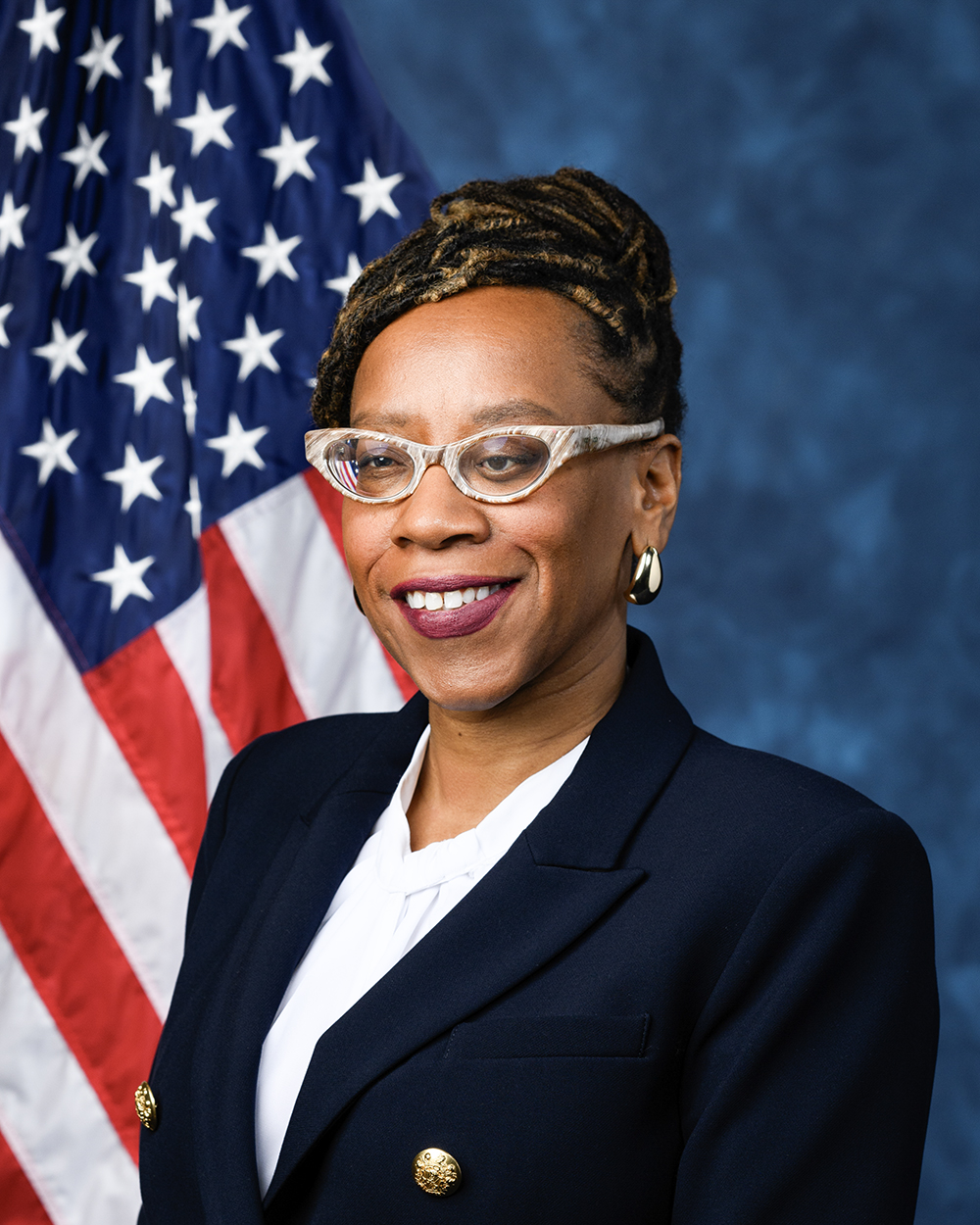
Rep. Lateefah Simon
Sponsored bills
Maddy summaryThis bill prohibits federal officials from reducing, eliminating, or suspending funding for land-grant colleges and universities without specific authorization from Congress. It directly affects public institutions designated as land-grant colleges under the 1977 National Agricultural Research, Extension, and Teaching Policy Act. The key provision requires that any change to their funding must be explicitly approved by an Act of Congress, preventing unilateral federal action. This creates a clear legal barrier against unexpected funding cuts to these institutions. The bill focuses on preserving existing funding streams rather than creating new programs.
Maddy summaryHR 3243, the Therapeutic Fraud Prevention Act of 2025, bans the provision of paid conversion therapy aimed at changing a person's sexual orientation or gender identity, and prohibits advertising such therapy as effective, safe, or without risk. It directly affects LGBTQ+ individuals and their families who might be targeted by these practices, as professionals have determined conversion therapy is ineffective and harmful. The law treats violations as deceptive acts under consumer protection laws, empowering the Federal Trade Commission and state attorneys general to enforce it through civil actions. It explicitly excludes legitimate gender transition support and non-discriminatory counseling from the ban.
Maddy summaryHR 3184, the PFAS Alternatives Act, funds research to develop turnout gear (firefighter safety clothing) without harmful PFAS chemicals, directly affecting firefighters who wear this gear. It authorizes $25 million annually (2025-2029) for grants to eligible organizations to research and test PFAS-free gear, requiring partnerships with firefighting groups to translate findings into practice. The bill also allocates $2 million yearly (2027-2031) for training programs on safe gear use and decontamination. Its goal is to reduce firefighters' exposure to chemicals linked to occupational illnesses during operations.
Maddy summaryHR 3199, the Captive Primate Safety Act of 2025, bans the import, export, sale, breeding, and possession of certain nonhuman primates (including chimpanzees, gorillas, and lemurs) in interstate or foreign commerce. It directly affects pet owners, breeders, zoos, and wildlife facilities that currently handle these primates. The bill allows limited exceptions for existing owners who register their primates with the U.S. Fish and Wildlife Service within 180 days, agree to stop breeding/selling, and prevent public contact. It amends the Lacey Act to implement these restrictions, with enforcement beginning immediately regardless of regulatory timelines.
Maddy summary# Summary of the SHIPS for America Act This comprehensive legislation focuses on strengthening the U.S. maritime industry, shipbuilding capacity, and maritime workforce to enhance national security and economic competitiveness. ## Key Areas of Focus 1. **Shipbuilding & Maritime Infrastructure** - Establishes a United States Center for Maritime Innovation to accelerate adoption of commercial technologies - Creates a National Shipbuilding Research Program - Requires an annual survey of anticipated commercial vessel construction - Includes provisions for streamlined environmental reviews of maritime infrastructure 2. **Workforce Development** - Establishes the United States Merchant Marine Career Retention Program to maintain mariner qualifications - Creates Centers of Excellence for Domestic Maritime Workforce Training and Education - Implements military-to-maritime transition programs - Establishes a Maritime Career and Technical Education Advisory Committee 3. **Education & Training** - Expands educational assistance for merchant mariners - Creates eligibility for Naval Postgraduate School for merchant mariners - Establishes maritime education programs from K-12 through higher education - Provides for international exchanges for mariners and naval architects 4. **National Security & Strategic Readiness** - Requires reports on National Defense Reserve Fleet utilization - Includes measures to de-risk the maritime sector from Chinese influence - Enhances shipbuilding capacity for national security needs - Establishes programs to ensure sufficient mariner workforce for national defense 5. **Funding Mechanisms** - Authorizes appropriations from the Maritime Security Trust Fund - Includes funding for workforce programs, education, and shipbuilding initiatives - Establishes specific funding levels for various programs over multiple fiscal years The legislation aims to create a sustainable domestic maritime industrial base that supports both commercial shipping and national defense requirements, with a particular emphasis on developing and retaining a skilled U.S. maritime workforce.
Maddy summaryThis resolution requests the President to provide unredacted documents within 14 days about government use of electronic communication platforms like Signal, WhatsApp, and Slack for official communications. It specifically seeks information on how the administration preserves national security communications sent via these platforms and ensures compliance with federal recordkeeping laws. The resolution targets communications containing highly sensitive national security information, whether sent on government or personal devices. It does not change policy but seeks transparency regarding current practices.
Maddy summaryHRES 286 is a non-binding House resolution (not a law) requesting the President to provide specific documents about a fictional "United States DOGE Service" and its AI use. It asks for records related to AI deployments at federal agencies since January 2025, including data sources, personnel involved in decisions, and analyses of potential program cuts, all framed around alleged violations of privacy laws and transparency requirements. The resolution specifically targets documents concerning "Elon Musk or an individual associated with the United States DOGE Service," which does not exist as a government entity. This is a procedural request for information, not a policy change, and references fictional elements (e.g., "Trump Administration" in 2025).
Maddy summaryThis resolution (HRES 264) requests the President to provide the House of Representatives with unredacted documents about security clearances held by specific individuals, including Elon Musk and six others (Akash Bobba, Edward Coristine, Ethan Shaotran, Luke Farritor, Gautier Cole Killian, and Gavin Kliger). It specifically targets documents related to security clearances for people associated with the "United States Department of Government Efficiency Service" (referred to as "DOGE" in the bill). The request requires the President to submit all relevant communications and background investigations within 14 days of the resolution's adoption. This is a procedural inquiry resolution, not a policy bill, and references fictional government entities (DOGE is not a real agency).
Maddy summaryHR 3112, the Better CARE for Animals Act of 2025, strengthens enforcement of the federal Animal Welfare Act by requiring dealers and exhibitors to hold valid licenses for animal sales or transport (Section 4). It expands enforcement authority by allowing the Attorney General to sue violators for up to $10,000 per day, seize animals, and seek injunctions (Section 20), while clarifying that courts can address violations of related rules and regulations. The bill directly affects animal dealers, exhibitors, the USDA, and the Department of Justice, creating clearer pathways for holding violators accountable. Key provisions include updating definitions, broadening inspection powers to cover all regulations, and directing penalty funds toward temporary animal care costs during legal proceedings.