

Maddy summaryThis bill redesignates a United States Postal Service facility at 3500 West 6th Street, Suite 103 in Los Angeles, California, as the "Dosan Ahn Chang Ho Post Office." It directly affects the postal service location by changing its official name to honor Dosan Ahn Chang Ho, a Korean independence activist and community leader. The bill amends prior legislation to update references to the facility’s address and name in all federal records and documents. This is a ceremonial naming resolution with no policy changes to postal services or operations.
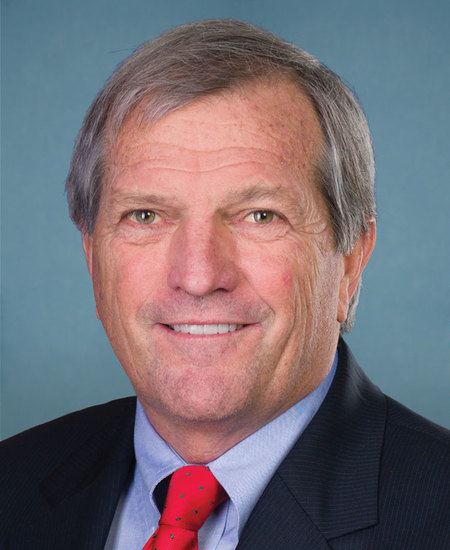
Rep. Mark DeSaulnier
Sponsored bills
Maddy summaryThis bill establishes a Truth and Healing Commission to investigate the history and impacts of U.S. Indian Boarding School policies on Native American communities, including cultural, emotional, and physical effects on survivors, descendants, and tribal communities. The Commission will document these impacts through research, public meetings, and testimony, working with two advisory committees focused on Native American perspectives and Federal agency coordination. The Commission will operate for six years, with annual reports to Congress and a final report containing recommendations for Federal action. The bill also includes provisions for managing burial sites related to boarding schools and ensures the Native American Graves Protection and Repatriation Act applies to remains found on Federal lands related to these schools.
Maddy summaryThis resolution urges Ukraine to reverse its 2022 suspension of adoptions by foreign nationals, including U.S. citizens. It specifically asks Ukraine to review its decision and resume such adoptions, prioritizing cases where U.S. prospective parents had already completed Ukrainian adoption requirements before the suspension or where children were part of pre-existing Ukrainian hosting programs. The resolution does not change U.S. law but formally requests Ukraine address mutual concerns to protect children's best interests. It directly affects U.S. families seeking to adopt Ukrainian children and Ukraine's adoption policies.
Maddy summaryThis bill requires private health insurance to cover lung cancer screenings with no out-of-pocket costs for people aged 40 and older, regardless of smoking history. Currently, coverage starts at age 55 only for those with a significant smoking history (30+ pack-years). It expands access to early detection for a broader group of people at risk, aligning lung cancer screening coverage with the earlier age standards already applied to breast, prostate, and colorectal cancer screenings. The change takes effect for plan years beginning January 1, 2026.
Maddy summaryHRES 1588 is a House resolution supporting Transgender Day of Remembrance (TDoR) by recognizing the epidemic of violence against transgender people and memorializing those killed between October 1, 2023, and September 30, 2024. It specifically honors 38 transgender or gender-nonconforming individuals whose lives were lost to violence during that period, highlighting that transgender women of color face disproportionate risks. The resolution acknowledges systemic issues like underreporting, barriers to healthcare, and higher rates of homelessness and suicide within the community. It calls for the U.S. government to prioritize solutions to this violence while affirming transgender people's right to dignity and safety. As a symbolic resolution, it does not create new laws or policies but formally recognizes these issues for congressional record.
Maddy summaryThis bill prohibits Medicaid from covering conversion therapy for any enrollee. It amends federal law to block Medicaid payments for any therapy aimed at changing a person's sexual orientation or gender identity (defined as "conversion therapy" in the bill), starting in the first full quarter after the law takes effect. The prohibition applies to all Medicaid providers who offer such therapy for compensation, but explicitly excludes support for gender transition, acceptance-based care, and interventions focused on safety or unlawful conduct. It directly affects Medicaid recipients seeking therapy and providers who previously billed for conversion therapy services.
Maddy summaryThe Improving Access to Higher Education Act creates new requirements and funding opportunities to make higher education more accessible for students with disabilities. It requires institutions of higher education to establish Offices of Accessibility and provides grants for faculty training on universal design for learning, accommodations, and transition support from secondary to postsecondary education. The bill also establishes a Commission to develop guidelines for accessible instructional materials and creates a National Technical Assistance Center to support inclusive programs for students with intellectual disabilities. These provisions directly affect students with disabilities, higher education institutions, and the faculty and staff who serve them.
Maddy summaryThis bill modifies how disability benefits are treated for homeless disabled veterans seeking housing assistance. It excludes certain disability payments (under Chapter 11 or 15 of Title 38, U.S. Code) from income calculations when determining eligibility for HUD-assisted housing programs, including the supported housing program under Section 8(o)(19) and housing on Department property. Specifically, it ensures these benefits are not counted toward income for housing eligibility, though they still count for "adjusted income" definitions. The bill directly affects disabled veterans applying for HUD housing assistance who receive these specific disability benefits. It makes a concrete change to income calculation rules without altering benefit amounts or creating new funding.
Maddy summaryThe Victims of Agent Orange Relief Act of 2024 would provide medical care, environmental remediation, and support services for people affected by Agent Orange exposure during the Vietnam War. The bill directly affects Vietnamese residents exposed to Agent Orange (including those living near contaminated areas), their children and descendants, Vietnamese Americans, and American veterans' families, particularly expanding VA benefits to cover birth defects for children of male veterans (previously limited to children of female veterans). Key provisions include creating new USAID programs for medical care, housing repairs, and environmental cleanup at Agent Orange hotspots, requiring health assessments for Vietnamese Americans, and mandating research into intergenerational effects. The bill sets implementation deadlines for federal agencies (180 days for plans, 18 months for full implementation) and expands VA benefits to address gaps in current support. This legislation aims to address longstanding gaps in assistance for victims across Vietnam, Laos, Cambodia, and the United States affected by Agent Orange exposure.
Maddy summaryThe VA Employee Fairness Act of 2024 modifies collective bargaining rules for employees of the Veterans Health Administration (VHA). It removes existing subsections (b), (c), and (d) from the law governing VHA employee bargaining and renumbers the remaining provision. This change streamlines the collective bargaining framework but does not alter the Secretary of Veterans Affairs' existing authorities over incentive pay and expedited hiring. The bill directly affects VHA employees by changing how their collective bargaining rights are structured under federal law. The law remains neutral, focusing solely on procedural adjustments to the existing bargaining framework.