

Maddy summaryThe LEAP Act creates a new $1,500 annual tax credit for employers with registered apprenticeship programs, paid per apprentice employee who exceeds a threshold based on the employer's prior three-year average of such employees (calculated at 80% of that average). The credit applies for up to two years per employee and excludes most construction industry workers unless they completed a pre-apprenticeship program and their employer sponsors an apprenticeship. It also includes a separate provision requiring federal agencies to reduce printing costs by moving documents online, publishing cost transparency data for printed materials, and maintaining essential print access for vulnerable populations. The bill primarily affects employers in qualifying apprenticeship programs, with the tax credit designed to incentivize hiring and training apprentices.
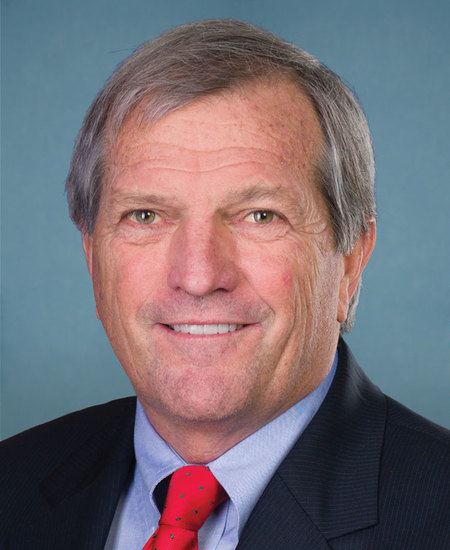
Rep. Mark DeSaulnier
Sponsored bills
Maddy summaryThe Pell Grant Sustainability Act (HR 1666) requires the federal government to automatically adjust the maximum Pell Grant amount each year based on inflation, starting with $1,060 for the 2024-2025 academic year. This adjustment uses the Consumer Price Index (CPI) to ensure grants keep pace with rising college costs, directly affecting low-income students who rely on Pell Grants to afford higher education. The bill amends the Higher Education Act to mandate this annual inflation-based increase, rounding the final amount to the nearest $5. It aims to reverse the decades-long decline in grant purchasing power, which covered 80% of college costs in 1974-75 but only 31% by 2022-23.
Maddy summaryThe Keep Americans Safe Act (HR 1674) restricts the sale, transfer, and possession of large capacity ammunition feeding devices (LCFDs) - defined as magazines or similar devices holding more than 15 rounds of ammunition - for most individuals. Exceptions allow law enforcement officers (including campus law enforcement), retired officers, and nuclear security personnel to possess LCFDs under specific conditions. The bill requires new LCFDs to have serial numbers and manufacturing dates, permits federal seizure of violative devices, and authorizes federal grant programs to fund buy-back initiatives for LCFDs. It directly affects gun owners and manufacturers while preserving access for covered law enforcement and security personnel.
Maddy summaryHR 1657, the Humane Cosmetics Act of 2025, prohibits cosmetic companies from conducting or contracting animal testing for products sold in the U.S. beginning one year after the law takes effect. It also bans the sale or transport of cosmetics developed using such testing after that date, with limited exemptions (e.g., for foreign regulatory requirements or when no non-animal safety alternatives exist). The bill directly affects cosmetic manufacturers, retailers, and distributors by requiring them to shift to non-animal testing methods. The Food and Drug Administration (FDA) will enforce the law, including reviewing records and imposing civil penalties for violations.
Maddy summaryThe PAST Act of 2025 amends the Horse Protection Act to ban harmful practices known as "soring," which deliberately cause pain to horses to exaggerate their gait for shows. It specifically prohibits devices like action devices (e.g., boots causing friction) and weighted shoes on Tennessee Walking Horses, Racking Horses, and Spotted Saddle Horses at events. The bill increases penalties, including escalating disqualifications for repeat offenses (180 days → 1 year → 3 years) and raises fines for violations to $5,000 per offense. It also requires stricter licensing for inspectors and mandates public posting of violation records to help event organizers enforce rules.
Maddy summaryThe American Dream and Promise Act of 2025 would create pathways to permanent residency for certain immigrant youth who entered the U.S. as children (Dream Act component) and for individuals from countries with Temporary Protected Status or Deferred Enforced Departure (American Promise Act component). To qualify, applicants must meet continuous physical presence requirements (since January 1, 2021 for Dream Act applicants, and for 3+ years for American Promise applicants), pass background checks, and satisfy educational or employment criteria. Conditional permanent resident status would be granted initially, with the option to convert to full permanent residency after meeting additional requirements like earning a degree, serving in the military for two years, or demonstrating three years of earned income. The bill includes fee exemptions for low-income applicants, establishes a grant program to assist applicants with legal help, and creates specific procedures for background checks and appeals.
Maddy summaryThe RAISE Act of 2025 creates a new tax credit for teachers and early childhood educators, with a base of $1,000 plus additional amounts based on school poverty rates. Teachers working in schools where more than 39% of students live in poverty can receive up to $14,000 more in tax credits, calculated based on how much a school's poverty rate exceeds 39%. The bill also increases the deduction for teachers' classroom expenses from $250 to $500 and requires schools to maintain teacher pay levels to receive certain federal funds. This directly affects public school teachers, early childhood educators, and schools serving communities with high poverty rates.
Maddy summaryHR 1382 amends the Federal Water Pollution Control Act to establish a formal San Francisco Bay Restoration Program. It provides federal funding through grants or cooperative agreements to local agencies, nonprofits, and the Estuary Partnership for specific Bay restoration projects, studies, and activities listed in an annual priority plan. The bill requires that federal funds cover no more than 75% of project costs, with non-federal sources (like local governments or nonprofits) contributing at least 25%. Additionally, it prohibits federal funding to entities with ties to certain foreign countries of concern, as defined in federal law.
Maddy summaryEthan's Law requires gun owners to store firearms securely in homes where minors live or where residents are legally prohibited from owning guns. It makes it unlawful to leave firearms unsecured if a minor or ineligible person could access them, with fines of $500 per violation and harsher penalties if injury or death occurs. The bill creates a federal grant program to help states implement similar secure storage laws and treats unsafe storage as negligence in legal cases. It directly affects households with children or residents who cannot legally possess firearms, aiming to reduce accidental shootings and unauthorized access.
Maddy summaryThe Conrad State 30 and Physician Access Reauthorization Act extends and reauthorizes a program that allows foreign medical graduates to work in underserved U.S. communities after completing their training. It extends the program through 2021 (with retroactive effect), adds protections for physicians who have completed service requirements, and makes changes to visa requirements to better support physicians working in underserved areas. The bill requires states to maintain a 90% utilization rate of waivers to keep receiving the full allocation, and adds reporting requirements for the program. This bill directly affects foreign physicians seeking to work in underserved areas and the health care facilities that employ them.