

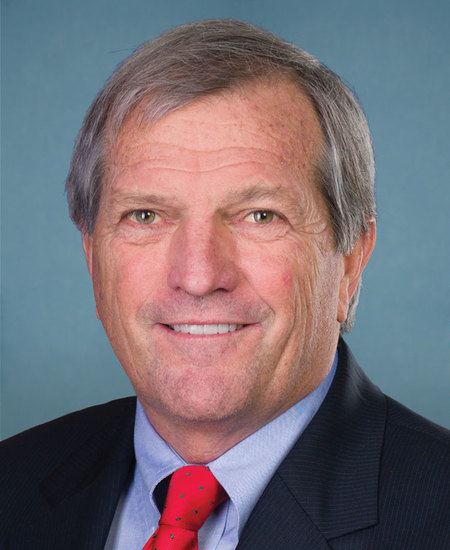
Photo of Mark DeSaulnier
D United States House · District 10 · California On the 2026 ballot

Rep. Mark DeSaulnier

Compare
Total votes
2,837
all sessions
Attendance
99%
40 missed
Near the chamber average
With party
98%
of cast votes
Near the chamber average
Bipartisan score
1%
crosses aisle rarely
Near the chamber average
Sponsored
2,010
bills & resolutions
Higher than 75% of chamber peers
Committees
9
assignments
2,010 bills and resolutions

Sponsored bills

Total
2,010
Primary
117
Co-sponsor
1,893
This page
2,010
matching current filters
Co-sponsor HR 5321
In committee · Indiana House · Co-sponsor
To amend title 23, United States Code, with respect to the special rule for low emission and energy efficient vehicles facilities, and for other purposes.

Maddy summaryHR 5321 extends the deadline for allowing low-emission and energy-efficient vehicles to use high-occupancy vehicle (HOV) lanes from September 30, 2025, to December 31, 2026. It also requires the Transportation Secretary to conduct a study within 180 days of enactment on whether electric vehicle exemptions in HOV lanes reduce traffic congestion, with results reported to Congress. The bill directly affects state and local transportation agencies managing HOV facilities and the Department of Transportation. Key provisions include the deadline extension and the mandated study, with no changes to vehicle eligibility rules.

In committee Sep 11, 2025 1 co-sponsor
Co-sponsor HRES 684
In committee · Indiana House · Co-sponsor
Expressing support for the designation of September 9, 2025, as "National Firearm Suicide Prevention Day" to educate about the growing firearm suicide crisis in the United States and promote the importance of storing firearms safely and securely as an essential component of suicide prevention.

Maddy summaryHRES 684 is a non-binding House resolution designating September 9, 2025, as "National Firearm Suicide Prevention Day." It aims to raise public awareness about firearm suicide statistics (including that firearms were used in 55% of U.S. suicides in 2023) and promote safe firearm storage as a key suicide prevention strategy. The resolution encourages health professionals to discuss safe storage with patients and supports existing awareness efforts led by organizations like Brady and End Family Fire. It directly affects the public and healthcare providers by emphasizing evidence-based prevention practices, not by creating new laws.

In committee Sep 9, 2025 1 co-sponsor
Co-sponsor HR 5222
In committee · Indiana House · Co-sponsor
ESP, Paraprofessional, and Education Support Staff Family Leave Act

Maddy summaryThis bill modifies the Family and Medical Leave Act (FMLA) to extend eligibility to school support staff, including paraprofessionals, cafeteria workers, bus drivers, and clerical staff. It allows these employees to qualify for FMLA leave if they work 60% of their expected monthly hours (instead of the standard 1,250 hours), based on their school’s assigned schedule. Employers must maintain records of expected hours for each staff member. The change directly benefits part-time and seasonal education support staff who previously faced barriers to FMLA coverage.

In committee Sep 9, 2025 1 co-sponsor
Co-sponsor HR 5104
In committee · Indiana House · Co-sponsor
Preventing HEAT Illness and Deaths Act of 2025

Maddy summaryThe Preventing HEAT Illness and Deaths Act of 2025 establishes a National Integrated Heat Health Information System (NIHHIS) within NOAA to coordinate federal efforts on heat-related health risks. It creates an interagency committee to develop a strategic plan for improving data sharing, forecasting, and decision support tools for heat events, with a focus on communities disproportionately affected by extreme heat. The bill authorizes a Community Heat Resilience Program that provides grants to states, tribes, and local governments for projects like urban forestry, cooling centers, and heat action plans, requiring at least 40% of funds to target communities with environmental justice concerns. The legislation also mandates a study to identify gaps in heat information and response capabilities across the country. This comprehensive approach aims to reduce heat-related health impacts, particularly for vulnerable populations including older adults, outdoor workers, and communities of color.

In committee Sep 3, 2025 1 co-sponsor
Co-sponsor HR 4669
In committee · Indiana House · Co-sponsor
FEMA Act of 2025

Maddy summary# Summary of Proposed FEMA Reform Legislation (FEMA Act of 2025) This comprehensive legislative document proposes significant reforms to the Robert T. Stafford Disaster Relief and Emergency Assistance Act, with four main sections addressing: ## 1. Disaster Assistance Reforms - **Expanded eligibility** for assistance, including clarifying that absence of a fixed address doesn't disqualify individuals from sheltering assistance - **Improved rental assistance** with consideration of local post-disaster rent increases - **Direct assistance** for those unable to use financial assistance, with no requirement to show other assistance can cover costs (except insurance) - **Enhanced notices** for applicants, including documentation of denial decisions - **Clarification of displacement assistance** eligibility, stating insurance shouldn't be considered a duplication of benefits ## 2. Mitigation Program Enhancements - **Preapproved project mitigation plans** requiring states to develop plans with peer review processes - **Improved allocation of funds** with formulas prioritizing vulnerable communities, high-risk areas, and rural/economically distressed communities - **Resilient buildings** requirements for housing retrofits using the latest building codes - **Streamlined application processes** for hazard mitigation funds across multiple programs - **Study on mitigation benefits** to evaluate cost savings and effectiveness ## 3. Transparency and Accountability Measures - **Public dashboards** for both individual assistance (431) and public assistance (432) showing application status, approvals, denials, and funding - **Transparency requirements** for disaster declarations with detailed justifications for approvals/denials - **GAO studies** on numerous topics including: - Identity theft in disaster assistance (409) - Insurance utilization for public assistance facilities (410) - Wildfire management plans (411) - Effectiveness of alerting systems (412) - Cost savings of repair/rebuilding reforms (415) - **Prohibition on political discrimination** in assistance distribution ## 4. Workforce and Operational Improvements - **Study on workforce retention** in noncontiguous communities - **Pilot program** for preliminary damage assessments in remote communities - **Fast-moving disasters working group** to develop best practices for rapid response The legislation focuses on improving efficiency, transparency, and effectiveness of disaster relief programs while prioritizing vulnerable populations and communities with higher risk of disasters. It also emphasizes data-driven decision making through required studies and reports to continuously improve disaster management policies.

In committee Sep 3, 2025 1 co-sponsor
Primary HR 5019
In committee · Indiana House · Lead sponsor
CEO Accountability and Responsibility Act

Maddy summaryHR 5019, the CEO Accountability and Responsibility Act, would require publicly traded corporations to pay higher federal income taxes based on their CEO-to-median-employee pay ratio. Specifically, corporations with a ratio exceeding 100:1 would face incremental tax rate increases (up to 3 percentage points for ratios over 400:1), with additional tax hikes if they reduce U.S. full-time staff while increasing contracted or foreign workers. The bill also directs federal agencies to prioritize contracting with companies maintaining a pay ratio below 50:1. These provisions directly affect publicly traded corporations subject to U.S. income tax, altering their tax liability based on pay equity metrics rather than revenue or profits.

In committee Aug 22, 2025 0 co-sponsors
Co-sponsor HJRES 115
In committee · Indiana House · Co-sponsor
Terminating the emergency determined by the President on August 11, 2025, in the Executive Order titled "Declaring a crime emergency in the District of Columbia".

Maddy summaryThis bill (HJRES 115) terminates a presidential emergency declaration made on August 11, 2025, which claimed a "crime emergency" in Washington, D.C. It directly affects the District of Columbia by ending federal restrictions that prevented D.C. from using $1 billion in locally-raised funds for public safety, law enforcement, fire services, and schools. The resolution cites that the emergency declaration was legally flawed - section 740 of the DC Home Rule Act does not permit federalizing the Metropolitan Police Department - and notes that D.C. violent crime has reached a 30-year low. The bill formally ends the emergency under the DC Home Rule Act, restoring D.C.'s authority over its own budget and public safety resources.

In committee Aug 15, 2025 1 co-sponsor
Primary HR 4948
In committee · Indiana House · Lead sponsor
HOV Lane Exemption Reauthorization Act

Maddy summaryThis bill extends the expiration date for a provision allowing certain vehicles to use High Occupancy Vehicle (HOV) lanes without meeting standard occupancy requirements. Specifically, it amends federal law to change the deadline from September 30, 2025, to September 30, 2031. The change directly affects drivers and vehicle operators who currently qualify for this exemption under existing rules. It is a procedural reauthorization, not a policy change, maintaining the current HOV lane exemption rules for an additional six years.

In committee Aug 13, 2025 0 co-sponsors
Co-sponsor HR 4966
In committee · Indiana House · Co-sponsor
Stop Price Gouging in Grocery Stores Act of 2025

Maddy summaryHR 4966 prohibits grocery stores from selling items at "grossly excessive prices," defined as 120% or more above the average market price over the previous six months (with exceptions for unavoidable cost increases like supply chain issues). It bans using facial recognition or personal data to set different prices for individual customers (e.g., adjusting prices based on shopping history) and requires clear signage if facial recognition is used. Stores over 10,000 square feet must replace electronic shelf labels with physical price tags. The Federal Trade Commission enforces these rules, allowing consumers to seek $3,000 per violation or actual damages, with penalties for willful violations.

In committee Aug 12, 2025 1 co-sponsor
Primary HR 4918
In committee · Indiana House · Lead sponsor
Advancing Gun Safety Technology Act

Maddy summaryHR 4918, the Advancing Gun Safety Technology Act, authorizes a $10 million pilot program for fiscal year 2026 to fund small businesses (under 500 employees) developing gun safety technology. The program provides grants to create devices like smart guns, childproof locks, or personalized safes that reduce accidental or unauthorized use. Grantees must report on milestones including prototype development, testing, and plans for bringing these technologies to market. The bill directly affects small gun technology developers by providing federal funding and reporting requirements for their safety-focused products.

In committee Aug 8, 2025 0 co-sponsors
Showing 211 to 220 of 2,010 bills
Previous 1 … 21 22 23 … 201 Next