

Maddy summaryThis bill establishes fairer pay and retirement benefits for federal firefighters. It requires that overtime hours worked during a firefighter's regular schedule be included in retirement calculations, improving retirement payouts. The bill also sets a maximum 60-hour regular workweek for federal firefighters, to be defined by the Office of Personnel Management within one year. These changes directly affect federal firefighters by addressing pay disparities with municipal firefighters and enhancing recruitment and retention.
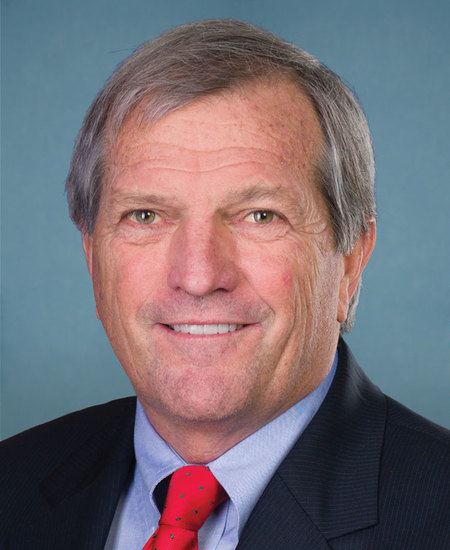
Rep. Mark DeSaulnier
Sponsored bills
This bill designates the facility of the United States Postal Service located at 28201 Franklin Parkway in Santa Clarita, California, as the "Deputy Ryan Clinkunbroomer Post Office Building".
Maddy summaryThe Increasing Access to Mental Health in Schools Act creates a federal grant program to increase the number of mental health professionals (counselors, social workers, and psychologists) in low-income public schools. It provides funding for partnerships between schools serving high percentages of low-income students and graduate institutions that train mental health professionals, aiming to reach recommended staff-to-student ratios (such as 1 counselor per 250 students). The bill also establishes a student loan repayment program for mental health professionals working in these schools, offering up to $200,000 in total repayment over five years. This legislation directly affects low-income school districts and mental health professionals working in those schools, with the goal of improving mental health support for students facing challenges like poverty, homelessness, or trauma.
Maddy summaryThe Global Respect Act (HR 6151) requires the U.S. President to publicly list foreign officials responsible for severe human rights violations against LGBTQI individuals, including torture, prolonged detention, or violence based on sexual orientation or gender identity. It mandates denying visas and entry to listed individuals and requires annual reports on the list's updates and impacts. The bill also directs the State Department to track global violence against LGBTQI people and update annual human rights reports to include discrimination based on sexual orientation or gender identity. These provisions directly affect foreign government officials and entities implicated in such abuses, aiming to increase accountability through U.S. visa restrictions.
Maddy summaryThe EXPERTS Act of 2025 requires agencies to disclose funding sources and potential conflicts of interest for studies submitted during rulemaking, including who funded research and any financial relationships that might influence findings. It establishes an Office of the Public Advocate within the Office of Management and Budget to assist public participation in rulemaking, conduct social equity assessments, and improve outreach to underrepresented groups. The bill also mandates that agencies consider social equity impacts when creating rules and requires detailed explanations for withdrawing proposed regulations. These provisions aim to increase transparency, inclusivity, and accountability in the federal regulatory process.
Maddy summaryHR 5894, the RESTRAIN Act, prohibits the United States from conducting any explosive testing of nuclear weapons or other nuclear explosions. It directly affects U.S. nuclear weapons programs by banning such testing using federal funds for fiscal year 2026 and beyond. The bill's key mechanism is a funding restriction: no money authorized for fiscal year 2026 or later may be used for explosive nuclear testing or other nuclear explosions. However, it explicitly excludes subcritical nuclear tests (which do not sustain a chain reaction) from this prohibition. The law aims to enforce a permanent ban on nuclear detonations while preserving the ability to conduct certain non-explosive testing.
Maddy summaryThis bill requires oil, gas, and geothermal companies to test nearby underground drinking water sources before, during, and after hydraulic fracturing ("fracking") operations. Companies must conduct testing at specified intervals (e.g., before starting, every 6 months during operations, annually for 5 years after) and submit results to the EPA within two weeks. The EPA will maintain a public database of all test results, making it searchable by ZIP code for community access. The requirement does not apply to sites with no accessible drinking water sources within one mile.
Maddy summaryThe CLEANER Act of 2025 requires the EPA to evaluate within one year whether drilling fluids, produced waters, and other wastes from oil, gas, and geothermal operations qualify as hazardous waste under federal law. If determined hazardous, the EPA must list these wastes and create tailored regulations for their handling, while also setting new safety standards for facilities managing non-hazardous waste from these sources. Key provisions include mandatory groundwater monitoring, location criteria for waste facilities, and financial assurance requirements to protect public health and the environment. This bill directly affects oil and gas producers, waste management facilities, and geothermal energy operations by imposing new regulatory obligations on their waste streams.
Maddy summaryThis bill requires oil and gas companies conducting hydraulic fracturing operations to disclose detailed chemical ingredients before starting and within 30 days after completing operations. Companies must provide full chemical names, CAS numbers, safety data sheets, and volumes to state or federal authorities, who then make this information publicly available online. The bill includes an exception allowing immediate disclosure of proprietary chemical formulas during medical emergencies, though companies can later request confidentiality agreements. It directly affects fracking operators in oil, gas, and geothermal production, amending the Safe Drinking Water Act to mandate transparency while maintaining trade secret protections outside emergency situations.
Closing Loopholes for Oil and other Sources of Emissions Act or the CLOSE Act This bill amends the Clean Air Act to revise requirements for hazardous air pollutants. Specifically, the bill allows (1) emissions from oil or gas exploration or production wells and emissions from pipeline compressors or pump stations to be aggregated with emissions from other similar sources and regulated as a major source of toxic air pollutants, (2) emissions from those wells to be aggregated for purposes of emissions standards for hazardous air pollutants, and (3) emissions from oil or gas production wells to be regulated as an area source of toxic air pollutants. The Environmental Protection Agency must (1) issue a final rule adding hydrogen sulfide to the list of hazardous air pollutants; and (2) revise the list of air pollution sources within 365 days after issuing the rule to include categories and subcategories of major sources and area sources of hydrogen sulfide, including oil and gas wells.