

Algorithmic Justice and Online Platform Transparency Act This bill establishes requirements for certain commercial online platforms (e.g., social media sites) that withhold or promote content through algorithms and related computational processes that use personal information. The platforms must make disclosures about their collection and use of personal information and their content moderation practices; retain specified records that describe how the algorithms use personal information and assess whether the algorithms produce disparate outcomes based on race and other demographic factors in terms of access to housing, employment, financial services, and related matters; employ algorithms safely and effectively; and allow users to access and transfer their personal information. If a platform uses algorithms to publish or sell advertising, it must maintain a library of the advertisements. The Federal Trade Commission must also adopt rules concerning deceptive advertising. A platform's chief executive officer or other senior officer must certify compliance with disclosure requirements. Additionally, platforms may not (1) employ algorithms or other design features that result in discrimination or similar harms based on demographic or biometric factors, or (2) process information such that it impairs voting rights. Further, users of a platform may not violate civil rights laws using the platform's algorithms. The bill prohibits waivers or other methods that limit rights under the bill; provides whistleblower protections for individuals who report violations; and authorizes enforcement by specified federal agencies, states, and private individuals. The bill also provides funding for an interagency task force to study the discriminatory use of personal information by platforms' algorithms.
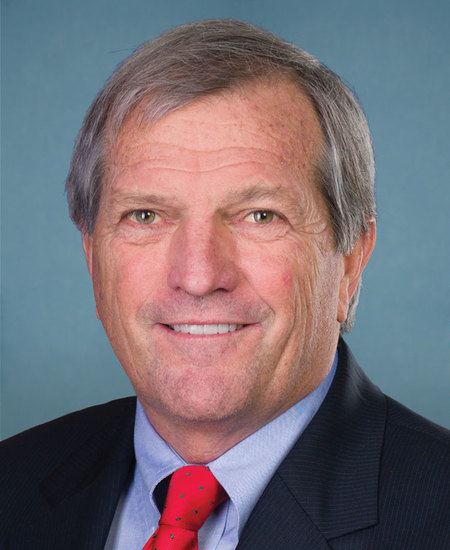
Rep. Mark DeSaulnier
Sponsored bills
Social Media Disclosure And Transparency of Advertisements Act of 2021 or the Social Media DATA Act This bill requires consumer-facing websites and mobile applications with a large number of users to maintain advertisement libraries and make them available to academic researchers and the Federal Trade Commission (FTC). Each library must include, among other things, a digital copy of the advertisement content, a description of the target audience, and the number of views generated from the advertisement. The FTC and state attorneys general are authorized to enforce these requirements, and the FTC must use information from the advertisement libraries to enforce other laws within its jurisdiction. Additionally, the bill establishes a working group to address social media research access and make policy recommendations with respect to the information an interactive computer service (e.g., a social media company) should make available to academic researchers.
Army Security Agency Monument Act This bill directs the Department of the Army to place in Arlington National Cemetery a monument honoring Army Security Agency veterans if the National Army Security Agency Association agrees to certain requirements, including that the association pay the monument's site preparation, construction, and maintenance costs.
United States Army Rangers Veterans of World War II Congressional Gold Medal Act This bill provides for the award of a single Congressional Gold Medal to the U.S. Army Rangers Veterans of World War II in recognition of their dedicated service during World War II.
Increasing Access to Mental Health in Schools Act This bill directs the Department of Education (ED) to establish a grant program and a student loan forgiveness program to increase the number of school-based mental health services providers in elementary and secondary schools. First, ED must award grants to partnerships between educational agencies and graduate institutions to increase the number of school-based mental health services providers employed by low-income local educational agencies (LEAs). Grant funds may be used for specified purposes, including to provide student loan forgiveness and tuition credits and to support recruitment, hiring, and training. In addition, ED must establish a program to provide student loan forgiveness for individuals who (1) are not, and have never been, participants in the grant program established by the bill; and (2) have been employed by low-income LEAs for five or more consecutive school years as mental health services providers.
Computer Science for All Act of 2021 This bill establishes a program through which the Department of Education must award grants to states, local educational agencies, and eligible tribal schools to serve as models for national replication of computer science education expansion efforts. Grant recipients must use these funds for certain activities, including training teachers to teach computer science and expanding access to high-quality learning materials and online options.
Veteran Education Empowerment Act This bill reauthorizes through FY2029 and otherwise revises a Department of Education (ED) grant program for student veteran centers. Specifically, ED must make grants to institutions of higher education (IHEs) or consortia of IHEs to establish, maintain, improve, or operate a student veteran center. A student veteran center is a dedicated space on a campus that provides students who are veterans or members of the Armed Forces with (1) a lounge or meeting space for themselves, their spouses or partners, their children, and veterans in the community; and (2) a centralized office for student veteran services that serves as a single point of contact to coordinate comprehensive support services for student veterans.
Reproductive Rights are Human Rights Act of 2021 This bill directs the Department of State to include in its annual reports on human rights in countries receiving U.S. development and security assistance a discussion of the status of reproductive rights in each country. This must include whether a country has adopted and enforced policies to (1) promote access to contraception and accurate, nondiscriminatory family planning and sexual health information; (2) provide services to ensure safe and healthy pregnancy and childbirth; (3) expand or restrict access to safe abortion services; and (4) prevent and treat sexually transmitted diseases. For each country, the reports shall also contain (1) data concerning pregnancy-related injuries and deaths; and (2) a description of the nature and extent of discrimination and violence against women, girls, and LGBTQI+ individuals in health care settings and the relevant government's response to such actions.
Trees for Residential Energy and Economic Savings Act of 2021 or the TREES Act of 2021 This bill directs the Department of Energy (DOE) to establish a grant program for states, local governments, Indian tribes, and other entities to facilitate tree planting projects that reduce residential energy consumption. Under the program, DOE may award grants to facilitate the planting of at least 300,000 trees annually in residential neighborhoods.
Safe Gun Storage Act of 20 21 This bill requires safety standards for firearm locks and safes. Under such standards, firearm locks must be reasonably designed to (1) prevent the firearm from discharging while the lock is activated, and (2) prevent unauthorized access to the firearm. Further, firearm safes must be reasonably designed to (1) secure firearms, and (2) prevent unauthorized access to the safe through physical manipulation or damage.