

Green New Deal for Public Schools Act of 2021 This bill provides environmental and educational resources to public elementary and secondary schools and Bureau of Indian Education (BIE) schools. Specifically, the bill requires the Department of Energy's (DOE's) Office of Energy Efficiency and Renewable Energy to provide climate capital facilities grants to eligible entities (e.g., public schools and BIE schools). Grant recipients must use these funds to construct new, or convert existing facilities into, healthy zero-carbon schools. Healthy zero-carbon school refers to a school with highly energy-efficient facilities that produce or procure sufficient carbon-free and pollution-free renewable energy to meet the school's needs. Next, the bill directs the Department of Education (ED) to award resource block grants to qualified local educational agencies (LEAs) to hire and retain educators and support staff in high-need schools. ED must award grants to eligible consortia of LEAs for educational equity planning and implementation. In addition, ED must establish the Climate Change Resiliency Program to increase the resiliency of public and BIE schools during climate change-related events, natural disasters, and public health crises. Further, ED must establish a related grant program for state educational agencies. Grant recipients must use these funds for certain activities (e.g., green infrastructure projects). The bill establishes the Office of Sustainable Schools within ED to (1) administer the resource block grant and educational equity grant programs, and (2) coordinate with DOE and the White House Office of Domestic Climate Policy on climate capital facilities grants and the Climate Change Resiliency Program.
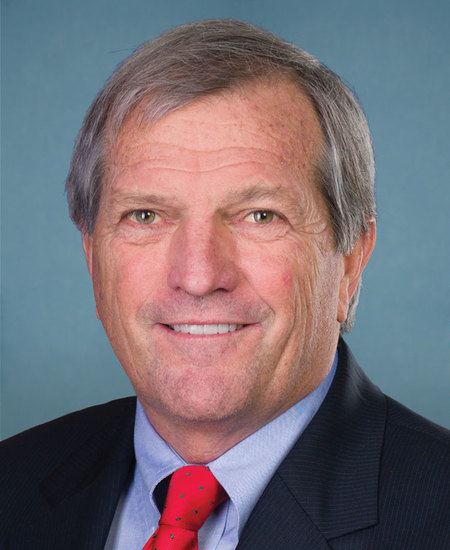
Rep. Mark DeSaulnier
Sponsored bills
Pathways to Health Careers Act This bill provides funding for, reauthorizes through FY2026, and makes a variety of changes to certain grants administered by the Department of Health and Human Services that provide education and training to low-income individuals for health care occupations, including by establishing a new competitive grant for projects designed to train low-income individuals in allied health professions.
Cancer Care Planning and Communications Act of 2021 This bill provides for Medicare coverage and payment of cancer care planning and coordination services for individuals who are diagnosed with or treated for cancer, including the development of treatment plans, follow-up care, and any necessary revisions.
This bill extends by one year the deadline for completion of proposed management plans for the Appalachian Forest National Heritage Area in West Virginia and Maryland, the Maritime Washington National Heritage Area in Washington, the Mountains to Sound Greenway National Heritage Area in Washington, the Sacramento-San Joaquin Delta National Heritage Area in California, the Santa Cruz Valley National Heritage Area in Arizona, and the Susquehanna National Heritage Area in Pennsylvania.
Preserving Rules Ordered for The Entities Covered Through 340B Act of 2021 or the PROTECT 340B Act of 2021 This bill prohibits pharmacy benefit managers (PBMs) and health insurance plans from discriminating against health providers participating in the 340B drug pricing program, including pharmacies contracted with such providers to dispense 340B drugs. The 340B program allows certain providers to receive covered outpatient drugs at reduced prices from manufacturers. Specifically, PBMs and insurance plans may not reimburse 340B participants at a lower rate than other entities not participating in the program; impose differing terms (such as fees, charge-backs, or audits) on 340B participants; interfere with an individual's choice to receive drugs from a 340B participant; require 340B participants to identify which drugs fall within the program; or refuse to contract with a 340B participant on the basis that they utilize the program. Violations of this bill are subject to a civil penalty of not more than $5,000 per violation per day. These prohibitions also apply to prescription drug (Part D) sponsors under Medicare. The bill also provides for a process to prevent duplicate 340B drug discounts to states under Medicaid.
Global Health Security Act of 2021 This bill directs the United States to implement a strategy to strengthen global health security, including by requiring the President to create the Global Health Security Agenda Interagency Review Council to implement the Global Health Security Agenda. The agenda is an initiative launched by nearly 30 nations to address global infectious disease threats. The council's responsibilities include (1) providing policy recommendations on agenda-related goals, objectives, implementation, and other international efforts to strengthen pandemic preparedness and response; (2) helping federal agencies with implementation; and (3) reviewing the progress and challenges in achieving U.S. commitments, including assistance to help other countries meet agenda targets. The bill also directs the federal agencies involved with the agenda to prioritize its implementation and to take certain steps to achieve that goal. The President shall coordinate a strategy for responding to global health security emergencies and submit a report on the implementation of this strategy. Additionally, the Department of State should seek to enter into negotiations with donors, relevant United Nations agencies, and other multilateral stakeholders to establish a Fund for Global Health Security and Pandemic Preparedness that (1) closes gaps in global health security and pandemic preparedness; and (2) builds capacity in eligible partner countries related to global health security, infectious disease control, and pandemic preparedness. The fund should provide grants, technical assistance, and innovative funding mechanisms to achieve its purposes.
Opening Doors for Youth Act of 2021 This bill requires the Department of Labor to provide funding to states for the development or expansion of summer and year-round youth employment programs that (1) match youth participants with appropriate employers for high-quality employment opportunities; and (2) provide work-readiness training and educational programs, coaching and mentoring, career and postsecondary education planning services, financial literacy education, and supportive services.
Safe Schools Improvement Act of 2021 This bill requires states to direct their local educational agencies (LEAs) to establish policies that prevent and prohibit bullying and harassment of elementary and secondary school students. In particular, these policies must prohibit bullying and harassment based on race, color, national origin, sex, sexual orientation, gender identity, disability, or religion. Further, LEAs must provide (1) students, parents, and educational professionals with annual notice of the conduct prohibited in their disciplinary policies; (2) students and parents with grievance procedures that target such conduct; and (3) the public with annual data on the incidence and frequency of that conduct at the school and LEA level. The Department of Education must conduct and report on an independent biennial evaluation of programs and policies to combat bullying and harassment in elementary and secondary schools. The National Center for Education Statistics must collect state data to determine the incidence and frequency of the conduct prohibited by LEA disciplinary policies.
Furthering Underutilized Technologies and Unleashing Responsible Expenditures for Western Water Infrastructure and Drought Resiliency Act or the FUTURE Western Water Infrastructure and Drought Resiliency Act This bill addresses water-related resources and infrastructure. Among other provisions, the bill reauthorizes through FY2026 the California Bay-Delta program, the Water Availability and Use Science Program, and a water desalination program; reauthorizes through FY2028 the Fisheries Restoration and Irrigation Mitigation program; creates various grants for water projects and expands the allowable uses of grants for water recycling and reuse projects; establishes a funding source for certain water resources development projects in western states; expands the tax exclusion for energy conservation subsidies provided by public utilities to include certain subsidies for water conservation or efficiency measures and stormwater management measures; establishes prizes for water technology applications; requires the U.S. Army Corps of Engineers to use specified funds for water control manual updates for forecast-informed water operations projects; and allows certain funding to be used for the remediation of land formerly used to cultivate marijuana. The Department of the Interior must, within 10 years, make certain streamgages operational. (Streamgages are fixed structures at streams, rivers, lakes, and reservoirs that measure water level and related streamflow.) The bill establishes programs related to ecosystem protection and restoration, including programs to (1) incentivize farmers to keep fields flooded during appropriate periods for waterbird habitat creation and maintenance, and (2) prepare drought plans to sustain critically important fisheries.
Excellence in Mental Health and Addiction Treatment Act of 2021 This bill increases the number of states that may participate in two-year Medicaid demonstration programs that improve access to community mental health services. It also provides for additional grants to certified community behavioral health clinics.