

Maddy summaryHR 6088, the *Restoring Food Security for American Families and Farmers Act of 2025*, repeals specific sections (10101-10108) from a prior reconciliation law. This action revives previous provisions related to food security programs that were modified by those repealed sections. The bill directly affects federal food assistance and agricultural support programs by restoring their prior legal framework. It does not create new policies but reverses recent changes to existing food security measures.
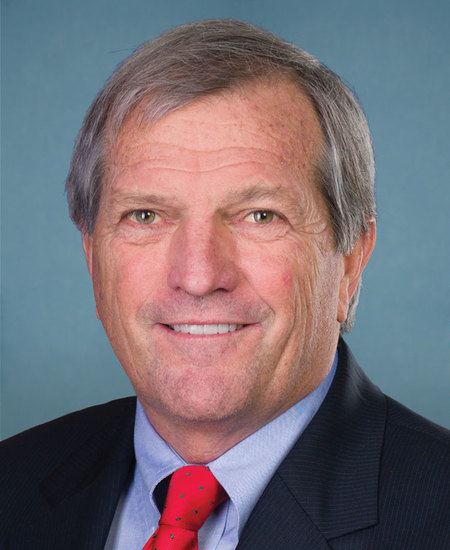
Rep. Mark DeSaulnier
Sponsored bills
Maddy summaryHR 909, the Crime Victims Fund Stabilization Act of 2025, modifies how funds from the False Claims Act are deposited into the Crime Victims Fund. It specifies that from 2025 through 2029, certain False Claims Act proceeds (specifically those for qui tam plaintiff payments and government damage reimbursements) cannot be deposited into the fund. This change directly affects the composition of the Crime Victims Fund by excluding these specific revenue streams during the specified period. The bill does not create new benefits or alter victim services; it only adjusts fund allocation rules for existing False Claims Act revenues.
Maddy summaryThis concurrent resolution (HCONRES 69) commemorates the 15th anniversary of the January 8, 2011, Tucson shooting that killed six people and injured 13, including former Congresswoman Gabby Giffords. It honors the victims, survivors, and Giffords - now a prominent advocate for gun violence prevention - and recognizes her leadership in promoting civility and reducing gun violence. The resolution also commends Tucson residents and first responders for their resilience and reaffirms Congress’s commitment to respectful dialogue and opposing political violence. As a ceremonial resolution, it does not create new laws or policies.
Maddy summaryThis resolution (HRES 980) commemorates the one-year anniversary of the 2025 Southern California wildfires, which impacted communities like Pacific Palisades and Altadena. It honors the 31 people who lost their lives, commends first responders who fought the fires, and affirms the House's ongoing support for affected communities. The resolution is purely ceremonial and does not create new laws, allocate funds, or change existing policies. It directly affects the Southern California communities devastated by the wildfires and their residents.
Maddy summaryThis bill creates a federal grant program to fund "low carbon corridors" connecting different transportation systems (like public transit, bike lanes, and electric vehicle infrastructure) to reduce emissions and improve connectivity. It establishes value capture financing mechanisms through tax increment districts to fund transportation infrastructure and expands tax-exempt bonds for transit-oriented development. The bill also creates a grant program to help workers transition from fossil fuel industries to sustainable jobs and establishes a National Employment Corps to guarantee employment for those displaced by the energy transition. Local governments, transit agencies, and communities near transportation hubs would directly benefit from these provisions, while requiring projects to follow prevailing wage laws.
Maddy summaryHR 4611 (EACH Act of 2025) requires all federally funded health programs - including Medicaid, Medicare, military health plans, and the Indian Health Service - to cover abortion services without restrictions, repealing the Hyde Amendment's long-standing ban on federal funding for most abortions. This directly affects millions of people enrolled in these programs, particularly low-income women, women of color (including 25% of Black women and 22% of Hispanic women on Medicaid), and young people. The bill mandates coverage in all federally administered health plans and prohibits state or private insurers from restricting abortion coverage in health insurance. It aims to eliminate current federal and state barriers that deny abortion access to people who rely on government health programs.
Maddy summaryThis bill creates a $25,000 one-time payment for eligible individuals who served as crewmembers in the U.S. Merchant Marine between December 1941 and December 1946. To qualify, applicants must not have received benefits under the 1944 GI Bill, provide proof of service (like a DD-214), and submit an application to the Department of Veterans Affairs. The bill authorizes $125 million in fiscal year 2026 to fund these payments, which will be distributed in the order applications are received. It directly affects surviving WWII Merchant Mariners or their estates who meet the service criteria.
Maddy summaryThis bill provides tax relief to individuals affected by qualifying disasters. It allows taxpayers to use their previous year's earned income to calculate tax credits like the Earned Income Tax Credit if their 2025 income was reduced by a disaster. The bill temporarily removes limits on charitable contributions for disaster relief, permits penalty-free withdrawals up to $100,000 from retirement plans, and adjusts rules for claiming personal casualty losses related to disasters. These provisions apply to individuals whose principal homes were in designated disaster areas during specific periods. The bill aims to help disaster survivors recover financially by easing tax burdens related to their losses.
Maddy summaryHR 6849 designates the U.S. Postal Service facility at 2121 Meridian Park Boulevard in Concord, California, as the "Carl Jefferson Post Office Building." This bill updates all official U.S. government references (laws, maps, documents) to the facility to reflect its new name. It directly affects the postal facility itself and any federal records mentioning it. The bill contains no substantive policy changes or funding provisions, solely serving a ceremonial naming purpose.
Maddy summaryThe Antisemitism Response and Prevention Act of 2025 aims to combat rising antisemitism through evidence-based policies rather than political weaponization. It requires universities to designate Title VI coordinators to handle civil rights complaints, establishes a National Coordinator to Counter Antisemitism within the Department of Justice, and creates a Hate Crime Reporting Center at the FBI to improve data collection on hate crimes. The bill prohibits using antisemitism accusations to restrict diversity programs, political advocacy, or immigration policies, and ensures nonprofit security grants for Jewish community centers cannot be tied to unrelated political conditions. The legislation authorizes $280 million annually for the Department of Education's Office for Civil Rights and $50 million for the Hate Crime Reporting Center from 2027-2032.