

Maddy summaryThis bill requires Medicare Advantage plans to implement electronic pre-approval systems for medical services by 2028 and meet transparency reporting standards starting in 2027. Plans must publicly report data on approval/denial rates, appeal outcomes, response times, and technology use for pre-approval requests, including details on how denials relate to clinical criteria. It establishes a 24-hour response timeframe for certain requests and mandates annual reviews of pre-approval requirements based on data and input from seniors and providers. The law directly affects Medicare Advantage plans, seniors enrolled in these plans, and healthcare providers who submit pre-approval requests. These changes aim to make the pre-approval process faster, more transparent, and more accountable for seniors seeking covered medical services.
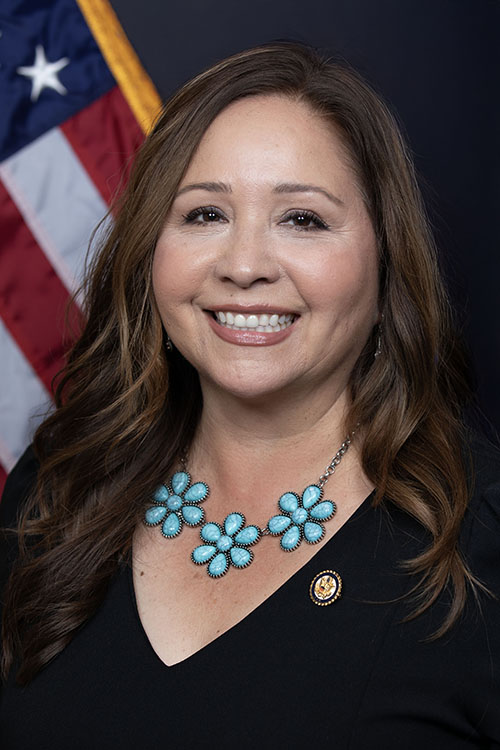
Rep. Adelita S. Grijalva
Sponsored bills
Maddy summaryThe Menopausal Workers' Fairness Act of 2026 expands federal employment protections to explicitly cover workers experiencing menopause and related symptoms, requiring employers with 15 or more employees to provide reasonable accommodations unless doing so causes significant business hardship. Under this bill, it would be illegal for employers to discriminate against or retaliate against qualified employees who request accommodations for issues such as hot flashes, fatigue, or mood changes, while also mandating that medical information regarding these conditions remains confidential. The legislation includes a specific list of low-cost adjustments, such as allowing extra restroom breaks or flexible sitting and standing, that employers must grant without requiring extensive documentation. Enforcement and legal remedies for violations will follow the same procedures currently used for age and disability discrimination claims, and the Equal Employment Opportunity Commission is tasked with issuing detailed regulations within a year of the law's passage.
Maddy summaryThe Fund Schools, Not ICE Act directs unspent funds originally allocated to Immigration and Customs Enforcement to be transferred to the Department of Education for use in elementary and secondary school programs. Additionally, the bill requires the Secretary of Homeland Security to sell eleven specific immigration detention warehouses that were purchased between January 1, 2026, and March 31, 2026. These measures aim to redirect financial resources from immigration enforcement toward educational initiatives while mandating the disposal of recently acquired detention facilities.
Maddy summaryThis resolution expresses support for reproductive justice as the United States approaches its 250th anniversary. It defines reproductive justice as the right to have children, not have children, and raise them in safe communities, emphasizing that these rights should not depend on race, income, or location. The document calls for policies that ensure universal access to comprehensive healthcare, including abortion and contraception, while condemning the criminalization of pregnancy outcomes and forced sterilization. Additionally, it advocates for universal paid family leave, affordable childcare, and medically accurate sex education to support families. Ultimately, the resolution frames reproductive freedom as a fundamental human right and a cornerstone of democracy rather than a privilege.
Maddy summaryThe Find Our Families Act of 2026 requires the Department of Homeland Security to create a public online system that allows families to locate individuals detained by Customs and Border Protection or Immigration and Customs Enforcement. This system must provide search results within eight hours of detention, display information in multiple languages, and include specific details such as names, dates of birth, and facility locations, while excluding data for minors. The bill also mandates that families be notified within five hours if a detainee is transferred for medical care and establishes new reporting requirements for CBP arrests, including details on the circumstances of the arrest and the number of agents involved. Additionally, the legislation creates a process for families to report errors in detainee information and imposes penalties on employees or contractors who fail to comply with these data-sharing and reporting obligations.
Maddy summaryThe DHS Surveillance Technology Moratorium Act of 2026 temporarily halts the Department of Homeland Security from using funds to start, renew, or expand contracts for surveillance tools used in immigration enforcement, such as facial recognition and predictive analytics. This pause applies to agencies like U.S. Immigration and Customs Enforcement and Customs and Border Protection, though existing contracts can continue until a review is complete. The bill mandates an independent audit within 180 days to examine data collection practices, privacy impacts, and the accuracy of these technologies, followed by a public report detailing their use and capabilities. The funding ban remains in effect until the audit is finished, a public report is released, and the department demonstrates it has implemented necessary safeguards to protect civil liberties. Once these conditions are met, the moratorium lifts, but the department must submit annual reports on its continued use of these technologies and any related privacy complaints.
Maddy summaryThis bill establishes a new Office for Civil Rights and Civil Liberties within the Department of Homeland Security, led by an Officer who reports directly to the department head. The Office is tasked with overseeing compliance with civil rights laws, reviewing potential abuses or profiling by employees, and integrating these protections into all department policies and programs. It grants the Officer authority to investigate complaints, issue public reports on findings, and coordinate with other officials to ensure diverse communities are engaged effectively. Additionally, the legislation requires each major department unit to have its own civil rights officer and mandates annual reporting to Congress on the Office's activities and progress.
Maddy summaryThe Living Wage for Federal Contractors Act mandates that employees working on federal contracts receive a basic hourly wage that starts at $17.00 and increases annually to $25.00, with future adjustments tied to inflation. This requirement applies to all workers performing services or labor on federal contracts, including those at any subcontracting tier, while offering a slightly lower initial rate for tipped employees. To enforce compliance, the bill allows the government to terminate contracts for wage violations, requires contractors to repay double the amount of unpaid wages, and prohibits future contract awards to firms repeatedly found in violation. Additionally, the legislation updates existing wage standards under the Davis-Bacon and Service Contract Acts to ensure they align with the new federal living wage floor.
Maddy summaryThe LIFT the BAR Act aims to restore access to federal benefits for lawfully present noncitizens by repealing several restrictions imposed by the 1996 welfare reform law and a 2024 reconciliation bill. Specifically, it would allow eligible noncitizens to receive SNAP food assistance, Medicaid, CHIP, and child nutrition programs, while also updating legal terminology to refer to "noncitizens" rather than "aliens" in relevant statutes. The legislation includes provisions to ensure these individuals can qualify for premium tax credits and would require federal agencies to issue implementation guidance within 180 days of enactment.
Maddy summaryThis bill, titled the Encouraging Public Service in Our National Parks and Public Land Act, requires the Secretary of the Interior to make specific federal recreational lands and waters free of admission fees on designated dates throughout the year. The key provision mandates that these free access days include Martin Luther King Jr. Day, the first day of National Park Week, Juneteenth, Great American Outdoors Day, National Public Lands Day, and Veterans Day. Additionally, the legislation grants the Secretary the authority to establish extra fee-free days beyond those listed. These changes directly affect visitors to national parks and other federal recreational areas by providing them with guaranteed free entry on these holidays and observances.