

Maddy summaryThis bill requires pharmacy benefits managers (PBMs) administering prescription drug benefits for federal employee health plans to reimburse pharmacies at specific rates, including the national average drug cost plus a small percentage or $50, whichever is lower. It prohibits PBMs from favoring their own pharmacies, restricting patient choice, or reducing pharmacy payments after claims are processed. The bill establishes $10,000 civil penalties for violations, with debarment from federal health plans after 10 penalties in 10 years. This directly affects PBMs, in-network pharmacies, and federal health benefit plans covering millions of federal employees and their families. The law aims to ensure fair reimbursement practices and maintain pharmacy choice under the Federal Employees Health Benefits Program.
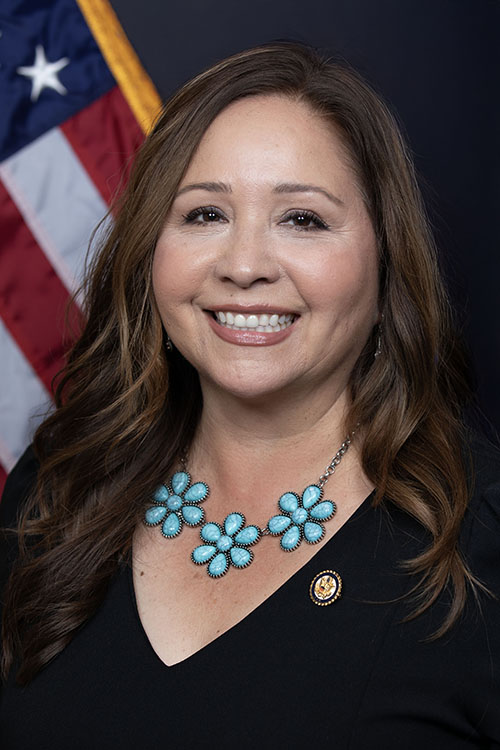
Rep. Adelita S. Grijalva
Sponsored bills
Maddy summaryThe Justice for Incarcerated Moms Act aims to improve maternal health outcomes for pregnant and postpartum individuals in the criminal justice system by restricting financial incentives for states that use restraints on pregnant inmates. Under the bill, states receiving federal justice grants would face a 25 percent funding penalty if they fail to implement laws limiting the use of shackles on pregnant individuals, with those withheld funds redirected to compliant states. The legislation also directs the Bureau of Prisons and the Department of Justice to create and fund programs in at least six federal facilities and across various state and local prisons that provide specialized prenatal care, mental health support, and reentry assistance. These programs are designed to address specific health disparities, particularly for racial and ethnic minority groups, by offering culturally competent care, nutrition counseling, and opportunities to maintain contact with newborn children. Additionally, the act requires an independent oversight organization to monitor program implementation and mandates a Government Accountability Office report to analyze maternal and infant health data within the correctional system.
Maddy summaryThe MOMMIES Act expands Medicaid and CHIP coverage for low-income pregnant and postpartum individuals by extending continuous benefits for one year after childbirth and mandating full coverage of oral health services. To support these changes, the bill includes maintenance of effort provisions that prevent states from restricting eligibility or reducing benefits for this population, alongside a temporary 100 percent federal funding match for states that increase spending on these services. Additionally, the legislation establishes a five-year demonstration project to fund maternity care home models that integrate medical and social support services, while also requiring studies and guidance on improving access to doula services and telehealth for maternity care.
Maddy summaryThe Save MEDICARE Act of 2026 aims to improve the Medicare Advantage program by starting in 2028 with several changes to how health plans are paid and monitored. It requires the government to exclude diagnoses from chart reviews when calculating payments to prevent plans from inflating costs based on questionable data. The bill also speeds up audits and appeals to ensure faster resolution of coding disputes and introduces a new penalty system to recover overpayments from plans. Additionally, the law allows states to enforce Medicare rules within their borders and bans financial incentives for doctors based on how they code patient records. Finally, it establishes a mechanism for the Department of Veterans Affairs to recover costs when Medicare Advantage plans cover care that should have been paid for by the VA.
Maddy summaryThe Protecting Students from Worthless Degrees Act restricts federal funding for colleges that offer programs preparing students for licensed professions unless those programs guarantee licensure eligibility in the student's specific state and provide required clinical or internship placements. To prevent low-earning degrees, the bill mandates that programs must maintain a debt-to-earnings ratio below 8 percent and a discretionary debt-to-earnings ratio below 20 percent, with institutions barred from enrolling students in non-compliant programs for up to three years. Additionally, the legislation requires colleges to clearly warn students if a program does not meet the educational prerequisites for practicing a profession in the state where the student lives. Finally, the act enforces stricter rules on distance learning by requiring schools to be legally authorized in every state where their online students reside, unless covered by a specific reciprocity agreement between states.
Maddy summaryThe Family Grocery and Farmer Relief Act aims to break up the highly concentrated meatpacking industry by forcing major companies to divest assets and stop operating in multiple meat categories simultaneously. The Federal Trade Commission is authorized to order these divestitures if market concentration remains too high or if a single firm controls a large share of beef processing, with a specific goal of transferring assets to farmers' cooperatives and small businesses. Additionally, the bill mandates that foreign-owned meatpacking firms divest their U.S. operations and prohibits companies from acquiring new assets in lines of protein they do not already process. To support these changes, the legislation provides funding for new competitors and requires the FTC to actively enforce these rules against firms that fail to comply.
Maddy summaryThe Stop CHEATERS Act directs the Internal Revenue Service to increase its enforcement efforts against high-income individuals and large corporations by allocating billions of dollars in additional funding for tax audits, criminal investigations, and taxpayer services through fiscal year 2031. A significant portion of this funding is designated for modernizing the IRS's technology and business systems to improve its ability to detect fraud and noncompliance. The legislation also requires the IRS Commissioner to submit regular reports to Congress detailing plans to shift auditing resources toward wealthy taxpayers and analyzing how much unpaid tax is owed by different income groups.
Maddy summaryThis concurrent resolution does not create new laws or change existing regulations but serves to formally recognize the ongoing need for better physical access in federally funded facilities, especially for people with disabilities. It highlights statistics on disability prevalence and employment gaps while reaffirming support for the Architectural Barriers Act of 1968 and the Americans with Disabilities Act of 1990. The measure pledges to use universal and inclusive design as a guiding principle for future infrastructure projects and encourages full compliance with current accessibility laws.
Maddy summaryThe Mamas First Act aims to reduce maternal mortality rates by expanding Medicaid coverage to include support services from doulas, midwives, tribal midwives, and lactation providers. This legislation modifies the Social Security Act to allow these professionals to bill Medicaid for prenatal, labor, and postpartum care delivered in various settings, including homes, hospitals, and clinics. To qualify for reimbursement, doulas must hold a certification requiring continuing education and gather specific client or provider recommendations, while midwives and lactation support providers must meet defined state or international standards. The bill also prohibits Medicaid programs from charging copayments or deductibles for these essential services, with the changes taking effect on January 1, 2027.
Maddy summaryThe Essential Caregivers Act of 2026 requires nursing homes, long-term care hospitals, rehabilitation facilities, and intermediate care facilities to allow two chosen family members or friends to visit residents during times when regular visitation is suspended. These essential caregivers must agree to follow the facility's existing safety and infection control rules, which are no more restrictive than those applied to staff. While facilities can limit access for the first seven days of a suspension or deny entry if a caregiver shows symptoms of a serious infectious disease, they cannot block visits for end-of-life care. Additionally, the bill mandates that complaints about denied access to essential caregivers be investigated and resolved within three days.