

Maddy summaryThis bill requires the Federal Energy Regulatory Commission (FERC) to consider environmental justice and greenhouse gas emissions when reviewing applications for natural gas pipeline projects and other infrastructure needing a certificate of public convenience and necessity. FERC must evaluate how projects affect communities disproportionately burdened by pollution (defined as communities of color, indigenous groups, or low-income areas) and quantify all foreseeable greenhouse gas emissions, including upstream leaks and downstream combustion. Projects emitting 100,000+ metric tons of CO2 equivalent annually are presumed to have significant climate impacts. Applicants must submit mitigation plans to address environmental effects, and FERC must attach enforceable conditions to certificates if mitigation is practicable - or provide a detailed explanation if it isn’t.
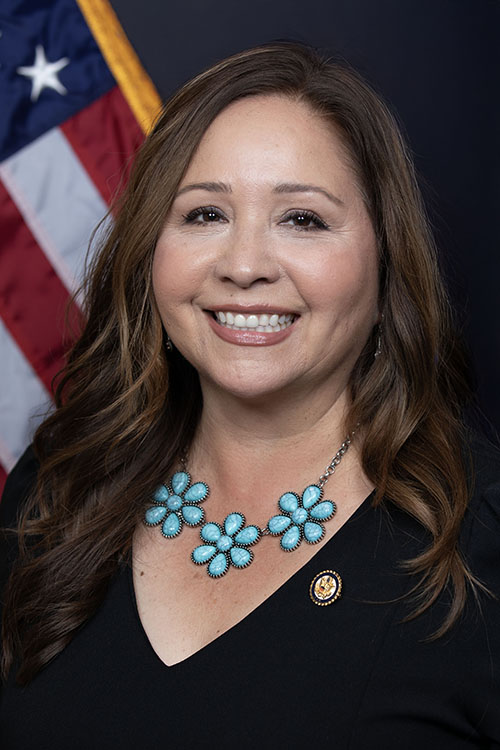
Rep. Adelita S. Grijalva
Sponsored bills
Maddy summaryThis bill creates federal grants to support STEM education programs for girls and underrepresented minorities in K-12 schools. It directs $250,000 annually per grant to school districts serving high-poverty communities (with at least 40% students eligible for free/reduced lunch) to fund specific activities like after-school STEM programs, teacher training on reducing bias, mentorship, parental engagement, and summer camps. The grants require schools to track student participation and academic progress in STEM through annual evaluations. The program aims to increase opportunities for these students to develop skills and pursue STEM careers, while ensuring funds supplement - rather than replace - existing resources.
Maddy summaryHR 6407, the RCORP Authorization Act, authorizes $165 million annually (2026-2030) to fund the Rural Communities Opioid Response Program. This program provides grants to states, tribes, rural health offices, and other eligible entities to expand prevention, treatment, and recovery services for opioid and substance use disorders in rural areas. Funds can support planning, evidence-based service models, and coordination with local communities but cannot be used for real property acquisition. The bill directly affects rural communities facing opioid crises and the organizations delivering care through these grants.
Maddy summaryHR 6391, the Save Oak Flat from Foreign Mining Act, repeals Section 3003 of the 2014 National Defense Authorization Act that would have transferred Oak Flat (2,422 acres in Arizona’s Tonto National Forest) to Resolution Copper for mining. The bill withdraws Oak Flat from all public land use, preventing the foreign-owned mining venture (Rio Tinto/BHP) from extracting copper beneath the site for export to China. It directly protects the area, which is a sacred site for Indigenous peoples and a National Register Historic Property, from a mine projected to consume 250 billion gallons of groundwater over 40 years and cause significant land subsidence. The bill halts a process that would have allowed foreign corporations to mine copper from public land without requiring domestic smelting or benefiting U.S. consumers.
Maddy summaryThe Artificial Intelligence Civil Rights Act of 2025 requires developers and deployers of AI systems that make decisions affecting "consequential actions" (such as employment, housing, healthcare, education, and credit) to conduct pre-deployment evaluations and annual impact assessments by independent auditors. The bill mandates transparency requirements including clear disclosures to individuals about how AI is used in decision-making, establishes a right to human alternatives for significant AI-driven decisions, and prohibits discrimination based on protected characteristics like race, gender, or disability. It creates enforcement mechanisms through the Federal Trade Commission, state attorneys general, and private lawsuits, with penalties including civil penalties of up to 4% of annual revenue. The act also requires developers to provide explanations for AI-driven decisions and sets standards for data collection to prevent harm and ensure fairness in critical life areas.
Maddy summaryHR 6361, the Ban AI Denials in Medicare Act, prohibits the U.S. Department of Health and Human Services from implementing or testing Medicare models that use artificial intelligence for prior authorization of covered services under traditional Medicare. Specifically, it blocks the existing WISeR model (described in a 2025 federal notice) and prevents future models from using AI to deny coverage for Medicare Part A or Part B services. This bill directly affects Medicare beneficiaries and healthcare providers who would otherwise face AI-driven coverage decisions. The key mechanism is an amendment to the Social Security Act, explicitly banning the use of AI in prior authorization systems within Medicare's innovation models.
Maddy summaryHR 5731, the School Food Modernization Act, provides funding to help schools upgrade facilities and equipment for healthier meal programs. It authorizes $300 million in loan guarantees (covering up to 80% of costs) and $35 million annually for grants to support kitchen renovations, equipment purchases, and food safety improvements for local schools and tribal organizations. The bill also allocates $10 million yearly to fund training programs for school food service staff, developed by third-party organizations, to meet nutrition standards. These provisions directly affect public school districts, tribal schools, and their food service operations by enabling infrastructure upgrades and staff training.
Maddy summaryThe FRESHER Act of 2025 requires the Secretary of the Interior to study stormwater runoff impacts from oil, gas, and mining operations on groundwater and aquifers. It mandates a specific analysis of measurable contamination, groundwater resources, and aquifer susceptibility to contamination in affected areas. The study must be completed within one year of the bill's enactment, with results reported to Congress. This bill directly affects oil, gas, and mining operations by establishing new federal study requirements for their stormwater runoff.
Maddy summaryThis bill requires Medicaid programs to cover lung cancer biomarker testing for eligible enrollees, beginning January 1, 2027. It directly affects Medicaid recipients diagnosed with lung cancer who need these specific tests to guide treatment decisions. The key provision adds "lung cancer biomarker testing" as a mandatory benefit under Medicaid, amending the Social Security Act to require coverage for this diagnostic service. The change applies to all state Medicaid programs participating in the federal program, ensuring standardized access to this testing method. Coverage starts in 2027, with no additional state cost-sharing required for this specific test.
Maddy summaryThis bill establishes a Lung Cancer Task Force within the National Institutes of Health (NIH) to examine key issues in lung cancer research and care. The task force, appointed by the NIH Director, will specifically study differences in research funding and patient access compared to other diseases, assess if federal funding matches lung cancer's health impact, and review current lung cancer screening practices in the U.S. Within 180 days of the bill's passage, the task force must submit a report to Congress with its findings and recommendations for increasing federal funding for lung cancer research. The bill directly affects federal health agencies (NIH and CDC) and aims to inform future policy decisions based on the task force's analysis.