

Maddy summaryHR 7212 establishes a federal regulatory framework under the Food, Drug, and Cosmetic Act for "cannabinoid hemp products," directly affecting their manufacturers, distributors, retailers, and consumers. It mandates FDA registration for facilities and product listing, along with adherence to new manufacturing, testing, and labeling requirements for oral, inhalable, and topical cannabinoid hemp products. Key provisions include setting cannabinoid content limits, prohibiting certain ingredients and marketing practices (like appealing to children), requiring child-resistant packaging, and establishing a minimum purchase age of 21. The bill grants the FDA authority to enforce these rules through mandatory recalls, refusal of non-compliant imports, and penalties for violations, including selling "prohibited cannabinoid products" or to underage individuals. Additionally, it creates an advisory committee to provide recommendations on cannabinoid content limits and other regulatory matters.
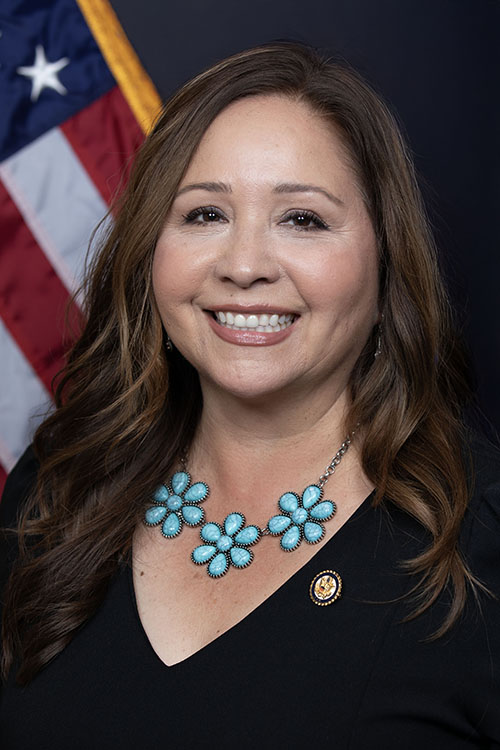
Rep. Adelita S. Grijalva
Sponsored bills
Maddy summaryHR 7190 would end immigration detention and electronic monitoring by requiring the immediate release of all detained noncitizens on their own recognizance within six months and repealing all federal laws authorizing detention. It prohibits using federal funds for detention facilities, ankle monitors, or immigration enforcement activities after specific deadlines (six months for monitors, two years for detention contracts). Instead, it establishes a new grant program to fund community-based wrap-around services - including housing, healthcare, mental health support, legal aid, and job training - provided voluntarily by non-profit organizations without surveillance or data sharing with federal agencies. The bill directly affects noncitizens currently held in detention or under electronic monitoring.
Maddy summaryThe PrEP Access Act expands Medicare Part B coverage to include pharmacist-provided HIV prevention services, such as pre-exposure prophylaxis (PrEP) counseling, medication administration, and related testing. It directly affects Medicare beneficiaries (primarily seniors) and pharmacists, allowing pharmacists to bill Medicare for these services under state law. Key provisions set payment at 80% of the lesser of actual charges or 85% of physician rates, and prohibit balance billing for these services. The policy change takes effect January 1, 2027, making PrEP more accessible through pharmacy settings.
Maddy summaryHR 7138 disallows tax deductions for mortgage interest and depreciation on single-family homes (1-4 units) owned by large investment entities with over $100 million in assets, while imposing a 100% excise tax on sales or transfers of such properties. The bill directly affects institutional landlords (e.g., large real estate investment firms), excluding government entities, nonprofits, and federally assisted housing. Revenue from the tax will fund low-income housing programs via the Housing Trust Fund. It also prohibits Fannie Mae, Freddie Mac, and Ginnie Mae from purchasing or guaranteeing mortgages for these properties. The provisions apply 18 months after enactment.
Maddy summaryThis bill requires U.S. Department of Homeland Security (DHS) law enforcement officers and agents to follow a new department-wide policy on use of force. It mandates that officers use only objectively reasonable force, prioritize de-escalation, ban chokeholds and carotid restraints, and complete regular training. The policy also requires DHS components to establish internal review teams to analyze incidents and report detailed data every six months - including incidents causing injury, death, or involving deadly force - to the public via the DHS website. Additionally, DHS must brief Congress and inform the public within 24 hours of any incident resulting in hospitalization or death.
Maddy summaryHR 7101, the "No Delay in Representation Act," requires the House of Representatives to seat members elected in special elections within five legislative days of certification of results. It mandates that newly elected members be sworn in and seated as House Members by this deadline, overriding any existing rules or laws that might delay the process. If a member declines the oath during this period, the Speaker must administer it on a mutually agreed date. This bill directly affects individuals elected to fill House vacancies through special elections, ensuring faster integration into the legislative body.
Maddy summaryHR 7125, the Stop Body Camera Paywalls Act, requires states and local governments seeking certain federal law enforcement grants to certify they do not charge fees for public access to body camera footage, dash camera footage, or prison surveillance recordings. To qualify for Byrne or COPS grant programs, applicants must confirm no financial barriers exist for the public requesting these specific video recordings. The bill makes certification mandatory for grant eligibility, directly affecting law enforcement agencies receiving federal funds under these programs.
Maddy summaryHRES 996 is a resolution introduced by multiple House members to impeach Kristi Lynn Arnold Noem, the Secretary of Homeland Security, for alleged violations of law and the Constitution. It outlines three articles of impeachment: obstructing congressional oversight by denying access to detention facilities and withholding funds, violating public trust through warrantless arrests and excessive force (including tear gas on children), and self-dealing by awarding federal contracts to associates without competitive bidding. If approved by the House, this resolution would formally charge Noem, triggering a Senate trial to determine her removal from office. The resolution itself does not enact new policy but initiates the constitutional impeachment process against a sitting Cabinet official.
Maddy summaryThis bill establishes minimum salary and wage standards for paraprofessionals and education support staff in public schools. It requires states to set a minimum annual salary of $45,000 for full-time staff (increasing with inflation after 2030) and a minimum hourly wage of $30 for part-time staff (also inflation-adjusted). The federal government will provide $25 billion in FY2026, with annual funding increases, to help states implement these standards through grants. States must ensure all local schools meet these minimums within 4 years of receiving funds, with 98% of grant money allocated directly to schools for salary increases or professional development.
Maddy summaryHR 6088, the *Restoring Food Security for American Families and Farmers Act of 2025*, repeals specific sections (10101-10108) from a prior reconciliation law. This action revives previous provisions related to food security programs that were modified by those repealed sections. The bill directly affects federal food assistance and agricultural support programs by restoring their prior legal framework. It does not create new policies but reverses recent changes to existing food security measures.