

Maddy summaryHR 5658, the Child Care for Every Community Act, establishes a federal framework to create universal, high-quality child care and early learning programs available to all young children not yet required to attend school. The bill requires that covered children (children below compulsory school age) be entitled to participate in these programs, with no fees for low-income families and sliding-scale fees for others based on family income. Key provisions include requiring full-working-day, full-calendar-year care; setting national quality standards for staff qualifications and facilities; mandating comprehensive services including health, nutrition, and family support; and requiring coordination with schools to support children's transitions to kindergarten. The bill directly affects families seeking child care, child care providers, and local communities that would administer these programs through designated "prime sponsors."
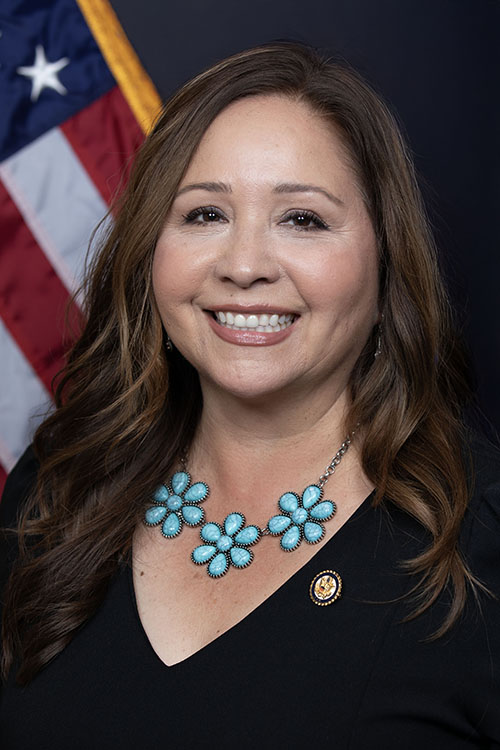
Rep. Adelita S. Grijalva
Sponsored bills
Maddy summaryThis bill would improve Medicare reimbursement for specific care services needed by people with ALS (amyotrophic lateral sclerosis). It creates a new payment system for eight key services including specialized physician support, occupational therapy, speech pathology, physical therapy, dietary support, respiratory support, registered nurse support, and coordination of medical equipment. The bill sets a base payment of $800 for these services in 2027, with annual increases based on a specific formula. This directly affects ALS patients who would have better access to these services and the medical facilities that provide them.
Maddy summaryThe Family Violence Prevention and Services Improvement Act of 2026 amends federal law to enhance support for victims of family violence, domestic violence, and dating violence. The bill authorizes $270 million annually for fiscal years 2027-2031 to fund state, tribal, and community programs, with specific funding reserved for tribal programs (12.5%), national hotlines ($20.5 million for general hotline, $4 million for Indian hotline), and services for underserved populations. It requires grantees to provide trauma-informed, culturally appropriate services while prohibiting discrimination and protecting victim confidentiality, and mandates accessibility for people with disabilities and limited English proficiency. The bill also establishes new technical assistance centers, Tribal resource centers, and community-based prevention programs to address the needs of underserved populations including Native Hawaiians, Alaska Natives, and racial and ethnic minorities.
Maddy summaryHR 4469, the PRESUME Act, simplifies eligibility for veterans exposed to radiation during military service. It removes the requirement for veterans to provide specific radiation dose evidence to qualify as "radiation-exposed veterans" under VA benefits. This change directly affects veterans who participated in nuclear testing or other radiation-related military activities and previously had to prove exact exposure levels. The bill amends 38 U.S.C. § 1112(c) to state the VA Secretary "may not require evidence of a certain dose of radiation" for this classification, streamlining access to medical benefits.
Maddy summaryHR 7322, the True Shutdown Fairness Act, requires federal agencies to pay regular wages to most employees and contractor workers during government shutdowns in fiscal year 2026, instead of furloughing them. It applies to all standard federal employees (excluding those on emergency duty) and contractor workers whose jobs would normally halt during a funding gap. Agencies must pay covered employees within 7 days of the bill's enactment for ongoing shutdowns, and contractors receive reimbursement for costs incurred keeping workers paid. The bill also prohibits agencies from implementing layoffs or placing employees on administrative leave for more than 10 days during a shutdown.
Maddy summaryHR 6925, the Kennedy Center Protection Act, voids a December 2025 vote by the Kennedy Center's Board of Trustees that renamed the facility "The Donald J. Trump and John F. Kennedy Center for the Performing Arts." The bill mandates the immediate removal of all changed signage and restores the original name "John F. Kennedy Center for the Performing Arts" in all official references, documents, and records. It also permanently prohibits the Board from voting to rename the Center, amending existing law to restrict their authority in this regard. The bill requires the Board to report on any public or private funds used for the previous renaming effort within 30 days of enactment.
Maddy summaryThe Federal Property Integrity Act (HR 6926) prohibits federal agencies from naming, renaming, designating, or redesignating any federal building, land, or asset after the current President. This law directly affects the process of naming federal properties during a President's term in office. It would prevent the practice of honoring sitting Presidents with federal property names, such as naming a courthouse or park after the President while they are still in office. The bill does not apply to properties named before a President took office or to post-presidency naming.
Maddy summaryThis resolution (HRES 1025) expresses the U.S. House of Representatives' strong condemnation of violence, oppression, and abuse against ethnic minorities in the Democratic Republic of the Congo (DRC), particularly in the eastern regions. It specifically highlights documented atrocities - including killings, sexual violence, forced displacement, and child soldier use - perpetrated by the DRC's military (FARDC), M23, and other armed groups. The resolution calls for accountability, urges the DRC government to protect displaced civilians, and demands adherence to international agreements like the June 2025 peace deal with Rwanda. As a non-binding resolution, it serves as a formal statement of U.S. concern and outlines specific actions for U.S. officials to address the crisis.
Maddy summaryThe Digital Literacy and Equity Act of 2026 establishes a federal commission to study digital literacy and equity in the United States, with specific focus on low-income and disadvantaged communities as defined in the bill. The commission will examine current federal, state, and local programs; review international initiatives; and identify best practices to improve digital literacy skills, particularly through early education and community outreach. Within two years, the commission must submit a report to Congress with findings and recommendations, including strategies to expand digital literacy access in underserved areas and a proposed national measurement method for digital literacy. This bill creates a study framework but does not mandate immediate policy changes or funding.
Maddy summaryHJRES 144 is a congressional disapproval resolution targeting a specific rule issued by the Department of Veterans Affairs (VA) on December 31, 2025, which addressed "Reproductive Health Services" (90 Fed. Reg. 61310). This resolution directs Congress to disapprove the VA rule under Chapter 8 of Title 5, U.S. Code, meaning the rule would have no legal effect if passed. The bill directly affects the VA's implementation of reproductive health services for veterans, as it seeks to nullify the agency's existing policy. This is a procedural measure, not a substantive policy change, aimed solely at blocking the VA's rule through congressional action.