

Maddy summaryThe Worker Rights and Support Act amends the Fair Labor Standards Act to require employers to provide specific break times for employees, directly affecting workers covered under federal wage and hour laws. Under the new rules, employees must receive at least a 30-minute meal break for every six hours worked, along with a 10-minute break or time to use a restroom for every four hours, and up to 20-minute breaks for medical needs. While meal breaks can be unpaid if the employee is fully relieved of work, any break where the employee remains on duty or cannot leave the site must be paid at a rate of at least one and a half times their regular wage. The bill also allows employees to voluntarily waive meal breaks but prohibits employers from forcing them to do so, and it ensures that existing collective bargaining agreements or state laws offering better protections remain in effect.
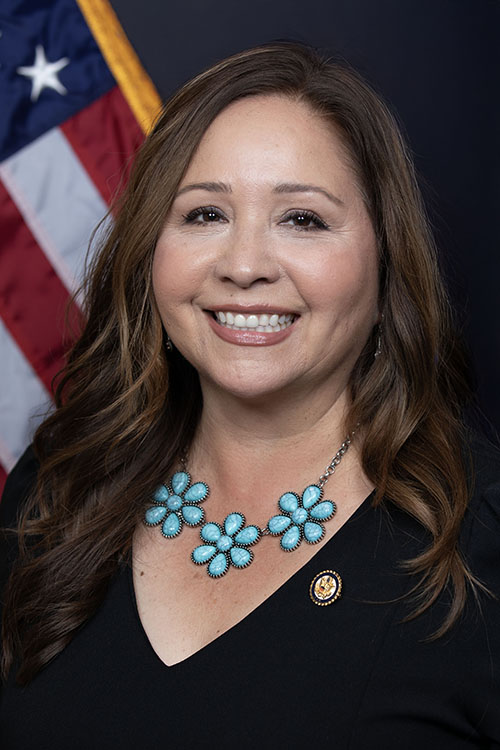
Rep. Adelita S. Grijalva
Sponsored bills
Maddy summaryThis bill authorizes the U.S. Mint to produce commemorative $5 gold and $1 silver coins marking the 25th anniversary of the September 11, 2001, terrorist attacks. The coins must feature designs honoring victims and first responders (including the inscription "Never Forget") and will be sold only during 2027-2028. All surcharges ($35 per gold coin, $10 per silver coin) collected from sales will fund the National September 11 Memorial and Museum at the World Trade Center, with no net cost to the federal government. The coins are legal tender but primarily intended for collectors, not circulation.
Maddy summaryThe Smithsonian American Women’s History Museum Act authorizes the creation of a new Smithsonian museum dedicated to women’s history, to be located within the National Mall Reserve in Washington, D.C. If the site is managed by another federal agency, the bill requires that agency to transfer the land after notifying Congress and relevant committees. The museum must ensure exhibits and programs accurately represent diverse women’s experiences by consulting a broad range of experts and community voices. The Smithsonian will submit biennial reports to Congress detailing how the museum meets these representation standards.
Bridging Agency Data Gaps and Ensuring Safety for Native Communities Act or the BADGES for Native Communities Act This bill revises federal policies and procedures related to information sharing, reporting, and investigating cases of missing, unidentified, or murdered Indians. Among other elements, the bill requires the Department of Justice to (1) establish a grant program for specified entities (e.g., tribes) to implement changes to enhance their responses to missing person cases and death investigations of interest to tribes, and (2) work with the Department of Health and Human Services to ensure that federal training resources and culturally appropriate mental health and wellness programs are available to tribal and Bureau of Indian Affairs (BIA) law enforcement officers. The Department of the Interior must establish a five-year demonstration program for the purpose of conducting or adjudicating personnel background investigations for applicants for law enforcement positions in the BIA. The bill also requires the Government Accountability Office to conduct specified studies, including a study on the evidence collection, handling, response times, and processing procedures and practices of federal law enforcement agencies.
Maddy summaryThe Scratch Cooked Meals for Students Act establishes a pilot program to provide competitive grants to school food authorities for preparing meals using unprocessed or minimally processed ingredients. These grants, which cover costs such as equipment upgrades, staff training, and technology systems, are available for a two-year period and are prioritized for schools serving high numbers of students eligible for free or reduced-price lunches. To support implementation, the bill requires recipients to collaborate with a designated technical assistance center to create strategic plans and mandates a final report detailing changes in ingredient usage and menu preparation methods. The program is funded with up to $20 million annually from fiscal years 2027 through 2031, with a portion reserved for administrative and technical assistance expenses.
Maddy summaryThis bill nullifies a specific decision made by the Endangered Species Committee regarding oil and gas operations in the Gulf of America. It immediately cancels any exemptions previously granted to these activities under the Endangered Species Act and bars federal agencies from using funds to enforce the canceled order. For a three-year period starting when the bill is enacted, the committee is prohibited from issuing any new exemptions for Gulf oil and gas projects. Consequently, all standard environmental protections required by the Endangered Species Act will continue to apply fully to these activities.
Maddy summaryThe No Taxpayer-Funded Settlement Slush Funds Act of 2026 prohibits the use of federal money to pay specific settlements involving high-ranking government officials and their close associates. It bars payments to the President, Vice President, their immediate families, cabinet members, senior executive staff, political appointees, and individuals connected to these roles, as well as any entity owned by the President or Vice President. Additionally, the bill restricts settlements related to claims about the January 6 Capitol attack, foreign election interference, or previously dismissed lawsuits, while requiring Treasury reports for large settlements and allowing the government to seek repayment if rules are broken.
Hemp Planting Predictability Act This bill extends by two years the implementation of changes to the regulation of hemp products, which reimpose certain federal controls over some hemp products. Specifically, Congress enacted the FY2026 agriculture appropriations act (P.L. 119-37) on November 12, 2025. Effective November 12, 2026, the act modifies the statutory definition of hemp products that are considered to be lawful. This bill extends the effective date to November 12, 2028. As background, the 2018 farm bill excluded hemp from the Controlled Substances Act definition of marijuana and defined hemp . As a result, hemp and hemp-derived products at or below the 0.3% delta-9 tetrahydrocannabinol (THC, the psychoactive component of marijuana) concentration threshold were no longer regulated as Schedule I controlled substances and registration with the Drug Enforcement Administration was no longer required to cultivate or handle hemp and hemp-derived products. However, hemp remained subject to Department of Agriculture and Food and Drug Administration regulation. The 2025 changes to the definition of hemp, include changing the limit to a total THC concentration of not more than 0.3% on a dry weight basis rather than only delta-9 THC, explicitly including industrial hemp, excluding seeds from a cannabis plant that exceed a certain THC concentration, and excluding various types of hemp-derived cannabinoid products. Cannabinoids refer to unique chemical compounds that are found in hemp and marijuana (e.g., THC) and are known to exhibit a range of psychological and physiological effects.
Dental Care for Veterans Act This bill expands eligibility for veterans for dental care provided by the Department of Veterans Affairs (VA). Specifically, the bill makes all veterans who are enrolled in the VA health care system eligible for VA-provided dental services. Currently, only veterans who have a service-connected dental issue or meet other narrow criteria are eligible for certain dental services. The bill phases in eligibility over four years based upon existing eligibility, degree of service-connected disability or other disability, prisoner of war status, award of a Purple Heart, financial need, or VA health care eligibility.
Maddy summaryThis joint resolution expresses Congress's disapproval of a Centers for Medicare & Medicaid Services rule that requires doctors to obtain prior authorization for certain medical services under the WISeR Model. The bill directly affects healthcare providers and patients by seeking to cancel the rule, which would otherwise mandate that specific services be approved before they are delivered. If passed, the provision would render the rule ineffective, preventing the new prior authorization requirements from taking effect. This action is part of a standard legislative process used to reject federal regulations without needing to pass a new law.