

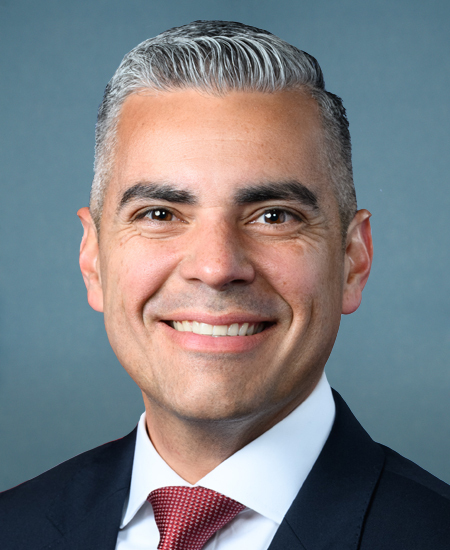
Photo of Juan Ciscomani
R United States House · District 6 · Arizona On the 2026 ballot

Rep. Juan Ciscomani

Compare
Total votes
1,879
all sessions
Attendance
96%
70 missed
Lower than 83% of chamber peers
With party
89%
of cast votes
Near the chamber average
Bipartisan score
6%
crosses aisle rarely
Near the chamber average
Sponsored
746
bills & resolutions
Near the chamber average
Committees
7
assignments
746 bills and resolutions

Sponsored bills

Total
746
Primary
63
Co-sponsor
683
This page
746
matching current filters
Primary HR 7011
In committee · Indiana House · Lead sponsor
To designate the facility of the United States Postal Service located at 209 Main Street in Duncan, Arizona, as the "Sandra Day O'Connor Post Office".

Maddy summaryThis bill designates the U.S. Postal Service facility at 209 Main Street in Duncan, Arizona, as the "Sandra Day O'Connor Post Office." It updates all official U.S. government references - such as laws, maps, and documents - to use this new name for the location. The change applies only to the Duncan post office and does not alter any postal services or policies.

In committee Jan 17, 2024 0 co-sponsors
Co-sponsor HR 6979
In committee · Indiana House · Co-sponsor
To amend the Internal Revenue Code of 1986 to provide a credit to small businesses for research activities related to the mitigation of certain drug threats.

This bill allows certain small businesses a new tax credit for 10% of their qualified drug threat mitigation research expenses. Such expenses include research into mitigating or treating the effects of specified drugs, including any emerging drugs, fentanyl, a fentanyl-related substance, or methamphetamine.

In committee Jan 11, 2024 1 co-sponsor
Co-sponsor HRES 955
In committee · Indiana House · Co-sponsor
Commending Taiwan for its history of democratic elections, and expressing support of Taiwan in the preservation of its democratic institutions.

Maddy summaryHRES 955 is a resolution commending Taiwan for its democratic election history and supporting Taiwan's democratic institutions. It recognizes Taiwan's transition to democracy since the late 1980s, including 7 presidential and 9 legislative elections held since then, all deemed free and fair. The resolution specifically expresses support for Taiwan's upcoming January 13, 2024, elections and condemns interference by the Chinese Communist Party. It affirms U.S. commitment to a strong partnership with Taiwan across multiple domains and supports Taiwan's self-defense and liberty. As a procedural resolution, it does not create new law but formally expresses congressional support for Taiwan's democratic development.

In committee Jan 10, 2024 1 co-sponsor
Co-sponsor HR 6749
In committee · Indiana House · Co-sponsor
Menopause Research and Equity Act of 2023

Maddy summaryThe Menopause Research and Equity Act of 2023 requires the National Institutes of Health (NIH) to evaluate existing and ongoing research on menopause, perimenopause, and mid-life women’s health, identifying gaps in knowledge and funding over the past five years. The NIH must then develop a strategic plan with health professionals (including specialists like gynecologists and endocrinologists) to address these gaps and guide future research on treatments for menopause symptoms. The bill also mandates new NIH research on causes, symptoms, and treatments for menopause-related health issues, including a study on hormonal treatments. All activities must be funded using existing NIH resources, with no new appropriations authorized. This aims to improve scientific understanding of women’s mid-life health needs.

In committee Dec 15, 2023 1 co-sponsor
Co-sponsor HR 6731
In committee · Indiana House · Co-sponsor
FORWARD Act of 2023

Maddy summaryThe FORWARD Act of 2023 establishes new funding and coordination mechanisms to address endemic fungal diseases in the U.S., primarily affecting patients with conditions like Valley Fever (coccidioidomycosis), blastomycosis, histoplasmosis, and sporotrichosis. It authorizes $20 million annually (2024-2028) for NIH research on these diseases and creates an HHS working group to coordinate federal efforts, identify research gaps, and recommend strategies - including for antifungal product development. The bill also expands a priority review voucher program to incentivize treatments for Valley Fever and launches a $500 million antimicrobial resistance program requiring at least 20% of funds to support antifungal research. These provisions directly impact federal agencies (NIH, CDC, FDA), researchers, healthcare providers, and patients affected by endemic fungal infections.

In committee Dec 15, 2023 1 co-sponsor
Co-sponsor HR 4531
Passed · Indiana House · Co-sponsor
Support for Patients and Communities Reauthorization Act

Maddy summaryThis bill reauthorizes and extends funding for programs addressing substance use disorders and opioid addiction, including residential treatment for pregnant and postpartum women, first responder training, and community recovery initiatives. It increases funding levels for these programs, adds xylazine to Schedule III of controlled substances, and requires a study on remote monitoring for patients prescribed opioids. The bill also expands Medicaid coverage requirements for medication-assisted treatment and mandates reporting on mental health condition data alongside substance use disorder data, directly affecting individuals with substance use disorders, healthcare providers, and state and tribal governments.

Passed Dec 13, 2023 1 co-sponsor
Co-sponsor HR 6663
In committee · Indiana House · Co-sponsor
Kid PROOF Act of 2023

Maddy summaryThis bill amends existing law to expand substance abuse treatment services for children, adolescents, and young adults to explicitly include suicide prevention. It broadens eligibility for funding to include pediatric specialists, children’s hospitals, emergency departments, and Indian Health Service programs. The bill requires grantees to provide parents or guardians with counseling on preventing overdose/suicide and supplies to reduce access to lethal means (like medications or firearms). It mandates a minimum of $2 million annually in federal grants for these suicide and overdose prevention programs, effective 2024-2028.

In committee Dec 8, 2023 1 co-sponsor
Co-sponsor HR 6600
In committee · Indiana House · Co-sponsor
Tyler’s Law

Maddy summaryHR 6600, "Tyler’s Law," requires the Secretary of Health and Human Services to study how often hospital emergency departments test for fentanyl during overdose cases, along with the costs, benefits, risks, and patient privacy impacts. The study must be completed within one year of the bill’s enactment, followed by guidance issued within six months on whether fentanyl testing should become routine. This guidance will address how hospitals can inform clinicians about testing protocols and how fentanyl testing might affect future overdose risks and patient health outcomes. The bill directly affects hospitals and emergency departments treating overdose patients, focusing on improving data-driven practices for fentanyl detection.

In committee Dec 8, 2023 1 co-sponsor
Co-sponsor HR 6628
In committee · Indiana House · Co-sponsor
BOP Direct-Hire Authority Act

Maddy summaryThe BOP Direct-Hire Authority Act (HR 6628) allows the Bureau of Prisons to hire qualified candidates for positions that would normally require competitive hiring without following standard federal hiring procedures, such as public announcements or competitive exams. This directly affects the Bureau of Prisons' ability to fill vacancies at its facilities more quickly. The authority expires once 96% of competitive service positions across all Bureau of Prisons facilities are filled. The bill changes the hiring process for existing positions but does not alter the total number of positions available.

In committee Dec 6, 2023 1 co-sponsor
Co-sponsor HR 6613
In committee · Indiana House · Co-sponsor
PLAN for School Safety Act of 2023

Maddy summaryThe PLAN for School Safety Act of 2023 creates a federal program to fund State and regional centers that help schools develop and improve individualized safety plans. These centers, established by eligible entities like state education agencies or Tribal organizations, provide tailored consulting on school safety, mental health, and violence prevention using research-backed methods. The program requires centers to cover 5% of activity costs and prioritizes support for schools in rural, Tribal, or low-resourced communities. Annual reports to Congress will track implementation progress, effectiveness, and how centers assist schools in accessing funding for safety initiatives.

In committee Dec 6, 2023 1 co-sponsor
Showing 561 to 570 of 746 bills
Previous 1 … 56 57 58 … 75 Next