

Maddy summaryH.J. Res. 117 is a joint resolution that would disapprove an Environmental Protection Agency (EPA) rule concerning the reconsideration of National Ambient Air Quality Standards for particulate matter. The EPA rule, published on March 6, 2024, was part of the agency’s process to review these standards, which set limits for harmful air pollutants. This resolution invokes a congressional disapproval procedure under federal law to block the rule from taking effect. If enacted, the rule would have no force or effect, preserving the existing air quality standards for particulate matter.
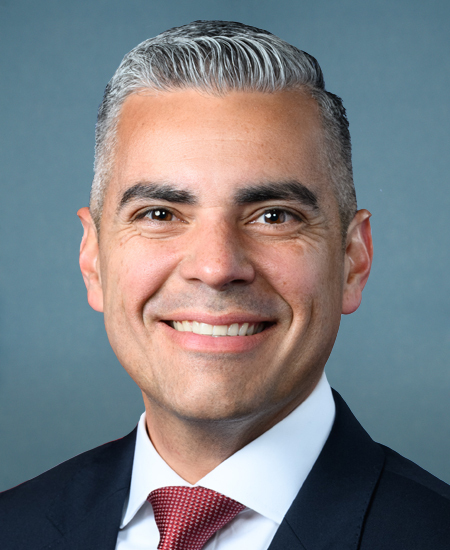
Rep. Juan Ciscomani
Sponsored bills
Maddy summaryThis bill removes an age restriction preventing working adults with disabilities from enrolling in Medicaid buy-in programs. Specifically, it amends two sections of the Social Security Act (1902(a)(10)(A)(ii)(XV) and 1905(v)(1)(A)) by deleting the phrase "but less than 65," which previously limited eligibility to those under 65. The change directly affects working adults with disabilities of all ages who currently cannot access Medicaid buy-in options due to this age cap. It would allow them to maintain Medicaid coverage while working, without being excluded based on age.
Maddy summaryThe Kids Online Safety Act (HR 7891) would require major online platforms (with high revenue or user numbers) to implement safety features for children and teens, including default protective settings, parental controls, and age verification. It would mandate platforms to report annually on risks to minors and their safety measures, and prohibit advertising harmful products (like tobacco, alcohol, or gambling) to minors. The bill directly affects social media platforms, online video games, and video streaming services that are used by minors, with the goal of preventing mental health harms, compulsive usage, and cyberbullying.
Maddy summaryThis bill requires the Department of Veterans Affairs (VA) to commission an independent review of its notices sent to veterans applying for benefits. The review, to be completed within 30 days of the bill's enactment, must assess whether notices can be made clearer for claimants while reducing paper use and government costs. The VA must then implement the recommended changes within 90 days and report the findings to Congress. This directly affects veterans receiving VA claims communications by aiming to make those notices more understandable and efficient.
Maddy summaryHR 7100, the Prioritizing Veterans’ Survivors Act, clarifies that the Office of Survivors Assistance is part of the Office of the Secretary within the Department of Veterans Affairs, rather than being located within the Department itself. This procedural change updates the organizational structure of the VA by moving the office under direct Secretary oversight. The bill does not alter benefits, services, or eligibility for veterans' survivors but aims to streamline internal VA operations. It affects VA administrative processes, not the public or beneficiaries.
Maddy summaryHR 6033, the SPEAK Act of 2024, creates a task force within the Department of Health and Human Services to address telehealth barriers for patients with limited English proficiency (LEP). The task force - comprising healthcare providers, tech vendors, language services, and patient advocates - will assess current obstacles and develop best practices for improving access to telehealth platforms, video interpretation, and digital patient portals. Within 90 days of each annual report, the Secretary must publish a public website sharing these best practices, including guidance on integrating interpreters and making telehealth instructions accessible. The bill directly affects LEP patients and healthcare providers who serve them, aiming to make digital health tools more usable through concrete, evidence-based recommendations.
Maddy summaryHR 4424, the Vietnam Veterans Liver Fluke Cancer Study Act, directs the Department of Veterans Affairs to study the rate of cholangiocarcinoma (a type of bile duct cancer) among veterans who served in the Vietnam theater during the Vietnam era. The bill requires the VA, working with the CDC, to analyze existing cancer registry data to compare cancer rates between these veterans and the general U.S. population, breaking down results by age, gender, race, ethnicity, and location. The VA must report its findings and recommendations to Congress within one year of completing the study, with ongoing periodic updates. This study aims to identify patterns and inform potential future actions for affected veterans, without changing current benefits or eligibility.
Maddy summaryHR 1479, the Chiricahua National Park Act, renames Chiricahua National Monument in Arizona as Chiricahua National Park. The bill maintains the monument's existing boundaries, ensures all existing funds and administrative rules for the monument transfer to the new park designation, and updates all federal references from "National Monument" to "National Park." This procedural bill directly affects the park's official name and administrative management under the National Park System, with no new policies or land changes.
Maddy summaryThe JUDGES Act of 2024 authorizes new federal district court judgeships across multiple states to address rising case backlogs in the federal judiciary. It specifies new permanent judgeships for districts including California (multiple districts), Florida, Texas, Delaware, Indiana, Iowa, New Jersey, and New York, with implementation phased through 2035, and creates temporary judgeships for Oklahoma districts with specific vacancy rules. The bill authorizes funding for these positions and requires reports on judicial caseloads and detention space needs, while mandating public access to the Judicial Conference's judgeship recommendations. The bill directly affects federal district courts in the specified locations by increasing judicial staffing to handle growing case volumes.
Maddy summaryThis bill expands Veterans Affairs medical coverage to include adaptive prosthetics and terminal devices designed for sports and recreational activities. It directly affects veterans who use prosthetic devices for non-medical purposes like sports participation. The key change amends existing law to explicitly add "adaptive prostheses and terminal devices for sports and other recreational activities" to the list of covered medical services. This ensures veterans can access these specialized devices under VA care without additional out-of-pocket costs.