

Maddy summaryThis bill establishes a Truth and Healing Commission to investigate the history and impacts of U.S. Indian Boarding School policies on Native American communities, including their cultural, emotional, and physical effects. The Commission will document these policies' history through research, public meetings across all 12 Bureau of Indian Affairs regions and Hawai'i, and consultation with survivors, tribes, and relevant Federal agencies. It will develop recommendations for federal action on memorialization, education, and addressing ongoing impacts, with a final report due six years after enactment. The Commission will include a Survivors Truth and Healing Subcommittee with 15 members representing boarding school survivors, their descendants, and tribal communities. The bill requires trauma-informed care at public meetings and mandates consultation with Native American communities throughout the process.
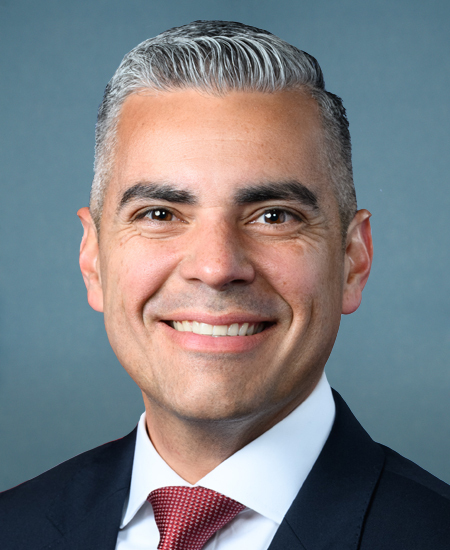
Rep. Juan Ciscomani
Sponsored bills
Maddy summaryHR 1458, the VETS Opportunity Act of 2025, amends VA education benefits rules to ensure veterans using these benefits for independent study courses receive meaningful instruction. It requires that such courses include regular, substantive interaction between students and instructors, and limits eligibility to programs at institutions approved for federal student aid under the Higher Education Act. This directly affects veterans pursuing online or self-paced courses using VA education benefits. The changes apply to courses starting August 1, 2025, and aim to standardize benefit access for qualifying educational programs.
Maddy summaryHR 988 is a procedural bill that changes the legal location of the National Woman's Relief Corps. It moves the Corps' incorporation and legal domicile from the District of Columbia to Illinois, and shifts its principal office from Springfield, Illinois, to Murphysboro, Illinois. The bill also updates service-of-process requirements to reference Illinois officials instead of District of Columbia authorities. This is purely an administrative relocation with no impact on the Corps' operations or members.
Maddy summaryHR 6635, the Bus Operator Safety and Security Act, requires new fixed-route buses over 30 feet long (with a 10+ year lifespan) purchased using federal transit funds to have physical barriers at the driver's workstation. These barriers must extend from floor to ceiling, fully enclose the workstation to block entry of people or objects, and not obstruct the driver's view. Transit agencies must install these barriers within two years of the law's enactment, unless the labor union representing bus drivers agrees to waive the requirement. The rule applies only to new buses bought with federal funds (excluding those from rural transportation programs) and directly affects transit agencies and bus drivers operating large fixed-route vehicles.
Maddy summaryThis bill exempts certain less-than-lethal projectile devices from federal sales taxes and National Firearms Act restrictions. It directly affects manufacturers, importers, and producers of these devices, which are defined as non-lethal tools (like rubber bullets or beanbag rounds) designed not to cause serious injury and unable to be easily converted to use standard firearm ammunition. Key mechanisms include a 90-day classification process for manufacturers seeking exemption, an annual public list of approved devices, and annual congressional reports on devices excluded from the exemption. The policy change applies to devices meeting specific safety criteria, such as projectile velocity limits and design features preventing misuse as conventional weapons.
Maddy summaryThe VSAFE Act of 2025 establishes a Veterans Scam and Fraud Evasion Officer within the Department of Veterans Affairs to prevent and address fraud targeting veterans. This officer will develop communication plans, training, and reporting systems for veterans, families, caregivers, and survivors to identify and avoid scams, while coordinating with agencies like the IRS, DOJ, and Social Security Administration. The bill also modifies a home loan fee deadline in the VA loan program, changing a date from June 9, 2034, to June 23, 2034. It does not create new full-time positions or alter existing Inspector General authority.
Maddy summaryThis procedural resolution (HRES 1016) directs the House Clerk to correct a technical error in the official version (engrossment) of H.R. 7147. Specifically, it requires changing the wording in section 230(b) from "in this Act or any other act" to "for the Department of Homeland Security in this or any prior Act." The correction is purely administrative and affects only the text of H.R. 7147, with no substantive policy change. It does not impact constituents, create new laws, or alter legislative outcomes.
Maddy summaryThis bill creates a tax credit for businesses selling products made with U.S.-grown cotton. The credit equals 24% of the cotton's market value if processed only in the U.S. or in countries with U.S. trade deals, or 18% for other processing locations. To qualify, cotton must be digitally traced from U.S. farms to finished products and certified by the USDA as meeting origin requirements. It directly affects clothing and textile manufacturers selling qualifying products in the U.S. market.
Maddy summaryHR 7178, the U.S.-Israel Anti-Killer Drone Act of 2026, requires enhanced U.S.-Israel cooperation to counter Iranian unmanned systems. The bill directs the U.S. and Israel to jointly develop, test, and deploy counter-drone technologies through their existing Operations Technology-Working Group, including sharing threat intelligence and conducting joint training. It increases annual funding for this cooperation from $55 million to $100 million and mandates detailed annual reports to Congress on progress, threat assessments, and the adequacy of current counter-drone capabilities. The bill directly affects U.S. and Israeli military forces by accelerating joint efforts to address threats from Iran-origin drones targeting U.S. allies and military assets in the Middle East.
Maddy summaryHR 4105, the VET Act of 2025, establishes a federal grant program to help veterans, active-duty service members transitioning out of the military, and their spouses secure jobs in the energy industry. The program provides grants to energy companies (including manufacturers of solar, wind, or nuclear equipment) to cover costs like job training, recruitment, and relocation for eligible individuals - prioritizing those with military energy experience, in opportunity zones, or facing barriers like homelessness. Grants are capped at $10,000 per hire, with a maximum $500,000 annual limit per company, funded at $60 million yearly from 2026-2031. Companies must report on job retention, employee satisfaction, and program outcomes to the Department of Labor, with a final evaluation due to Congress by 2030.