

Maddy summaryThis bill amends the Higher Education Act to require all U.S. colleges and universities receiving federal financial aid to create detailed anti-harassment policies covering physical, online, and institution-sponsored settings. It mandates policies prohibiting harassment based on race, sex (including sexual orientation and gender identity), disability, religion, and other protected characteristics, including harassment via institutional email, computers, or electronic messaging. The bill also establishes a $50 million annual grant program to fund colleges developing prevention programs, victim support services, and training for students and staff on recognizing and addressing harassment. These policies and grants must comply with existing civil rights laws like Title IX but add specific requirements for reporting and prevention.
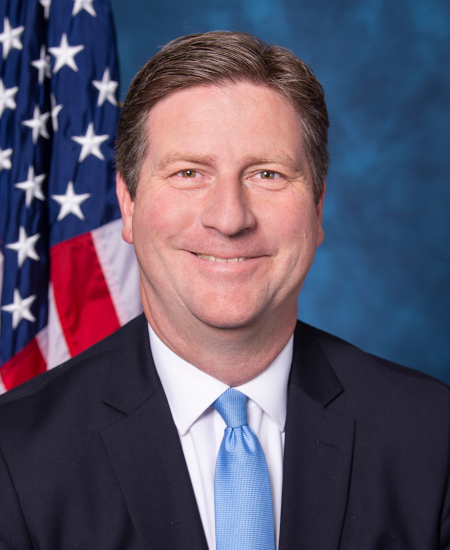
Rep. Greg Stanton
Sponsored bills
Maddy summaryHR 5619, the Military Dependents School Meal Eligibility Act of 2023, requires the Secretary of Agriculture to study how to directly certify military children for free or reduced-price school meals without additional applications. The bill directs a report by October 2024 evaluating options like using military housing allowance data and excluding non-service income from household calculations under existing school nutrition laws. This would affect children in households of active-duty military members, potentially streamlining eligibility for meals at schools. The bill itself is procedural, focusing on feasibility study rather than immediate policy changes.
Maddy summaryThe Earn to Learn Act establishes a federal grant program to help low-income students save for college or career training through matched savings accounts. Students must save $100 initially, then for every additional dollar they save, the program adds $8 to their account, while requiring mandatory financial education and coaching on budgeting, debt management, and savings habits. Administered by states or nonprofits using federal grants, the program directly affects low-income students admitted to eligible colleges or career schools, aiming to reduce reliance on student loans by promoting early savings and financial literacy. The initiative includes evaluation requirements to assess its impact over five years with $100 million in funding.
Maddy summaryThe Better CARE for Animals Act of 2023 amends the Animal Welfare Act to strengthen enforcement of animal welfare standards. It gives the Attorney General authority to bring civil cases for violations, including seeking penalties up to $10,000 per day per violation and injunctions to remove or relocate animals. The bill also requires the Secretary of Agriculture and Attorney General to coordinate through a new Memorandum of Understanding, focusing on repeat violators. These changes directly affect dealers, exhibitors, and enforcement agencies by expanding civil enforcement tools and clarifying jurisdiction over rule violations.
Maddy summaryThe John R. Lewis Voting Rights Advancement Act of 2023 would strengthen the Voting Rights Act of 1965 by updating the criteria for which states and localities must obtain federal preclearance before changing voting practices. It would establish new standards for proving vote dilution and vote denial by requiring courts to consider historical discrimination, racial polarization in voting, and whether voting practices disproportionately burden minority voters. The bill would also require states and localities to provide public notice of voting changes and share demographic data about polling locations. These changes would primarily affect jurisdictions with a history of voting rights violations, aiming to prevent discriminatory voting practices before they take effect.
Maddy summaryThe Humane Cosmetics Act of 2023 bans cosmetic animal testing in the United States, prohibiting companies from conducting or contracting such testing after its enactment (effective 1 year later). It also bans selling or transporting cosmetics developed using animal testing conducted after that date within U.S. interstate commerce. The law directly affects cosmetic manufacturers, retailers, and suppliers operating in the U.S. market, requiring them to use non-animal testing methods for safety evaluations. Exceptions exist for foreign regulatory requirements or when no alternative testing methods are available for specific ingredients.
Maddy summaryThis bill creates a new grant program to fund partnerships between Hispanic-serving institutions (HSIs) and local school districts with high Hispanic/Latino enrollment (at least 25% Hispanic/Latino students and 50% poverty rate). It authorizes $150 million for fiscal year 2024 to support specific activities like aligning high school coursework with college requirements, providing college application assistance, addressing non-academic barriers (such as housing and food insecurity), and developing teacher pipeline programs. The grants require eligible partnerships to report on outcomes, disaggregating data by student demographics to measure impact on Hispanic/Latino students' college enrollment, persistence, and completion rates. The program directly affects HSIs, qualifying school districts, and the Hispanic/Latino students they serve, aiming to close educational gaps through targeted collaboration.
Maddy summaryThis bill designates an annual "African Diaspora Heritage Month" through a presidential proclamation. It requires the President to annually designate a month for observance, encouraging state/local governments and educational institutions to host related programs and activities. The bill does not create new funding or alter existing programs - it establishes a ceremonial recognition of the African diaspora community's contributions to U.S. society and U.S.-Africa relations.
Maddy summaryThis bill requires the Bureau of Prisons to develop and implement a strategy for scanning all incoming mail at federal prisons to stop fentanyl and other synthetic drugs from entering facilities. It directs the Bureau to evaluate existing scanning technology within 180 days and submit a detailed plan to Congress within 90 days, including how to provide digital copies of mail to inmates within 24 hours and physical copies within 30 days (if safe). The strategy must achieve 100% mail scanning capacity at all federal prisons, prioritize high-security facilities, and include a budget proposal for fiscal years 2024-2026. This directly affects federal prisons, inmates, and Bureau employees by changing mail processing procedures to enhance safety and reduce staffing burdens from manual mail checks.
Maddy summaryHR 4350, the MONARCH Act of 2023, establishes a $12.5 million annual fund (2023-2027) to support habitat restoration for western monarch butterflies, which are at risk of extinction due to a 99% population decline over 30 years. The bill authorizes grants to eligible entities like tribal governments, nonprofits, and local agencies to restore milkweed, protect overwintering sites, and conserve pollinator habitats across California, Arizona, Nevada, Washington, Oregon, Idaho, and Utah. Projects must include community consultation, avoid conflicts with food safety, and demonstrate clear conservation benefits. The Secretary of the Interior will manage the grants, require annual progress reports to Congress and the public, and coordinate with existing conservation plans.