

Maddy summaryThis bill establishes a Truth and Healing Commission to investigate the history and impacts of U.S. Indian Boarding School policies on Native American communities, including cultural, emotional, and physical effects on survivors, descendants, and tribal communities. The Commission will document these impacts through research, public meetings, and testimony, working with two advisory committees focused on Native American perspectives and Federal agency coordination. The Commission will operate for six years, with annual reports to Congress and a final report containing recommendations for Federal action. The bill also includes provisions for managing burial sites related to boarding schools and ensures the Native American Graves Protection and Repatriation Act applies to remains found on Federal lands related to these schools.
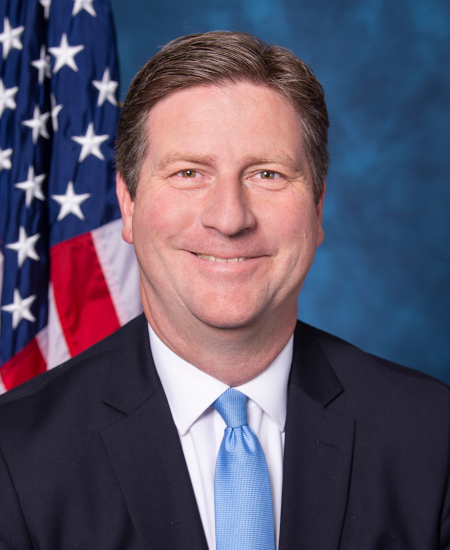
Rep. Greg Stanton
Sponsored bills
Maddy summaryThis bill establishes a Coordinator within the State Department to manage the relocation and resettlement of eligible Afghan allies and to assist U.S. citizens and lawful permanent residents in Afghanistan who seek U.S. support to leave the country. The Coordinator can hire temporary staff (preferring Foreign Service appointments), enter contracts, and coordinate with other federal agencies to use their funds for these efforts. The Coordinator must notify relevant congressional committees 15 days before transferring funds between agencies. The position and its authorities will expire three years after the bill becomes law.
Maddy summaryThis bill establishes a new interest-bearing fund within the Treasury to manage non-Federal contributions for the Lower Colorado River Multi-Species Conservation Program. It requires the Treasury to deposit existing and future state contributions (from participating states) into this fund, which can then earn interest through U.S. government securities. The fund's principal and interest are available for program expenses as specified in the existing funding agreement, without needing new annual appropriations. This directly affects the participating states (referred to as "State Parties" in the agreement) and the federal Treasury, streamlining how conservation program funds are held and invested.
Maddy summaryThis bill prohibits Medicaid from covering conversion therapy for any enrollee. It amends federal law to block Medicaid payments for any therapy aimed at changing a person's sexual orientation or gender identity (defined as "conversion therapy" in the bill), starting in the first full quarter after the law takes effect. The prohibition applies to all Medicaid providers who offer such therapy for compensation, but explicitly excludes support for gender transition, acceptance-based care, and interventions focused on safety or unlawful conduct. It directly affects Medicaid recipients seeking therapy and providers who previously billed for conversion therapy services.
Maddy summaryThis resolution (HRES 1558) is a symbolic House of Representatives measure supporting October as "National Domestic Violence Awareness Month." It does not create new laws or allocate funding but formally expresses the House's support for raising awareness about domestic violence and its impacts, and urges continued backing for existing programs that address domestic violence. The resolution cites statistics on domestic violence prevalence (e.g., 24 people per minute affected by intimate partner violence) to underscore the importance of the observance. It directly affects public awareness efforts but does not change policies or directly impact individuals.
Maddy summaryHRES 1537 is a non-binding House resolution condemning Hamas' October 7, 2023, attacks on Israel, which killed over 1,200 people and took 251 hostages, including 7 Americans still held captive. It calls on Hamas to immediately surrender, cease attacks, and release all hostages unconditionally, while reaffirming Israel's right to self-defense. The resolution also urges international organizations to condemn Hamas' actions and address the global surge in antisemitism following the attacks. As a symbolic statement, it does not create new laws or alter policy but expresses congressional position. The bill specifically references the ongoing captivity of seven U.S. citizens: Edan Alexander, Itay Chen, Sagui Dekel-Chen, Gadi Haggai, Judith Weinstein Haggai, Omer Neutra, and Keith Siegel.
Maddy summaryThis bill establishes a federal coordinator within the Department of Health and Human Services to advance valley fever (coccidioidomycosis) vaccine development, licensing, and manufacturing by 2034. It requires a national strategy detailing scientific progress, funding needs, and regulatory pathways, with grants of $500,000-$2.5 million for vaccine development and $500,000-$5 million for manufacturing. The bill also creates a National Valley Fever Registry to collect non-identifiable case data and improve diagnosis, funded through $26 million in authorized appropriations. It directly affects researchers, vaccine manufacturers, patients in endemic regions (like the Southwest U.S.), and public health agencies coordinating vaccine efforts.
Maddy summaryHR 9950, the "Miracle on Ice Congressional Gold Medal Act," authorizes three gold medals to be awarded to the members of the 1980 U.S. Olympic men's ice hockey team for their historic victory over the Soviet Union during the Winter Olympics. The medals, designed by the Treasury Secretary, will be presented by Congress to honor the team's achievement, which revitalized American morale during the Cold War. One medal will be displayed at the Lake Placid Olympic Center, one at the USA Hockey Hall of Fame in Eveleth, Minnesota, and one at the U.S. Olympic Museum in Colorado Springs. The bill also permits the sale of bronze duplicates to cover production costs. This is a ceremonial honor, not a policy change, directly recognizing the team members and their legacy.
Maddy summaryHRES 1516 is a resolution passed by the U.S. House of Representatives to commend Big Brothers-Big Sisters of America on its 120th anniversary. It recognizes the organization’s work in providing youth mentorship that helps young people graduate from school and plan for their future. The resolution highlights how the organization, operating in over 5,000 communities nationwide, has supported millions of young people through long-term mentor relationships. As a symbolic gesture, it does not create new laws or policies but expresses congressional support for the organization’s mission.
Maddy summaryHR 1719, the Honoring Our Fallen Heroes Act of 2023, establishes a presumption that certain cancers diagnosed in public safety officers (like police and firefighters) are work-related if linked to their duties. It defines 22 specific cancers (including lung, mesothelioma, and WTC-related cancers) as "exposure-related," allowing officers or their families to receive benefits without proving direct work connection, provided they were diagnosed within 15 years of leaving active service. The bill also creates a process for adding new cancers to the list based on scientific evidence, requiring the Bureau to review petitions and make decisions within 180 days. This applies to deaths or disabilities occurring on or after January 1, 2023, directly affecting officers who developed covered cancers during service.