

Maddy summaryThis bill amends a section of law governing Department of Veterans Affairs (VA) employee compensation to clarify that disputes over whether an employee received the correct pay amount under existing rules are not considered "adjustment of compensation" under the statute. It specifically excludes grievances challenging pay accuracy from the definition of "establishment, determination, or adjustment of employee compensation." The change directly affects VA employees covered under Section 7421(b) who might file such pay-related grievances. The bill makes a technical clarification to streamline how these disputes are categorized within VA's compensation process.
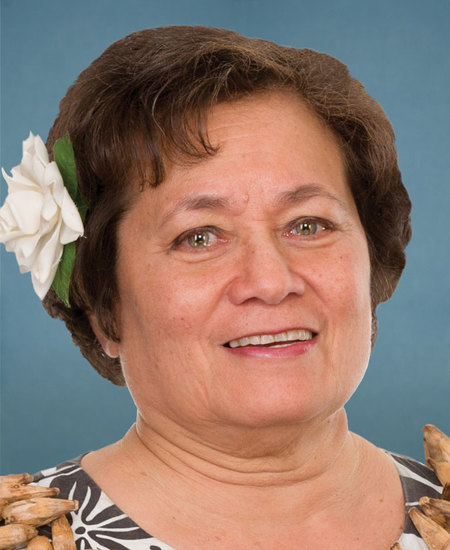
Rep. Aumua Amata Coleman Radewagen
Sponsored bills
Maddy summaryThe VSAFE Act of 2023 (HR 6452) establishes a new "Veterans Scam and Fraud Evasion Officer" within the Department of Veterans Affairs. This position focuses on preventing fraud against veterans, their families, caregivers, and survivors by creating communication plans, developing reporting guidelines, monitoring fraud metrics, and coordinating with other federal agencies like the IRS and DOJ. The bill does not create new benefits or increase staffing, instead directing the Department to improve existing fraud prevention efforts through standardized training and cross-agency collaboration.
Maddy summaryHR 3042 updates the eligibility rules for countries seeking to become "candidate countries" under the Millennium Challenge Corporation (MCC) program. It revises the income threshold to align with World Bank graduation standards and clarifies that U.S. waivers or suspensions of foreign aid restrictions no longer disqualify countries. The bill specifies that the MCC Board will make the final determination on candidate country status. This directly affects countries aiming to qualify for U.S. economic aid through the MCC program.
Maddy summaryHRES 1349 is a symbolic House resolution recognizing the success of the Food for Peace Act, which provides U.S. humanitarian food aid to global populations facing hunger. It does not create new policy or funding but formally acknowledges the program’s impact - such as reaching 53 million people with emergency aid in 2022 - and highlights global hunger statistics (e.g., 783 million people hungry in 2022). The resolution urges continued U.S. funding prioritization for the program but has no binding effect or direct policy changes. It directly affects no new groups, as it solely expresses congressional support for an existing aid program.
Maddy summaryHRES 1335 is a non-binding resolution designating July 21, 2024, as "Guam Liberation Day" to commemorate the U.S. military's liberation of Guam from Japanese occupation on July 21, 1944. It directly affects Guam's community by honoring the island's historical resilience, the CHamoru people's suffering during the 1941-1944 occupation, and the U.S. military's role in the Pacific campaign. The resolution's key mechanism is a formal House endorsement of this commemorative date, urging the President to issue a proclamation encouraging public observance. This is a symbolic gesture with no legal or financial impact, focusing solely on historical recognition.
Maddy summaryHR 8899, the Ko’ko’ BIRDS Stamp Act, directs the U.S. Postal Service to issue a special semipostal stamp (where the extra cost over postage supports a cause) for four years. All revenue from the stamp's sales must go directly to Guam’s Division of Aquatic and Wildlife Resources to fund native bird conservation, rehabilitation, breeding programs, and brown tree snake eradication efforts. The funds are protected from being offset against future postal service appropriations, ensuring dedicated support for these wildlife programs. This bill specifically affects Guam’s wildlife conservation initiatives by creating a new funding stream through stamp sales.
Maddy summaryHR 537 authorizes a Congressional Gold Medal to honor 60 diplomats who saved Jewish lives during the Holocaust by issuing visas and passports against their governments' orders, risking expulsion and personal danger. The medal will be presented to the next of kin of these diplomats, alongside representatives from their home countries, and permanently displayed at the United States Holocaust Memorial Museum. The bill also permits the sale of bronze duplicates to cover production costs, with proceeds going to the U.S. Mint. This legislation recognizes the diplomats' humanitarian actions without creating new government programs or altering existing laws.
Maddy summaryHRES 1290 is a symbolic resolution recognizing June 12, 2024, as "Philippines Independence Day" to commemorate the 126th anniversary of the Philippines' independence from Spain on June 12, 1898. It honors the historical significance of this date and reaffirms the longstanding U.S.-Philippines relationship, including support for Filipino American contributions and cooperation. The resolution has no legal effect or policy changes - it is purely a commemorative gesture by the U.S. House of Representatives.
Maddy summaryHRES 965 is a non-binding resolution calling for the immediate release of Ryan Corbett, a U.S. citizen wrongfully detained by the Taliban in Afghanistan since August 2022. It directly affects Corbett (held in poor conditions without charges) and other Americans detained by the Taliban. The resolution demands the Taliban release Corbett unconditionally, urges respect for his human rights, commends Qatar’s role as U.S. protecting power, and condemns the Taliban’s practice of detaining U.S. citizens. It does not create new law but formally expresses congressional support for Corbett and other wrongfully detained Americans.
Maddy summaryHR 8693, the "No American Land for Communist China Act," prohibits U.S. citizens or entities from purchasing real estate adjacent to specific federal lands if owned by the Chinese government or businesses with 25%+ Chinese government ownership. It directly affects Chinese government entities and Chinese-owned businesses operating in the U.S., restricting their ability to buy land near protected federal areas. The bill requires the President to take necessary actions to block such purchases, covering lands managed by Interior, Defense, Agriculture (Forest Service), or designated Indian country. This is a policy restriction, not a funding measure, targeting land transactions near sensitive federal properties.