

Maddy summaryHR 1571, the Compact Impact Fairness Act of 2023, removes barriers to federal benefits for citizens of the Federated States of Micronesia (FSM), the Republic of the Marshall Islands (RMI), and Palau who legally reside in the U.S. under the Compacts of Free Association. The bill amends the 1996 welfare law to add an exception, making these citizens eligible for most federal benefit programs (like Medicaid and food assistance) that previously excluded them due to their immigration status. It eliminates a 5-year waiting period for benefits and removes specific references to Medicaid, applying the change broadly across all federal programs. This directly affects over 30,000 citizens of these nations living in the U.S. under the compacts, who currently face restrictions on accessing critical support. The bill aims to align federal benefit eligibility with the unique status granted by the Compacts of Free Association.
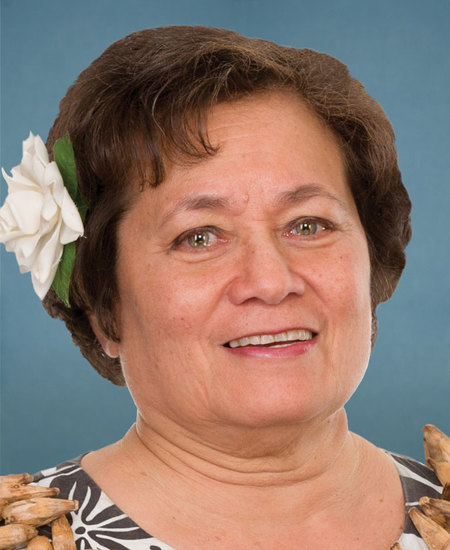
Rep. Aumua Amata Coleman Radewagen
Sponsored bills
Maddy summaryThis bill requires the Treasury Secretary to review 10 specific Chinese companies within 60 days to determine if they are responsible for or complicit in serious human rights abuses against Uyghurs and other Muslim groups in Xinjiang, or meet criteria under existing sanctions laws. If determined to meet these criteria, the companies - such as Hikvision, BGI Group, Tiandy Technologies, Alibaba, and ByteDance - would be added to a U.S. sanctions list blocking their assets. The Treasury must then report its findings to Congress, including the reasons for the determination, in an unclassified report with a potential classified annex. The bill directly affects these listed entities by subjecting them to potential U.S. financial sanctions.
Maddy summaryThe Territories Health Equity Act of 2023 improves healthcare access and funding for residents of U.S. territories by making several key changes to Medicare and Medicaid programs. It eliminates funding limitations for Medicaid in territories beginning in 2024, removes specific Medicare funding restrictions for Puerto Rico, and allows territories to receive payments for hospitals serving high numbers of low-income residents. The bill creates automatic eligibility for low-income territorial residents to receive Medicare premium and cost-sharing subsidies, eliminates late enrollment penalties for Part B Medicare in Puerto Rico, and requires transparency about Medicaid and CHIP programs in territories. These changes directly affect residents of Puerto Rico, the Virgin Islands, Guam, the Northern Mariana Islands, and American Samoa, as well as healthcare providers in these territories.
Maddy summaryThis bill amends Medicare rules to allow nurse practitioners and physician assistants to document medical necessity for diabetic shoes, a requirement currently limited to physicians. It directly affects Medicare beneficiaries with diabetes who need these shoes and expands the pool of providers (nurse practitioners and physician assistants) who can fulfill the documentation requirement. The key change inserts "nurse practitioner, or physician assistant" into Medicare's documentation standards for diabetic shoe coverage. This simplifies access for patients by enabling more healthcare providers to support coverage approval without requiring a physician's signature. The bill does not change coverage eligibility or costs, only the documentation process.
Maddy summaryHR 549, the Metastatic Breast Cancer Access to Care Act, removes waiting periods for disability and Medicare coverage for people diagnosed with metastatic breast cancer. Specifically, it amends Social Security Act sections to allow immediate eligibility for disability insurance benefits (eliminating the standard waiting period) and immediate Medicare coverage (waiving the 24-month waiting period) for these patients. The bill directly affects individuals with metastatic breast cancer who would otherwise face delays in accessing critical benefits. These changes apply to applications filed or benefits beginning after the bill's enactment date. The law makes no other policy changes beyond these specific eligibility adjustments.
Maddy summaryThis bill, the Supplemental Security Income Equality Act (HR 256), would extend the federal Supplemental Security Income (SSI) program to residents of Puerto Rico, the U.S. Virgin Islands, Guam, and American Samoa. Currently, these territories are excluded from SSI, which provides monthly financial assistance to low-income elderly, disabled, and blind individuals. The bill amends the Social Security Act to include the territories in the definition of "state" for SSI eligibility, remove payment limits for territories, and ensure U.S. nationals are treated equally with citizens. It also grants the Social Security Commissioner authority to waive requirements to adapt the program to each territory’s needs. The changes would take effect one year after the bill is enacted.
Maddy summaryThe ESA Amendments Act of 2024 makes significant changes to the Endangered Species Act of 1973, primarily focusing on improving conservation efficiency and increasing incentives for private landowners. It establishes a national listing work plan with five priority classifications (Priority 1-5) for species to streamline conservation efforts and sets deadlines for acting on listing petitions. The bill creates "Candidate Conservation Agreements with Assurances" that provide private landowners with legal assurances they won't face additional restrictions if species they're conserving gets listed under the Act. It also requires the government to publish the basis for listing decisions online, mandates transparency in using state and local information, and allows states to develop recovery strategies that could be adopted as regulations. These changes aim to improve conservation outcomes while reducing regulatory burdens on private landowners and increasing government transparency.
Maddy summaryHR 1586, the Forest Protection and Wildland Firefighter Safety Act of 2023, exempts certain fire suppression activities from requiring permits under the Clean Water Act. It directly affects federal agencies like the Forest Service, National Park Service, and Bureau of Land Management, as well as state, local, and tribal governments conducting wildfire response. The bill's key provision removes the need for a Section 402 permit under the Clean Water Act when these covered entities discharge fire retardants, chemicals, or water for fire control or prevention. This change streamlines firefighting operations by eliminating a specific permitting step during active wildfire events.
Maddy summaryHR 7438 directs the U.S. Treasury to mint commemorative coins for the 2026 FIFA World Cup, including 100,000 $5 gold coins, 500,000 $1 silver coins, and 750,000 half-dollar coins. The coins will be sold to the public at face value plus surcharges ($35, $10, and $5 per coin, respectively), with all surcharge revenue paid to FWC2026 US, Inc. for U.S. soccer programs. These funds must support soccer initiatives, particularly in underserved communities and youth development, as specified in the bill. The coins are legal tender but will only be issued during 2026, with no net cost to the U.S. government.
Maddy summaryThis bill designates the U.S. Customs and Border Protection Air and Marine Operations Marine Unit at 101 Km 18.5 in Cabo Rojo, Puerto Rico, as the "Michel O. Maceda Marine Unit" to honor Marine Interdiction Agent Michel O. Maceda, who was mortally wounded during a 2022 drug interdiction operation. The bill ensures all future government documents, maps, and references will use this new name for the unit. It does not change policies, funding, or operations - only commemorates Agent Maceda's service and sacrifice.