

Maddy summaryHR 2854 requires the U.S. Agency for International Development (USAID) Administrator to submit a report to Congress within 180 days of the bill's enactment. The report must detail progress toward reducing global malaria cases and deaths by 90% by 2030, including specific data on malaria incidence and mortality rates. This bill does not change funding or programs but mandates a standardized assessment of U.S. malaria reduction efforts, directly affecting USAID's reporting obligations. It focuses on tracking measurable outcomes of existing U.S. initiatives like the President’s Malaria Initiative. The summary is based solely on the bill's reporting requirement (Section 3), not on policy changes or advocacy.
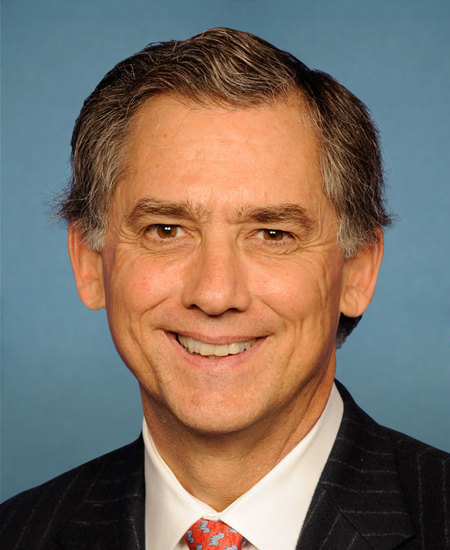
Rep. J. French Hill
Sponsored bills
Maddy summaryHR 2743 prohibits large financial institutions (over $100 billion in assets) from denying banking services to lawful businesses based on subjective political reasons, industry type, or reputational concerns. It requires these institutions to use objective, risk-based assessments for service decisions and provide written justifications for denials. The law applies to banks, credit unions, and payment networks, with civil penalties for violations including fines up to $10,000 per incident. It specifically ensures businesses operating legally under federal law receive fair access to financial services without discrimination. The bill mandates that denials be based on documented risk factors, not political bias or category-based exclusion.
American Innovation and R&D Competitiveness Act of 2023 This bill eliminates the five-year amortization requirement for research and experimental expenditures, thus allowing continued expensing of such expenditures in the taxable years in which they are incurred.
Maddy summaryHR 2620, the Federal Firearms Licensee Protection Act of 2023, increases penalties for crimes targeting firearms licensees. It amends Section 924 of Title 18 to impose mandatory minimum sentences of 3 years for burglaries or 5 years for robberies committed at the business premises of licensed firearms dealers, manufacturers, or importers. The bill specifically targets violations of Section 922(u), which prohibits unauthorized access to these premises, and adds "attempts to do so" to the penalties. This directly affects licensed firearms businesses by strengthening legal protections against theft or violence at their locations. The law creates clearer, harsher consequences for crimes committed during burglaries or robberies at these specific business sites.
Maddy summaryHR 2380, the Cellphone Jamming Reform Act of 2023, allows state and federal correctional facilities (like prisons and jails) to operate cellphone jamming systems to block wireless signals from contraband devices or communications involving individuals held in the facility. The bill restricts the Federal Communications Commission (FCC) from blocking such jamming systems, but requires facilities to limit jamming only to housing areas, have state facilities cover all costs, and consult with local law enforcement before implementation. It defines "jamming systems" broadly to include all necessary equipment and installation details. This bill directly affects correctional facilities seeking to prevent cell phone use by inmates, particularly for security purposes related to contraband. The law does not create new restrictions on cellphone use but changes how facilities can deploy jamming technology.
Maddy summaryHR 2497 modifies SEC rules to change how public companies calculate market capitalization when assessing if an acquisition or sale is significant. It allows companies to include the value of all share types - such as preferred stock and convertible shares - in this calculation, rather than only counting voting and non-voting common stock. This adjustment directly affects companies required to file SEC financial statements under current regulations. The bill aims to prevent unusual or inconsistent results in acquisition testing by using a more comprehensive market value approach. It does not alter the underlying requirements but adjusts the calculation method for determining significance.
This joint resolution nullifies the final rule issued by the Consumer Financial Protection Bureau titled Small Business Lending under the Equal Credit Opportunity Act (Regulation B) and published on May 31, 2023. The rule requires financial institutions to collect and report to the bureau credit application data for small businesses. On July 31, 2023, the U.S. District Court for the Southern District of Texas ordered the bureau not to implement or enforce the rule until a related pending case is resolved.
Maddy summaryHR 2427, the Hmong Congressional Gold Medal Act, authorizes Congress to award a gold medal to honor Hmong veterans who served with U.S. forces during the Vietnam War. The bill directs the Treasury Secretary to strike the medal and present it to the Smithsonian Institution for display, recognizing their combat service, heavy casualties, and displacement after the war. Duplicate bronze medals may be sold to cover costs. This procedural bill commemorates the Hmong people's military contributions and their refugee resettlement in the U.S., affecting the Hmong community as a whole.
Maddy summaryHR 1376, the COVID-19 Origin Act of 2023, requires the Director of National Intelligence to declassify and publicly release specific information related to the origin of the pandemic within 90 days of enactment. It directs the declassification of details about the Wuhan Institute of Virology’s activities (including military ties and pre-pandemic coronavirus research) and health records of researchers who fell ill in autumn 2019, including names, symptoms, and roles. The bill mandates an unclassified report to Congress containing this information, with only minimal redactions for source protection. This legislation directly affects the Director of National Intelligence and aims to make origin-related information available to the public and Congress for pandemic prevention planning.
Maddy summaryHR 1139, the GUARD VA Benefits Act, amends federal law to strengthen penalties for individuals or organizations charging veterans unauthorized fees when helping with VA benefit claims. It directly affects veterans seeking assistance with VA claims and the representatives (like advocates or attorneys) who might charge them fees. The bill adds a new provision making it a violation to solicit, charge, or receive any fee for preparing, presenting, or prosecuting VA claims, punishable by fines under Title 18. This change specifically targets unauthorized fee-charging while excluding fees covered under existing exceptions in sections 5904 or 1984 of the law.