

Maddy summaryThis resolution urges the UK, France, and Germany (the E3) to trigger the UN Security Council's "snapback" mechanism under Resolution 2231 to reimpose nuclear-related sanctions on Iran before the mechanism expires on October 18, 2025. It cites Iran's violations of the 2015 nuclear deal (JCPOA), including enriching uranium to 60% purity, expanding nuclear facilities, and blocking IAEA inspections. The E3 would need to formally request the UN Security Council to restore sanctions lifted under the JCPOA. The resolution does not impose sanctions itself but calls for diplomatic action to prevent Iran from advancing its nuclear program.
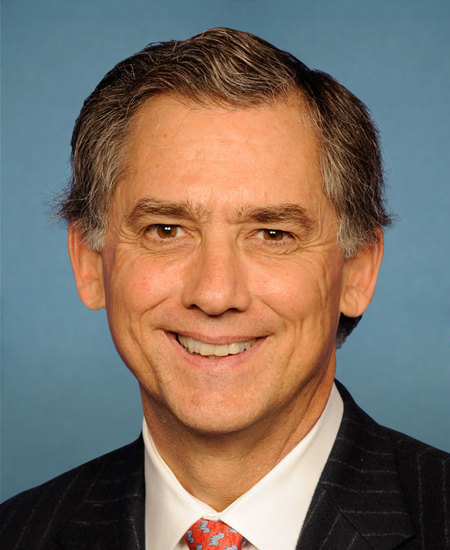
Rep. J. French Hill
Sponsored bills
This concurrent resolution declares that Congress should not impose any new performance fee, tax, royalty, or other charge relating to the public performance of sound recordings on a local radio station for broadcasting sound recordings over the air, or on any business for such public performance of sound recordings.
Maddy summaryHR 1301, the Death Tax Repeal Act, would eliminate the federal estate tax and generation-skipping transfer tax for estates of individuals dying on or after its enactment date. It directly affects individuals inheriting significant assets, as it removes taxes on estates exceeding $10 million (adjusted for inflation) and repeals taxes on large transfers between generations. The bill modifies the gift tax by establishing a $10 million lifetime exemption with annual inflation adjustments, replacing previous tax brackets. It applies to estates, gifts, and transfers occurring on or after the bill's effective date.
Maddy summaryHR 1232, the National Right-to-Work Act, would make union membership voluntary for workers in most private-sector jobs by removing legal requirements for employees to join a union or pay dues as a condition of employment. It directly affects workers in unionized workplaces covered by the National Labor Relations Act (including most private employers) and railroad workers covered by the Railway Labor Act. The key change eliminates provisions that allowed "union security agreements" (requiring dues or membership), meaning workers could no longer be forced to pay union fees to keep their jobs. This bill does not change other labor rights or create new programs - it only modifies existing laws to allow workers to opt out of union membership and financial obligations.
Maddy summaryHR 1267, the Water Systems PFAS Liability Protection Act, exempts certain water and wastewater treatment facilities from liability under the federal environmental cleanup law (CERCLA) for releases of specific PFAS chemicals. It directly affects public water systems, wastewater treatment plants, municipalities with stormwater permits, and their contractors who handle PFAS while following all applicable laws. The exemption applies only if facilities manage PFAS in compliance with existing federal or state water quality rules, such as through proper biosolids disposal or treated water discharge under permits. However, the bill does not protect facilities that act with gross negligence or willful misconduct in handling PFAS. This law changes liability rules for water systems but does not alter PFAS regulation standards.
Maddy summaryThe HALT Fentanyl Act (HR 27) creates a new category of Schedule I controlled substances for "fentanyl-related substances" defined by specific chemical modifications to fentanyl. This law directly affects researchers, medical professionals, and law enforcement by expanding the legal definition of fentanyl-related substances to include many structurally similar compounds. Key provisions include streamlined registration processes for research on these substances, allowing researchers to conduct studies with expedited procedures if related to FDA-approved drug development or government-funded research. The bill requires the Attorney General to issue implementing rules within six months and includes penalties for violations involving these substances.
Maddy summaryThis bill expands 529 college savings account flexibility by allowing funds to cover costs for industry-recognized postsecondary credentials, not just traditional degrees. It defines "qualified expenses" to include tuition/fees for recognized credential programs (like certifications or apprenticeships), required testing fees, and continuing education needed to maintain credentials. To qualify, programs must meet specific criteria, such as appearing on state lists under the Workforce Innovation and Opportunity Act or being listed in VA or Defense directories. The change applies to 529 distributions made after the law's enactment, giving families more options to use these accounts for job-focused training.
Maddy summaryHR 1007, the Antisemitism Awareness Act of 2025, clarifies how the Department of Education enforces Title VI of the Civil Rights Act of 1964 to address discrimination against Jewish individuals. It requires the Department to consider the International Holocaust Remembrance Alliance (IHRA) definition of antisemitism when investigating complaints involving discrimination based on actual or perceived Jewish ancestry or ethnic characteristics. This affects Jewish students and communities in K-12 schools and colleges receiving federal funding, as it ensures antisemitism is assessed under existing civil rights protections. The bill does not create new laws but specifies that the IHRA definition - already used by the Department since 2018 - must be applied in Title VI enforcement cases.
Maddy summaryThis resolution allocates $22.4 million in funding for the operational expenses of the House Committee on Financial Services during the 119th Congress. It specifies that $11.2 million is available for expenses incurred in 2025-2026 and another $11.2 million for 2026-2027, covering staff salaries and committee operations. The funds are subject to standard House budget procedures, requiring approval from the Committee on House Administration and authorization by the committee chairman. This is a procedural budget resolution affecting only the committee's internal operations, not public policy or external stakeholders.
Maddy summaryHR 951 authorizes the U.S. Mint to produce commemorative coins (gold $5, silver $1, and half-dollar) in 2028 to mark the 250th anniversary of the Declaration of Independence. Surcharges from coin sales ($35 per gold coin, $10 per silver, $5 per half-dollar) will fund the Stephen Siller Tunnel to Towers Foundation, supporting programs for Gold Star families, first responders, veterans, and their families. The coins must meet specific weight, size, and composition standards, with mintage limits set at 100,000 gold, 500,000 silver, and 750,000 half-dollar coins. All surcharge proceeds directly benefit the Foundation’s existing initiatives, such as mortgage-free housing and scholarships, without requiring additional federal funding.