

Maddy summaryHR 2402, the No Hungry Kids in Schools Act, creates a new option for states to implement a statewide program under the National School Lunch Act starting in 2025. States would cover costs from non-federal funds to allow all schools in the state to receive full federal reimbursement for meals served, eliminating income-based eligibility thresholds. Key provisions include setting the eligibility threshold to zero and calculating student eligibility statewide instead of by individual school district. This directly affects state education agencies (which must fund the program) and schools (which gain simplified access to full meal reimbursement), benefiting students in qualifying schools.
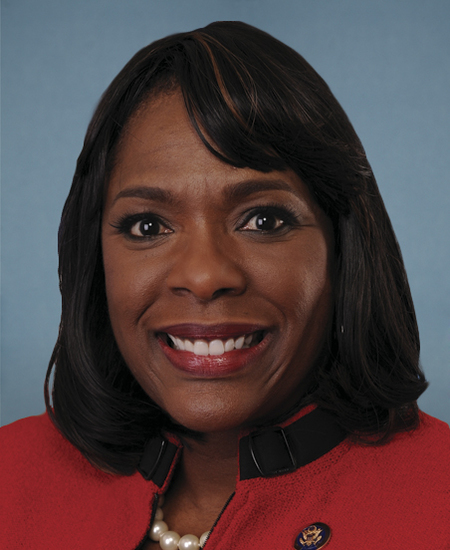
Rep. Terri A. Sewell
Sponsored bills
Reclaim Trade Powers Act This bill repeals the statute that directs the President to take certain actions, such as imposing a tariff of up to 15% for up to 150 days on articles imported into the United States, when necessary to address large and serious U.S. balance-of-payments deficits or certain other situations that present fundamental international payments problems.
Maddy summaryHR 2398, the Rural Veterinary Workforce Act, amends federal tax law to exempt certain student loan repayment or forgiveness assistance from income tax for veterinarians working in rural areas. It specifically expands existing tax exclusions to include programs under the National Agricultural Research, Extension, and Teaching Policy Act (7 U.S.C. 3151a) and similar state-level programs designed to increase rural veterinary access. This change directly affects veterinarians participating in qualifying loan repayment or forgiveness programs in states prioritizing rural veterinary services. The policy change modifies IRS tax treatment to reduce the financial burden on veterinarians serving underserved rural communities.
Maddy summaryHRES 257 is a symbolic resolution expressing support for designating March 2025 as "Music in Our Schools Month." It does not create new laws or allocate funding but formally recognizes music education's value in schools. The resolution highlights music's role in cultural heritage, student development (including cognitive and social benefits), and existing disparities in access - particularly for students in underserved urban, rural, or high-poverty schools. It calls for greater support for music programs but does not mandate any policy changes or require action from schools or the government.
Maddy summaryHRES 256 designates March 2025 as Endometriosis Awareness Month, recognizing endometriosis as a common chronic condition affecting approximately 1 in 10 women of reproductive age. The resolution supports raising public awareness, promoting early detection and culturally competent care for those with the disease, and encourages increased research funding for better treatments and a potential cure. It specifically highlights the significant impacts of endometriosis, including diagnostic delays (3-11 years), chronic pain, high healthcare costs ($13,000+ annually per patient), and reduced workforce participation. This non-binding resolution directly affects women and girls living with endometriosis and aims to foster public education and support through designated awareness activities.
Maddy summaryThis bill amends the tax code to allow charitable organizations (501(c)(3) nonprofits) to provide grants for college student housing without losing their tax-exempt status. It specifically permits grants to improve or maintain "collegiate housing property" (where most residents are full-time students at a nearby college) but excludes grants for fitness facilities. The change affects charities seeking to fund student housing infrastructure, clarifying that such grants qualify as charitable under existing tax rules. The policy change applies to grants made after the bill's enactment date.
Maddy summaryThe Cellphone Jamming Reform Act of 2025 allows state and federal correctional facilities to operate jamming systems that block cell signals from entering or leaving the facility, specifically targeting contraband devices used by inmates. It directly affects prisons and jails by enabling them to disrupt unauthorized wireless communications without FCC approval, provided the jamming is limited to housing areas within the facility. Key requirements include state facilities covering all costs themselves, consulting with local law enforcement before implementation, and notifying the Bureau of Prisons. The law aims to address security risks from smuggled phones while restricting jamming to only necessary areas and requiring transparency.
Maddy summaryThis bill would require federal firearms licensees to prohibit sales of specific high-capacity rifles and shotguns to people under 21. It targets semiautomatic centerfire rifles and shotguns capable of holding more than 5 rounds in their magazines, raising the age limit from 18 to 21 for these weapons. Exceptions apply for active military members and certain government employees authorized to carry firearms. The law directly affects gun retailers and individuals under 21 seeking to purchase these specific firearms. It modifies existing federal gun sale rules without changing age requirements for other firearms.
Maddy summaryThis bill authorizes the President to award Doris Miller the Medal of Honor posthumously for her heroic actions during the Pearl Harbor attack in 1941. It directly affects Miller, an African American Navy cook who was initially recognized with a Navy Cross for saving lives and operating a machine gun under fire while serving in a role typically restricted to Black sailors. The bill overrides standard time limits for awarding the Medal of Honor, enabling the upgrade from her existing Navy Cross citation. This would correct the historical oversight where Miller - unlike other Pearl Harbor heroes - was denied the Medal of Honor despite her documented valor.
Maddy summaryThe Paycheck Fairness Act strengthens equal pay protections by expanding the definition of "sex" to include pregnancy, childbirth, sexual orientation, gender identity, and sex characteristics. It modifies employer defenses for pay disparities to require proof that any pay difference is job-related, not based on sex, and accounts for the entire pay gap. The bill prohibits employers from asking about salary history, enhances penalties for violations, and requires employers with 100+ employees to collect and report detailed pay data by race, sex, and job category. It also establishes training programs for employers on eliminating pay bias and creates a National Equal Pay Enforcement Task Force to coordinate enforcement efforts. This legislation directly affects employers, particularly those with 100+ employees, and aims to address pay disparities impacting women, people of color, and other underrepresented groups.