Maddy summaryHR 3501 would require Medicare providers to screen beneficiaries aged 65 and older for cognitive impairment during annual wellness visits and initial preventive physical exams, using tools approved by the National Institute on Aging. The screening must be documented in the patient’s medical record. This change applies to visits starting January 1, 2026, and aims to support early detection of conditions like Alzheimer’s through standard preventive care. The bill directly affects Medicare beneficiaries, providers, and caregivers by integrating cognitive screening into routine preventive services.
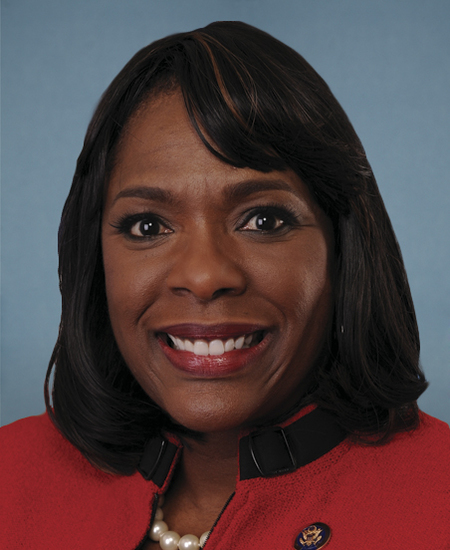
Rep. Terri A. Sewell
Sponsored bills
Stronger Communities through Better Transit Act This bill requires the Department of Transportation (DOT) to establish a grant program to support operating projects for public transportation and related service improvements, particularly in underserved communities and areas of persistent poverty. Specifically, the bill requires DOT to allocate funding under the program for urbanized areas, states, and Indian tribes that are recipients of funds under either the Federal Transit Administration's (FTA's) Urbanized Area Formula Funding program or Formula Grants for Rural Areas program. Eligible recipients may use funding for operating costs associated with projects that improve public transportation service for transit-dependent populations and support increased transit ridership (e.g., service expansion, information technology enhancements, and workforce development). DOT must apportion the funding so that recipients receive funds that are proportional to their share of operating costs. The bill also provides for an increased federal cost share for operating assistance for projects or programs carried out in areas of persistent poverty or underserved communities. DOT must set up a multimodal access measurement interface for public agencies to aid transit agencies in determining and reporting on access to jobs and essential services. A grant recipient must (1) report specific information to the FTA for inclusion in the National Transit Database, and (2) survey transit riders and non-riding residents regarding transit service improvements. Further, the bill expands the purposes of the public transportation programs to include supporting public transportation's role in combating climate change through growing/retaining transit ridership.

Maddy summaryHRES 423 is a symbolic resolution designating May 2025 as "National Physical Fitness and Sports Month" to raise awareness about health. It does not create new laws or funding but expresses congressional support for promoting physical activity and healthy lifestyles. The resolution cites obesity statistics (e.g., 41.9% adult obesity rate) to emphasize the importance of exercise, recommending 30 minutes daily for adults and 60 minutes for children. It focuses on education about healthy habits rather than implementing policy changes. As a procedural resolution, it has no direct impact on legislation or affected groups.
Maddy summaryHR 3457 establishes a federal program to control and eradicate feral swine (wild pigs) that threaten agriculture, ecosystems, and public health. The program provides financial assistance to farmers and ranchers in affected areas for eradication efforts and land restoration, while requiring coordination between federal agencies and contracts with eligible land-grant universities for research and technical support. It allocates $150 million over five years (2026-2030), with 40% funding producer assistance and 60% supporting population control methods, and limits administrative costs to 10% of the total funds.
Maddy summaryHR 3368, the "Born in the USA Act of 2025," prohibits federal funding for Executive Order 14160 (which aimed to restrict birthright citizenship for children born in the U.S.). The bill directly affects federal agencies that might implement the executive order by blocking their use of funds for that purpose. Its key provision is a funding ban targeting the executive order and any similar future policies, without changing citizenship law. The bill does not alter birthright citizenship rights but prevents federal resources from being used to enforce the controversial executive order. It is a procedural measure focused on funding, not a substantive policy change to citizenship rules.
Maddy summaryHR 3376 creates the Water Affordability, Transparency, Equity, and Reliability Trust Fund, funded by increasing the corporate tax rate from 21% to 24.5% starting in 2025, with annual funding capped at $35 billion or 1/20th of 20-year infrastructure needs. The bill allocates funds to clean water programs (42%), safe drinking water programs (42.5%), household water well systems (1%), colonias assistance (0.5%), and Indian health services (3%), requiring specific prioritization of low-income and minority communities for many programs. It mandates an EPA study on water affordability, discriminatory practices, and civil rights violations in water service, including data collection on service disconnections affecting vulnerable populations. The bill also includes provisions for lead service line replacement, PFAS contamination response, and job training grants for water system operators with specific requirements to prioritize low-income communities.
Maddy summaryThis bill adds a new tax credit for homeowners who install qualifying U.S.-grown hardwood products in their primary residence. It expands the existing energy efficient home improvement credit to cover "natural carbon sink expenditures," defined as flooring, paneling, cabinetry, or windows made from deciduous trees grown and processed in the U.S. The credit applies to products installed in a dwelling owned and used as the taxpayer’s principal residence, with the installation expected to last at least five years. The bill also extends the credit’s expiration date from 2032 to 2035.
Access to Prescription Digital Therapeutics Act of 2025 This bill provides for Medicare and Medicaid coverage of prescription digital therapeutics (i.e., software applications that are used to prevent, manage, or treat medical conditions). The Centers for Medicare & Medicaid Services must establish a Medicare payment methodology for payments to manufacturers that takes into account certain factors (e.g., ongoing use); manufacturers must report specified information about private payors, subject to civil penalties.
Maddy summaryThe LEO Fair Retirement Act of 2025 allows federal law enforcement officers to include unpaid overtime hours in their retirement benefit calculations. Currently, pay caps prevent officers from being compensated for all overtime worked, meaning they miss out on retirement credit for those hours. To qualify, officers must make a lump-sum payment (or choose a reduced monthly annuity) to cover the retirement contributions they would have made if paid, based on their actual overtime hours. This applies to officers covered by the Civil Service Retirement System (CSRS) or Federal Employees Retirement System (FERS), and the bill also provides a tax credit for the lump-sum payment.
Maddy summaryHR 3277, the Ensuring Lasting Smiles Act, requires group health plans and health insurance issuers to cover medically necessary outpatient and inpatient treatments for congenital anomalies or birth defects primarily affecting the eyes, ears, teeth, mouth, or jaw. This includes reconstructive procedures, dental/orthodontic support during treatment, and follow-up care, but excludes purely cosmetic surgery not tied to a medical diagnosis. Cost-sharing (like copays) for these services must not be stricter than for other medical benefits. The law takes effect for plan years beginning January 1, 2026, and mandates insurers to provide notice about this coverage to beneficiaries.