

Maddy summaryThe Sustaining Our Democracy Act establishes a federal program providing funding to states for election administration improvements, increased voter access, and protection of election workers. States must submit detailed plans for using funds to upgrade voting equipment, expand early and mail voting options, secure election infrastructure, and address disparities in voting access for underserved communities. The bill prohibits states from using funds for activities that restrict voting access or suppress participation, and creates an Office of Democracy Advancement and Innovation to administer the program. Funded through a $2.5 billion Trust Fund for fiscal years 2026-2035, this legislation directly affects all 50 states, the District of Columbia, and U.S. territories receiving federal election funding.
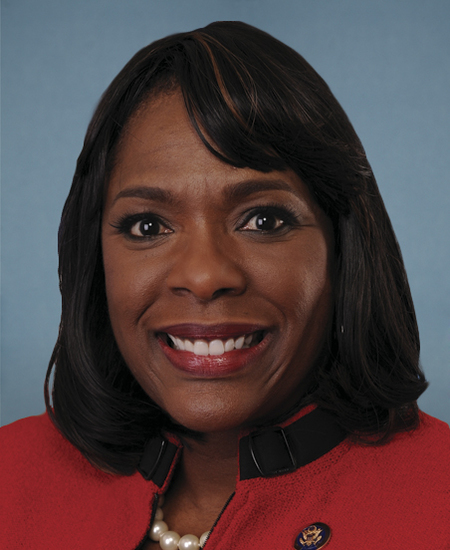
Rep. Terri A. Sewell
Sponsored bills
Maddy summaryThe CREATE Act increases tax credit limits for film and television productions, raising the annual spending cap from $15 million to $30 million for qualified productions and adjusting related thresholds from $20 million to $40 million. It adds an annual inflation adjustment mechanism to these limits starting in 2026, automatically increasing them based on the cost-of-living index. The bill extends the program's expiration date from December 31, 2025, to December 31, 2030. This directly affects producers of eligible entertainment projects by expanding available tax credits and providing long-term stability for the industry. The changes apply to productions starting in taxable years ending after December 31, 2025.
Maddy summaryThis bill adjusts health insurance subsidies by modifying the premium tax credit structure under the Internal Revenue Code. It replaces previous income thresholds with a sliding-scale formula, increasing subsidies for households earning between 150% and 400% of the federal poverty level - reducing their required premium payments as income rises within these tiers. The changes apply to tax years beginning after December 31, 2025, directly affecting middle-income individuals and families purchasing coverage through health insurance marketplaces. It also repeals specific provisions from a prior reconciliation law related to health care.
Maddy summaryThis bill authorizes $50 million annually for the Centers for Disease Control and Prevention (CDC) to conduct research on firearms safety and gun violence prevention, beginning in fiscal year 2026 through 2031. The funding is in addition to existing CDC appropriations and would support studies under the Public Health Service Act. It does not create new regulations or directly affect individuals, but aims to expand research into causes and prevention strategies for gun violence. The bill focuses solely on enabling CDC research, without proposing policy changes or restrictions.
Maddy summaryHR 4796, the Restoring Essential Healthcare Act, repeals a provision that blocked Medicaid payments to certain healthcare providers during a specific period. It directly affects Medicaid beneficiaries who received care from these providers between the enactment of the prior law (Public Law 119-21) and this bill's enactment. The key provision retroactively restores Medicaid payments for services already provided during that blocked period, treating the payment restriction as if it never existed. This change ensures eligible individuals and providers receive reimbursement for covered care delivered during the prohibited timeframe.
Maddy summaryThis bill amends Medicare rules to improve payment for air ambulance services. It requires air ambulance providers to submit detailed cost and revenue data every three years (including fixed costs per base, utilization rates, and revenue) to the Medicare Secretary. The Secretary must then revise fee schedules based on this data and stakeholder input, aiming to better align payments with actual costs. A separate provision mandates the GAO to study average operating costs, payment adequacy, geographic variations, and make recommendations within one year of data collection starting. The bill directly affects Medicare beneficiaries using air ambulances and the providers operating those services.
Fix Our Flooded Basements Act of 2025 This bill expands the disaster assistance provided to individuals and households for repairs to and property in flood-damaged basements. It also expands eligibility and coverage for certain group flood insurance. Under current law, the Individual Assistance (IA) program of the Federal Emergency Management Agency (FEMA) limits home repair assistance for flood-damaged basements to damage affecting the safety, sanitation, or functionality of the home (e.g., structural damage, hazardous conditions). The bill allows home repair assistance for disaster-caused mold, mildew, and moisture damage in basements regardless of whether the damage affects safety, sanitation, or functionality. Additionally, flood-damaged basements are eligible for home repair assistance even when the basement is not required for occupying the dwelling. Also, currently, IA assistance for flood-damaged personal property in basements is limited to washers, dryers, and property essential for occupying the dwelling. The bill expands IA personal property assistance to more broadly cover property damaged by disaster-caused flooding in basements. The scope of such assistance must at least equal the coverage for such damage by a standard policy under the National Flood Insurance Program (e.g., covering air conditioning units and freezers in basements). Additionally, FEMA must expand the eligibility and coverage of the group flood insurance it provides to IA recipients, including increasing the maximum coverage and expanding coverage for basements. The bill also excludes from the maximum for IA housing assistance expenses for (1) hazard mitigation measures in flood-damaged basements, and (2) premiums for group flood insurance policies.
Maddy summaryThis bill updates the TRICARE Young Adult Program to make healthcare coverage more accessible for military dependents. It directly affects young adults (ages 21-26) who are children of active-duty service members, by eliminating a separate premium they previously paid for coverage. Key changes include removing an extra cost for young adults and adjusting eligibility rules to simplify enrollment. These amendments aim to reduce out-of-pocket expenses and streamline access to health insurance under the program.
Maddy summaryThe Foster Youth Mentoring Act of 2025 authorizes federal grants to fund structured mentoring programs for children in foster care (under 18) and youth with foster care experience (up to age 26). It requires grantees to provide trained mentors (adult or peer), ensure cultural competence, conduct background checks, and match mentors with mentees for at least one year to support academic, social, and emotional needs. Programs must prioritize input from youth, recruit diverse mentors reflecting foster youth demographics, and coordinate with child welfare and education systems. The bill allocates $50 million annually for fiscal years 2026-2027, mandating annual reports on program reach, mentor demographics, and outcomes like school attendance and college enrollment. This directly affects over 390,000 foster youth annually by expanding access to evidence-based mentoring.
Maddy summaryThis resolution symbolically designates August 25-29, 2025, as "National Community Health Worker Awareness Week" for the third consecutive year. It recognizes community health workers (CHWs) as trusted frontline staff who connect underserved communities to health services, provide cultural mediation, and support health education - without creating new laws or funding. The resolution encourages federal, state, and local collaboration to highlight CHWs' roles but does not alter existing programs or require government action. It directly affects CHWs and their communities by raising public awareness of their contributions.